
Charter committee advances concise amendment to create county ethics review board
Get AI-powered insights, summaries, and transcripts
Subscribe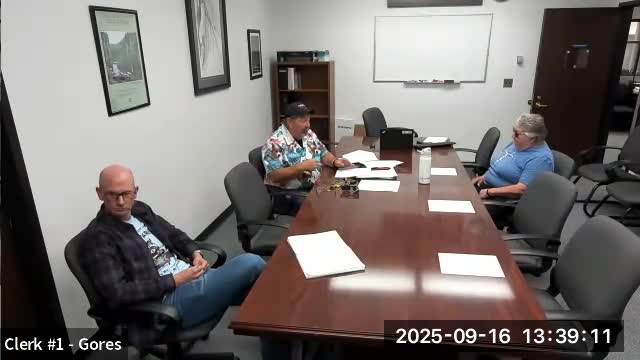
Summary
At a meeting of the Clallam County Charter Review Commission Ethics Committee, members agreed to advance a short charter amendment that would establish an ethics review board to receive and review complaints about violations of the Clallam County code of ethics by elected county officials and to make the board’s findings public.
At a meeting of the Clallam County Charter Review Commission Ethics Committee, members agreed to advance a short charter amendment that would establish an ethics review board to receive and review complaints about violations of the Clallam County code of ethics by elected county officials and to make the board’s findings public. The committee voted informally to forward the language to staff for placement as a “Step 2” item on the CRC agenda and to circulate a draft resolution for the larger commission to consider.
The amendment the committee agreed to circulate reads in part, as read aloud to the group: “An ethics review board shall be established to receive and review complaints of violations of the Clallam County code of ethics by elected county officials. The board shall consist of one citizen from each district appointed by the mayor of the city in that commissioner district. Members shall serve without compensation. Findings of the ethics review board shall be made public.” Committee member Jeff read the text and offered it as the concise version the panel should send forward.
Why it matters: committee members said the change is intended to give the public an independent avenue to raise and have evaluated allegations of ethical misconduct by elected county officials, while keeping the ballot language simple so voters can decide whether to create the board.
Committee discussion centered on three questions: how detailed the charter language should be, how many members the board should have, and who should appoint members. Commissioner Susan Fish argued for a short amendment: “If it is one or two sentences, I think…if we get into one or more than two sentences, then I think we’re asking for trouble,” she said, urging simplicity to avoid legal complications and expensive litigation. Several members cited Clark County’s recent process as an example of a longer, more detailed approach; the committee discussed that Clark County’s charter language and implementing resolution spelled out an independent oversight office and timelines but noted Clallam does not have the same county-manager structure.
On composition, the committee debated three versus five members before coalescing around language naming one citizen from each commissioner district. Several members said an odd-numbered panel can prevent tie votes; others argued three members would be sufficient for a new advisory body. On appointment, the committee agreed—after discussion and edits—to specify that each member would be appointed by the mayor of the city in that commissioner district (for example, Sequim, Port Angeles and Forks were mentioned), with the committee clarifying that appointed citizens need not live inside city limits but should represent the commissioner district.
Members also agreed that board members would serve without compensation and that procedural details, including terms, hearing procedures, appeal mechanisms and meeting cadence, should be left for the eventual board or implementing resolution to adopt rather than embedded in the charter amendment. Committee members noted several practical limits: the amendment would only create the board; the implementing resolution or ordinances would set the board’s rules and staffing. The committee discussed liability and cost concerns raised previously—some members warned voters should know possible legal costs of enforcement, while others said accountability may require those costs.
During public comment, John Worthington of Sequim raised a concern about politicization of appointments and enforcement, saying, “the party in power can pick someone who’s gonna be saying there’s no, nothing to look at here,” and urging stronger employment-contract language and clearer limits on government defense of officials accused of violations.
Next steps: committee members agreed to circulate the concise amendment language and a draft resolution to the executive committee and staff, ask staff (Lonnie Polanyi) to place the item on the CRC Step 2 agenda, and reconvene to edit the resolution. The panel directed staff to add the item to the larger Charter Review Commission agenda and to distribute proposed resolution drafts to committee members prior to the next meeting.
The committee did not take a formal recorded vote during the meeting; the decision to advance the concise language was recorded as the committee’s direction to staff rather than a binding action by ballot or ordinance.
(Reporting note: quotes and attributions are drawn directly from the meeting transcript.)