
Public and health staff press for expanded smoke monitoring as nearby wildfires burn
Get AI-powered insights, summaries, and transcripts
Subscribe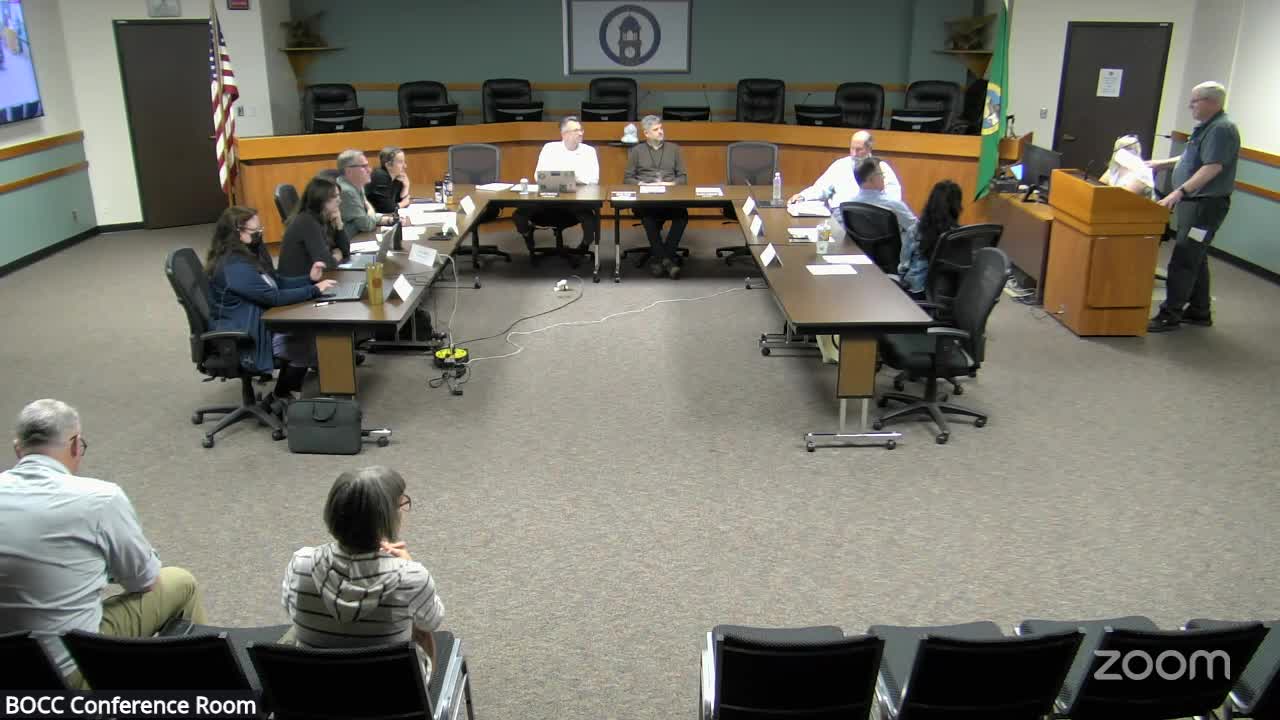
Summary
A public commenter and county health staff flagged nearby wildfires and local smoke-monitoring gaps; the board discussed PurpleAir sensors and possible presentations from regional air-quality agencies.
A public commenter and county public-health staff told the Comm County Board of Health on Sept. 16 that nearby wildfires and limited local monitoring make smoke exposure a continuing concern for the county.
Ed Bowen, a resident of Clallam Bay, told the board he was watching the Bear Gulch and Tunnel Creek fires to the north and urged the board to "keep an eye on this because this is gonna affect us up here" even if formal incident smoke reports are not available for remote fires.
Health Officer Austin Derry told the board the county is monitoring smoke and air quality and that local sampling sites are sparse: "We basically have Port Angeles and then we have Miele. And there's a lot of land between those places." He recommended expanding monitoring and noted the value of community-hosted PurpleAir sensors.
Derry said the county's regional partner, the Olympic Regional Clean Air Agency, could present to the board. He described recent efforts to maintain monitoring locations and said the county will continue to post updates via social media. "If we notice anything's coming, I'll send it over to Lisa for, posting on social media," Derry said.
Board member Tia (online representative) added that the tribe used foundation funding to deploy PurpleAir monitors. Staff said the county would consider outreach and possibly add more official sampling sites to better cover inland areas with different air patterns.
Ending: The board did not take formal action but agreed to continue monitoring wildfire smoke, consider partnering with the regional clean-air agency for a presentation, and promote publicly accessible sensors and forecasting tools to residents.