Seattle proposes co‑development ADU pilot to help homeowners add units without selling land
Summary
Seattle staff described a proposed pilot in which mission‑driven development partners would co‑develop accessory dwelling units (ADUs) on owner lots under 10‑year leases, share rental income during the lease, and enable homeowners to purchase out after the term to realize equity without selling land.
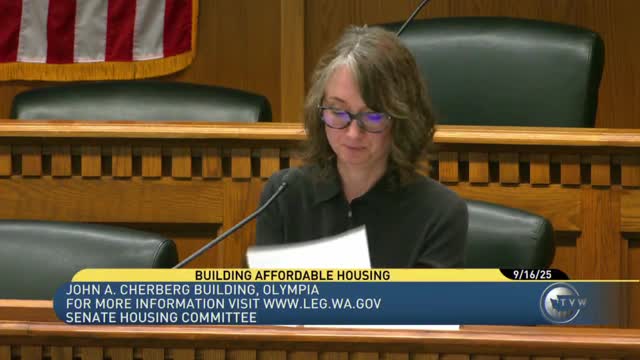
Rico Quirindongo and Nick Welsh presented on behalf of the City of Seattle a proposed ADU co‑development pilot that would partner homeowners with a mission‑driven developer to build detached accessory dwelling units in backyards while preserving the homeowner’s long‑term ownership of the lot.
Presenters described a co‑development model in which a development partner helps the homeowner with a lot split and then designs, finances, builds and operates two detached ADUs on the site under a 10‑year lease. Rental income would be split between the homeowner and the developer during the lease; the homeowner’s share would be placed into a savings account intended to accumulate so the homeowner could buy out the developer at the end of the lease and retain full ownership of all units.
Presenters gave a worked‑example scenario (illustrative only) in which two units could rent for roughly $2,200 each and the homeowner would receive half of the monthly income; they said the development partner would assume project risk and that contract terms would set rent assumptions, annual escalators and management fees. The presenters proposed an initial pilot of roughly 20 units with seed capital raised from public funds, investors and philanthropy and suggested a public development authority (PDA) or nonprofit development partner might operate the pilot. They said a longer‑term PDA could scale the model beyond the pilot.
Committee members asked about tenant screening and downside risk. Presenters said the development partner would manage tenant selection and operations during the lease and would absorb market risk; presenters acknowledged additional legal and financing details remain to be worked out and offered to follow up with written responses to committee questions.
Presenters emphasized that the model aims to help homeowners — including lower‑wealth and historically marginalized households — build generational wealth without having to sell land or assume construction financing themselves.