
VA officials describe clinical AI uses — from imaging to note-taking — and pilot tests for ambient dictation
Get AI-powered insights, summaries, and transcripts
Subscribe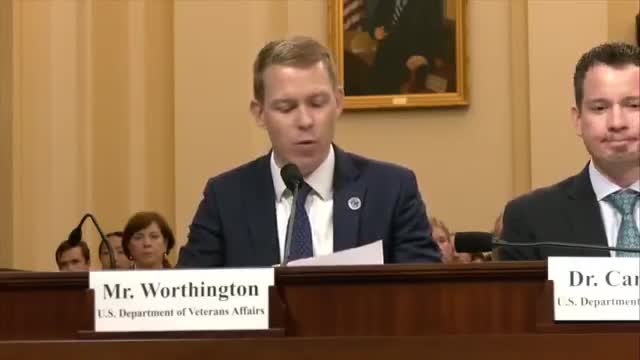
Summary
VA witnesses told a congressional subcommittee about AI deployments in imaging, colonoscopy and clinician support tools, and described an ambient dictation pilot being evaluated for user acceptance, clinician burden and veteran trust.
Department of Veterans Affairs witnesses described multiple clinical AI applications during a congressional subcommittee hearing and said the department is piloting an ambient dictation tool while measuring clinician and patient impacts. "AI is also revolutionizing clinical care," Charles Worthington said, citing examples: "AI assisted colonoscopy devices have increased adenoma detection rates by 21 percent," and VA researchers are investigating AI review of CT scans to detect cardiovascular risk. Worthington added that "all VA employees now have access to [a] secure generative AI tool to assist them with their work" and that in surveys users reported it saved more than two hours per week. Dr. Mohammad Ghassemie, an AI researcher at Michigan State University, summarized three roles for AI in health care — automation to reduce low-value work, augmentation to strengthen clinical decision-making, and insights to extract complex patterns from data — and said AI scribes can return time to clinicians. The department told lawmakers it is piloting an ambient listening/dictation program in clinical settings and will evaluate user acceptance, veterans' perceptions, clinician burden and tool performance. When asked whether recordings and transcriptions are retained or deleted after transcription, witnesses said procedures exist and that they would provide specifics for the record. Committee members pressed for specifics about clinician workload: VA officials said they are measuring clinician burden during the pilot and collecting both synchronous feedback and survey responses, and offered to provide targets and evaluation details for the record. Witnesses emphasized predeployment testing, continuous monitoring, and alignment with OMB requirements for high-impact systems. The hearing produced no policy change; it was an oversight session focused on pilot results, safety metrics and questions lawmakers said they expected the VA to answer in follow-up submissions.