
Council designates stop-sign camera sites; members debate locations and public-safety versus revenue goals
Get AI-powered insights, summaries, and transcripts
Subscribe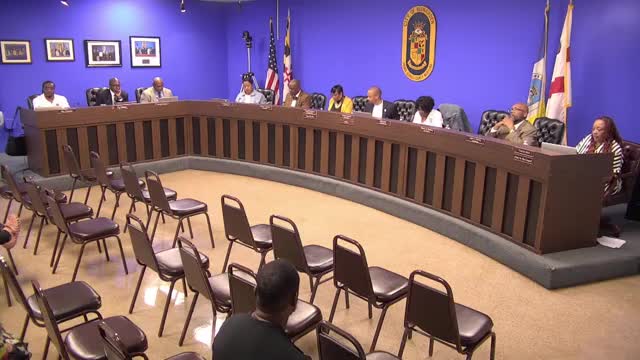
Summary
The council adopted a resolution naming six intersections for stop-sign monitoring systems and members continued a broader debate about camera placement, school-safety needs and how camera revenue is shared with the state.
The Glen Arden City Council adopted a resolution Sept. 15 designating six intersections for stop-sign monitoring systems as part of the city's broader automated enforcement program.
The resolution lists the intersections the city will use for stop-sign monitoring, including Smith View Place & Sir Michael Place; Geaton Park & Sir Michael Place; Glenarden Parkway & Echols Avenue (northbound); Glenarden Parkway & Johnson Avenue (northbound); Glenarden Parkway & Fifth (southbound); and Johnson Avenue & Glenarden Parkway (westbound). The resolution took effect immediately upon adoption.
Council debate focused on whether listed locations match community safety priorities. Councilman Herring said cameras should focus on northbound and southbound travel on Glenarden Parkway near a school and bus stops, where he described children crossing and pedestrian-safety risks. "That's where the need is mostly needed for them to stop," Herring said during discussion. Herring said he did not see a need for a camera at the Johnson-Glenarden westbound location and characterized that placement as unnecessary enforcement and a potential "money grab."
Councilwoman Cross recorded her vote in favor but noted Herring's concern; Herring formally abstained. The resolution passed with the majority of members voting yes.
Discussion at the meeting also connected stop-sign and automated enforcement issues to the city's broader use of license-plate readers and speed/red-light cameras. In the finance and public safety reports, staff said pilot enforcement revenue has begun to arrive; the treasurer said the city recorded roughly $121,000 in red/speed camera revenue for one early reporting period and $184,006.64 for August. City staff and several council members noted state rules limit the city's share of certain automated-enforcement proceeds. The treasurer said the municipality is generally eligible to retain up to 10% of city-budget-equivalent revenue from some programs; staff agreed to provide the council a written list of eligible uses under state statute.
Council members asked for follow-up on both safety data and the revenue rules. Some members emphasized safety and school-zone concerns as the primary criterion for camera siting; others raised concern about optics and fairness if cameras appear chosen primarily for revenue.
The council also adopted related administrative resolutions during the session to implement the broader monitoring program and to set a separate public process for hearings/advertising where required.