
Residents, community groups urge council to block luxury student housing in West Main and core neighborhoods
Get AI-powered insights, summaries, and transcripts
Subscribe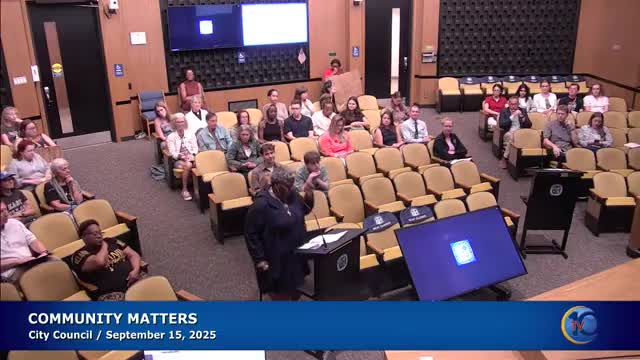
Summary
Dozens of Charlottesville residents, neighborhood groups and student organizers urged City Council on Sept. 15 to stop by‑right luxury student housing proposals on West Main Street and in Fifeville, and to amend the new zoning code so development does not displace long‑term Black and low‑income residents.
Dozens of residents and community groups told the Charlottesville City Council on Sept. 15, 2025, that by‑right luxury student housing proposed for West Main Street and sites in Fifeville and Tenth & Page will accelerate displacement of Black and low‑income households and must be blocked or narrowed by code changes.
Speakers said the city’s new “x” zoning districts allow tall, market‑rate and student housing by right and that the projects being proposed — including an 8–11‑story West Main proposal — will not deliver the deeply affordable units advocates say are needed. “Trickle‑down housing is a myth,” said Wendy Gayo, a community organizer with the Public Housing Association of Residents. “What we need is deeply affordable housing affordable to families at or below 30% area median income.”
Why it matters: Council’s new zoning code, which created the so‑called x districts, removed some discretionary review for large developments and includes formulas that reduce affordable‑housing obligations for student housing within a 0.5‑mile boundary of University of Virginia facilities. Residents said that rule, and the way the 0.5‑mile boundary was drawn using UVA hospital system buildings, makes core neighborhoods such as Fifeville and Tenth & Page especially vulnerable to tall student developments.
Speakers and neighborhood leaders pressed the council to amend the new zoning code to require early consultation with impacted neighbors and to tighten where 11‑story, by‑right development is allowed. Sarah Malpass, vice president of the Fifeville Neighborhood Association, urged an amendment “to require consultation with impacted neighbors whenever developments of a certain scale are proposed.” Frank Belcher, a Fifeville resident, and Laura Goldblatt, a former Redevelopment and Housing Authority commissioner, described the scale of proposed projects as out of keeping with adjacent historic neighborhoods.
Student groups and organizers also testified against student housing financed by the university and private developers. Abba Kodyaga and other members of Friends of FAR said students should oppose developments that displace long‑term Black residents. Several West Haven residents, including Angela Carr and Rosie Parker, described decades of disinvestment and said a luxury tower “hovering” over their neighborhood would worsen inequality.
Council members and staff discussed technical drivers for the proposals during the meeting. City staff explained that the inclusionary zoning formula gives student housing a lower affordable‑housing fee if a project lies within 0.5 miles of specified UVA properties; staff said the metric used UVA hospital system buildings rather than the Rotunda, which affects where the reduced fee applies. Mayor Juan Diego Wade and councilors said they will review the zoning impacts raised in public comment and explore whether code amendments or map changes are needed.
No formal vote on zoning changes occurred Sept. 15. Public comment on housing occupied multiple agenda slots and council members asked staff and legal counsel to report back with options for adjusting the code and for requiring earlier community consultation on large projects.
The council’s next scheduled review of legislative priorities is Oct. 6, when staff said they will bring refined proposals drawn from community and commission recommendations; any amendment to the zoning ordinance would require separate public hearings.
Ending: Residents said they will continue organizing and pressing council to prioritize housing that is affordable to extremely low income households and to prevent what they call continued gentrification of historically Black neighborhoods.