
Residents, community groups urge council to block luxury student housing around West Haven and Fifeville
Get AI-powered insights, summaries, and transcripts
Subscribe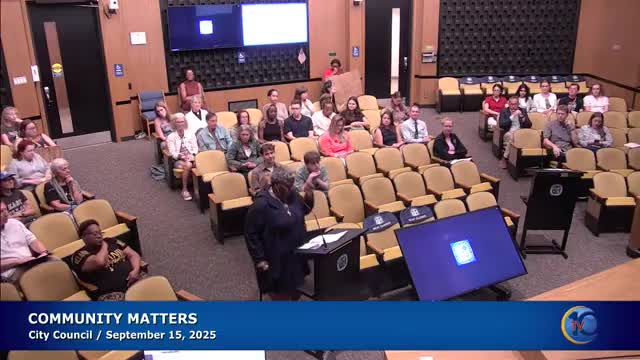
Summary
Dozens of residents and community organizers addressed Charlottesville City Council on Sept. 15, 2025, urging changes to zoning and opposing proposed luxury student housing on West Main Street, Seventh Street and other sites in West Haven, Tenth & Page and Fifeville neighborhoods.
Dozens of residents and local organizers told Charlottesville City Council on Sept. 15 that proposed luxury student housing along West Main Street and in nearby neighborhoods will accelerate displacement of long‑term Black and brown residents.
Those testifying — including neighborhood association leaders, community organizers and long‑time residents — said the recent zoning changes allow by‑right student housing projects that the neighborhood cannot meaningfully influence. Many called the “trickle‑down” housing argument misleading and said the city should prioritize deeply affordable housing (targeting households at or below 30% of area median income).
Why it matters: Speakers said the scale and height of proposed developments would change neighborhood character and raise rents and taxes on adjacent properties, increasing displacement pressure. Several speakers asked city council to amend zoning or require early and mandatory neighborhood consultation for large projects so residents can negotiate community benefits.
What was said and who spoke: Kate Lambert, CEO of Boys & Girls Clubs of Central Virginia, thanked the council for restored FY26 funding for the Cherry Avenue club and described the club’s summer and after‑school reach in the city. Community organizer Wendy Gayo of the Public Housing Association of Residents said, “It is gentrification,” and warned that past construction of luxury apartments in the city had not lowered rents. Sofia Marrero, community organizer at the Public Housing Association of Residents, said, “Trickle down housing is a myth,” and asked the city to prioritize housing affordable to families at or below 30% AMI. Multiple West Haven residents — including Angela Carr and Rosie Parker — described the projects as an imposed “luxury” that overlooks existing residents’ needs.
Neighborhood associations’ asks: Sarah Malpass, vice president of the Fifeville Neighborhood Association, said the current by‑right zoning for certain X districts permits buildings up to 11 stories in areas like Tenth & Page and Fifeville and that student housing economics make tall, high‑rent projects the most likely outcome. She asked council and Neighborhood Development Services (NDS) to work with neighborhoods to amend the code to require early and repeated consultation for developments above a certain scale.
Council response and process context: City staff and council members acknowledged the concern and outlined constraints in the existing code. Councilor and staff discussion referenced the new zoning code’s inclusionary provisions and a metric that reduces affordable‑housing fees for student housing within 0.5 miles of university property; staff noted the boundary was set using UVA hospital system buildings and urged the public to review how the 0.5‑mile boundary was drawn. Council members asked staff to return with prioritized legislative items and code corrections to address community concerns.
Next steps: Residents requested code amendments to restrict by‑right development scale in core neighborhoods and to require mandatory pre‑application community engagement for large projects. Council members asked staff to work with the Planning Commission and neighborhood groups to identify specific, prioritized changes to present to the council and the city’s legislative partners.
Ending: Multiple speakers committed to continued organizing and to attending upcoming BAR and Planning Commission hearings. The council did not take an immediate policy vote on the specific projects during the Sept. 15 meeting.