Get AI Briefings, Transcripts & Alerts on Local & National Government Meetings — Forever.
Council votes to terminate Turkey Peak financing agreements, seeks one-year extension
Loading...
Summary
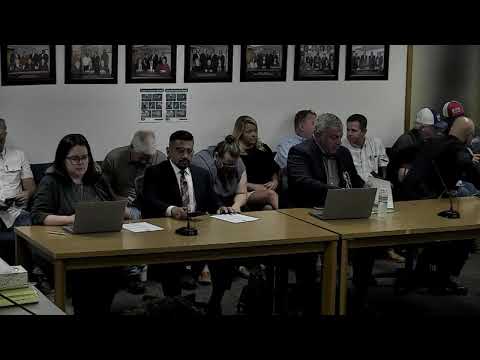
At a Mineral Wells City Council meeting, members voted 7-0 to terminate two financing agreements and ask the Palo Pinto County Municipal Water District No. 1 to request a one-year extension from the Texas Water Development Board for financing tied to the Turkey Peak reservoir project.
At a Mineral Wells City Council meeting, members voted 7-0 to terminate two financing agreements and ask the Palo Pinto County Municipal Water District No. 1 to request a one-year extension from the Texas Water Development Board for financing tied to the Turkey Peak reservoir project. The action followed presentation of construction bids that came in far above the district's earlier estimate and extensive council questioning about costs, timing and rate impacts.
The decision matters because the lowest construction bids received by the district’s engineer, HDR, ranged from roughly $350 million to more than $450 million, with three bids clustered near $390 million–$400 million — well above an earlier planning estimate of about $200 million. Council members and the district said those higher numbers could quickly translate to much larger utility bills for city ratepayers unless outside funding or different contracting methods lower costs.
City and district officials described the current point as a pause for further analysis rather than a cancellation. Howard Huffman, general manager of Palo Pinto County Municipal Water District No. 1, told the council, “where we are today is is a decision making point. Do we continue moving forward with financing, or do we halt the financing project and put Turkey Peak on hold for a year, giving staff and and the professionals time to to dig back into this project.” District officials said they will investigate alternate bidding approaches, including a construction-manager-at-risk (CMAR) method that can solicit and obligate lower line-item bids from multiple contractors, and will continue discussions with the Texas Water Development Board (TWDB) about other partnerships or state funding programs.
Officials summarized the bids and financing steps presented to the council. HDR opened five construction bids; per the district, the five included line-item submissions that, if the lowest bid for each individual line item were aggregated, would sum to about $230 million. The district said that aggregation does not reflect how the project was bid originally but suggested the figure indicates potential savings if an alternate contracting method is used. The district also reported that it had approved two financing agreements committing the district to issue $100 million in revenue bonds (noted in the council packet as a $58 million series 2025A and a $42 million taxable series 2025B) tied to the project and that the district is able to request a one-year extension from the TWDB instead of moving forward immediately.
Bond counsel Rudy Segura of McCall, Parkhurst & Horton told the council that reservoir projects can span decades and recounted prior planning and bond issues for Turkey Peak stretching back to 2009. Segura said the project had planning bonds in 2009 and 2015 and additional planning financing in 2023. He warned that federal and state permitting and project planning can take many years and that costs have risen steeply for similar projects statewide.
Council members pressed for specifics on how likely it is that alternative bidding or state funding would lower the cost. Huffman and Segura said they believe certain alternate contracting methods are designed to capture lower line-item prices and that a new state funding program approved by voters could be a source of support; however, TWDB rules and the program’s application schedule mean significant state dollars are not immediately available. Segura estimated the earliest the district could realistically expect to apply for the voter-approved state program would be late 2026, with awards possibly rolling out in 2027 as TWDB finalizes rules.
Council members and speakers from the public stressed the potential effect on residents if the project proceeds at current cost levels. One council member said that if the city moved forward now, starting in November 2027 a typical Mineral Wells utility bill (water, sewer, trash, drainage and tax) could be about $400, based on the district's scenario; officials said that figure was an estimate tied to the additional debt the bonds would carry. City staff said that, under the option the council adopted, there would be no planned water-rate increase for the next fiscal year but that some sewer-related increase could appear. City staff also said current city budgeted transfers to the district would fall from about $14 million to about $8 million under the delay.
Council members and members of the public voiced competing priorities: multiple speakers urged preserving momentum on securing new water supplies for long-term growth and wholesale customers, while others said the bids’ size would place an unacceptable burden on current residents, particularly seniors and low-income renters. Red Thomas, a resident and business owner, urged the council to seek a detailed revenue analysis of future city revenues and consult local business leaders. Leah Burns, who addressed the council during public comment, expressed anger at officials’ handling of the bonds.
On process and permits, district staff said the project’s U.S. Army Corps of Engineers Section 404 permit currently has about four years remaining before the next renewal would be needed; the district has submitted a biannual renewal packet to the Texas Commission on Environmental Quality (TCEQ). Officials told council members a one-year delay would not, at present, jeopardize the federal or state permits. Staff also cautioned that the SWIFT (State Water Implementation Fund for Texas) financing program’s timetable is strict: borrowers typically must close bonds within 60 days after TWDB closes its bond sale each year, and the SWIFT pool is allocated once per year. District counsel told the council that withdrawing from the scheduled TWDB funding for this year could carry a financial penalty; officials cited an approximate penalty figure of $8,485,000 that would apply if the district withdrew late from the posted offering.
After discussion, an unnamed council member moved to terminate the financing agreements and request that the district seek a one-year extension from the TWDB; another council member seconded the motion. The council voted 7-0 to approve the motion. Council and district officials said they will use the extension year to pursue alternative contracting methods, continue interviews with contractors, engage TWDB on funding options, and return to the council with updated cost analyses and bidding recommendations. The council’s decision also removed items tied to the financing from immediate consideration on subsequent agenda items, city staff said.
Next steps the council noted include additional district interviews with contractors through October, further analysis of CMAR and other procurement methods, continued outreach to TWDB and state representatives to prepare for the voter-approved state funding program, and a public hearing on the city budget scheduled the next day. District and city staff said they will provide updated rate analyses and documentation to TWDB and to the council as work proceeds.