Firms tell CalPERS they will use risk‑based, employer‑level sampling and analytics to test member census data
Summary
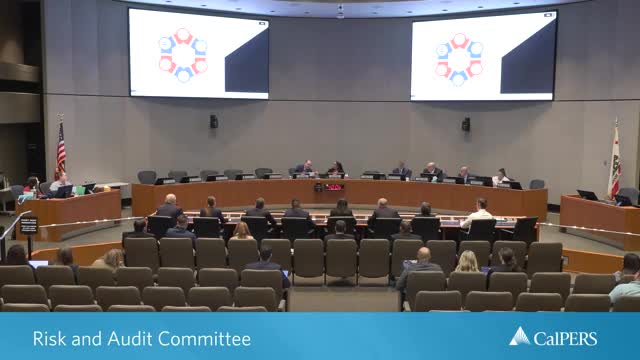
During interviews, BDO, Crowe, KPMG and Plante Moran described risk‑based approaches for testing active member census for PERF B and C plans: rotating employer samples, full‑population comparisons via matching engines, and use of secure portals for employer submissions.
Members of the committee asked each firm to explain how it would select samples and test active member census data for the cost‑sharing plans (PERF B and C). Firms consistently described a risk‑based approach rather than a simple random sample of members.
Crowe and KPMG described using population‑level comparison tools that ingest current‑year and prior‑year employer files and highlight additions, removals and changed data elements (birth date, Social Security number, employer assignment). Crowe said it has participated in developing AICPA guidance and uses rotating employer sampling for cost‑sharing plans; KPMG said it runs matching engines and assigns risk scores to transactions to bucket them into low/medium/high‑risk groups for targeted testing. BDO described walk‑throughs of employer controls, development of targeted procedures for existence, accuracy and completeness assertions, and the use of proprietary analytics for anomaly detection. Plante Moran emphasized following the AICPA guidance and sampling rotating employer populations, then testing member demographics and payroll that drive actuarial measures.
All firms told the committee they would secure census submissions through a portal or subsite model that allows each employer to upload data and preserves prior‑year documents to reduce rework. Several firms noted they would tailor sample sizing based on the assessed control environment and the number of contributing entities; none proposed a one‑size‑fits‑all sample. Committee members pressed on completeness and on how auditors would treat data exceptions discovered in employer submissions; firms replied that exceptions would be escalated and, if systemic, could affect the extent of substantive testing.
There were no decisions recorded; the firms’ descriptions will be used by committee staff in scoring proposals.