
Leon Valley council adopts budget with tax increase to add firefighters; 4–1 votes follow public debate
Get AI-powered insights, summaries, and transcripts
Subscribe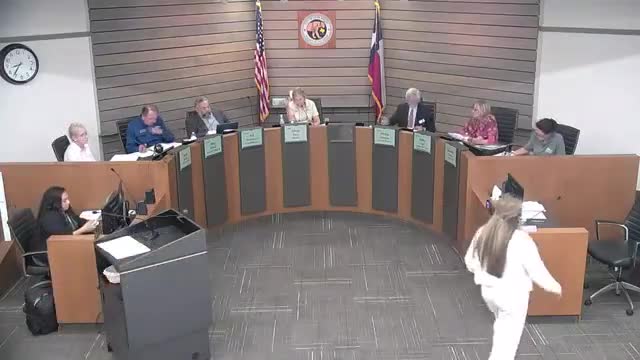
Summary
After public hearings and debate about impacts on older residents and families, the council adopted the FY2025–26 budget and ratified a proposed tax rate that funds three additional firefighters. The adoption followed extensive discussion about a proposed state limit on future rate increases that ultimately did not pass.
The Leon Valley City Council adopted the fiscal year 2025–26 budget Sept. 16 and ratified a tax rate that increases property taxes to support public‑safety hiring after extended public comment and a contentious council debate. The council approved the budget and associated capital plan after a recorded vote that passed 4–1. Key votes and rates: council adopted the FY2025–26 budget and an associated tax structure discussed as a maintenance and operation rate and an interest and sinking component; the package debated on Sept. 16 equated to a total proposed tax rate of approximately 0.54504 per $100 of assessed value as presented for council consideration. The council then ratified the budget and related tax resolution in recorded votes; the motion to adopt the budget passed with four yes votes and one no. Why the increase: council members said the increase was necessary to fund three additional firefighter positions, equipment and training (bunker gear, uniforms and boots), and to address chronic staffing shortfalls in the fire department. Staff and multiple council members cited prior analyses and recent operational strain as reasons to add personnel now rather than later. Public comment and council reaction: dozens of residents spoke during the public hearing, with some urging fiscal restraint because older homeowners and families on fixed incomes would bear more of the cost, and others urging investment in public safety. Several council members said they preferred to add personnel now; other members objected to the size of the tax increase and expressed concern about the economic burden on seniors and working families. Procedural notes: councilors discussed earlier budget steps — the “no‑new‑revenue” rate, a later one‑cent upward adjustment and the effects of a then‑pending state bill (commonly discussed as SB 10) that, if enacted, would have limited future local rate increases without voter approval. City staff reported the special session measure did not pass; council nonetheless acted in light of the earlier uncertainty. The city manager presented two budget scenarios to reflect the difference in rates and the personnel additions. Next steps: by charter and state law the council must hold a separate, second reading and formally adopt the final tax rate (the city scheduled a follow‑up meeting for Sept. 20 for second reading as required). Staff will prepare necessary budget and tax documentation for the public record and for the required follow‑up vote.