
Leon Valley approves 160-foot cell monopole with aesthetic conditions over resident objections
Get AI-powered insights, summaries, and transcripts
Subscribe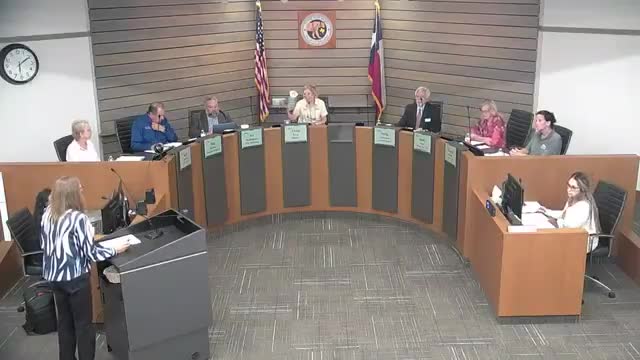
Summary
The Leon Valley City Council on Sept. 16 approved a specific-use permit for a monopole telecommunications tower at 6004 Grissom Road, authorizing construction of a roughly 160-foot pole and ancillary equipment after a 4–1 vote.
The Leon Valley City Council on Sept. 16 approved a specific-use permit for a monopole telecommunications tower at 6004 Grissom Road, authorizing construction of a roughly 160-foot pole and ancillary equipment after a 4–1 vote. Councilor Julie Mersch moved approval with the condition that the applicant install camouflage or “stealth” panels around the antenna portion; Councilor Orozco seconded the motion. The council’s action follows a months‑long review, a Planning and Zoning recommendation to approve and a period of extended neighborhood notification. The applicant, Andy Rotenstreich of APC Towers representing Verizon Wireless, told the council the site fills a significant Verizon coverage gap and that the proposed pole is a single‑pole design that will not require FAA lighting because it falls below the FAA’s 164‑foot threshold included in the applicant’s paperwork. Rotenstreich also said the pole is designed to accommodate future co‑location by other carriers. Why it matters: the decision allows new wireless infrastructure near single‑family homes and apartments while attempting to reduce visual impacts through forced screening. Opponents said the tower would be too close to residences and raised concerns about interference and health effects; proponents and the applicant said federal law limits local authority to regulate health concerns and pointed to industry and international health agency findings. Council and staff said the SUP includes standard conditions (setbacks, fencing, signage, building permits) and the newly stipulated stealth panels. City Attorney [City Attorney] advised council in executive session that the Telecommunications Act and federal regulations constrain local review to certain zoning and technical criteria, and that the city must make findings that the permit would not “adversely affect the character and appropriate use of the area,” among other ordinance standards. Resident concerns aired in public comment included perceived risks to health, the possibility of radio interference with personal electronics and TVs, and potential effects on property values. Applicant documents provided to the city included an FAA determination for structures under 164 feet, coverage maps showing existing tower locations and gaps, and an MAI appraiser summary arguing no measurable property‑value loss in comparable sites. The council vote: the motion to approve the SUP with the stealth‑panel stipulation passed 4 ayes, 1 nay. The applicant confirmed agreement with the aesthetic condition during the hearing. The ordinance and staff file will record the SUP conditions and the FAA documentation will be retained in the project record. If the applicant later seeks to raise the tower above the FAA clearance already approved, additional federal review and likely additional city review would be required.