
Patrol says headlight "candela" limits exist but practical enforcement is limited without standardized measurement tools
Get AI-powered insights, summaries, and transcripts
Subscribe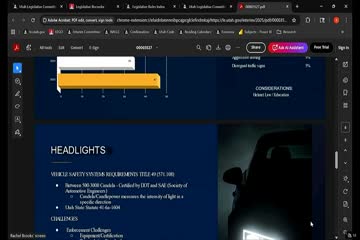
Summary
State code limits headlight intensity (candela) but Highway Patrol officials told the committee that enforcement is impractical without certified measurement equipment and clear processes.
Major Jeff Nyberg and Colonel Mike Rapich told the committee that federal vehicle-safety regulations set standards for headlamp intensity and that Utah statute caps certain headlight outputs (the Tax Commission presenter had earlier referenced light rules), but local enforcement faces practical obstacles. Why it matters: drivers report being blinded by aftermarket or retrofitted lights; consensus exists that uncontrolled high‑intensity lights are a safety issue, but agencies lack reliable on‑scene measurement equipment and standardized procedures. Technical limits and challenges: federal standards (title 49) specify manufacture standards (DOT/SAE certification) and measurement methods (triangulation measurement 63 feet from vehicle and multiple sampling points). Utah statute sets a numerical maximum (cited in the briefing as 300 candela), but the Highway Patrol told the committee they do not have certified field instruments or a calibrated enforcement protocol. Several other western states have similar statutes but do not actively enforce candela limits because of the same practical obstacles. Recommendations: the Patrol suggested a working group with sheriff and chiefs associations, UDOT and state technical experts to examine equipment standards, calibration and enforceability before proposing changes to statute or enforcement practice. Ending: Committee members suggested convening a stakeholder work group to identify measurement tools, certification procedures and potential statutory clarifications.