
State records sharp uptick in motorcycle fatalities; officials point to speed and low helmet use
Get AI-powered insights, summaries, and transcripts
Subscribe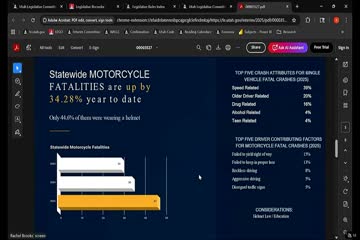
Summary
Highway Patrol reported a 30% increase in motorcycle fatalities in 2025 compared with the prior-year baseline and urged steps around training, licensing endorsements and helmet use.
Major Jeff Nyberg of the Utah Highway Patrol told the committee that motorcycle fatalities have risen sharply in 2025, even as overall statewide highway fatalities declined slightly. Nyberg said motorcycle fatalities were up roughly 30 percent in 2025 and that only about 44 percent of fatally injured riders were recorded as wearing helmets. Why it matters: motorcycle fatality increases represent a concentrated public‑safety problem with identifiable countermeasures (helmet use, licensing endorsement rates, safety courses and targeted education). Data and causes: Nyberg said 2025 saw a surge in motorcycle deaths and that July 2025 was the highest month on record for motorcycle fatalities in their dataset. He identified speed-related crashes, single-vehicle run-off incidents, and failures to keep in lane as leading contributing factors. The Patrol reported that only about 36.6 percent of riders involved in fatal crashes had a motorcycle license endorsement and that roughly 9.8 percent had completed a motorcycle safety course. Policy levers: Nyberg flagged three near-term responses: increasing helmet use through education or law changes (noting no guarantee of survival but a better chance when helmets are worn), encouraging endorsement acquisition and safety-course completion, and targeted outreach to riders of particular motorcycle types (he noted cruiser and sport bikes were prominent in fatality counts). Ending: The Patrol offered to coordinate further education and data analysis about rider licensing and training rates to support targeted prevention measures.