Get Full Government Meeting Transcripts, Videos, & Alerts Forever!
Get email alerts on the Election Judge Compensation topic
No spam. Unsubscribe anytime.
Committee debates whether to enshrine $300 election-judge base pay and training fees in ordinance
Summary
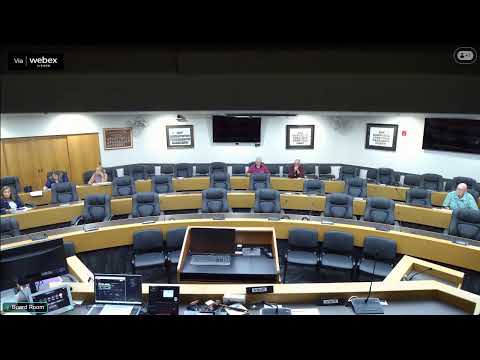
Committee members on Sept. 16 debated whether to put election-judge compensation details — including training and pickup/drop-off payments — into a single ordinance after County Clerk Jennifer presented a historical review and a draft ordinance that sets base pay at $300 and spells out additional training and related fees.
Committee members on Sept. 16 debated whether to put election-judge compensation details — including training and pickup/drop-off payments — into a single ordinance after County Clerk Jennifer presented a historical review and a draft ordinance that sets base pay at $300 and spells out additional training and related fees.
The proposal matters because the state provides per-judge reimbursement and because union-contract language, past resolutions and inconsistent historical practice could create duplicated or unintended payments, committee members said.
County Clerk Jennifer told the committee she researched committee minutes, resolutions and ordinances dating back to 1988 and said the intent of her draft was to “clean this all up from now and going forward.” She told members, “It's supposed to be 300 base pay.” The clerk also said the state is “currently set to reimburse $65 per election judge that works on Election Day.”
In her presentation the clerk traced a patchwork history: earlier county resolutions and ordinances changed judge pay multiple times (1988, 1992, 2006, 2007–2008, 2022, 2023 and March 2025 were cited in her review) and some increases appeared to have been recorded only in committee minutes rather than by a matching ordinance or resolution, which she said has created confusion about whether office employees received the same pay as judges in all years.
Committee members focused much of the discussion on whether non-base items — training-class payments, testing pay, supply-judge pay and mileage language — should be fixed in an ordinance (requiring formal amendment for future changes) or handled instead through a more flexible committee resolution or administrative practice. Mr. Compton said fixing small supplemental fees in an ordinance would make future adjustments cumbersome; another member suggested a shorter ordinance that sets base pay while leaving ancillary fees to committee resolutions.
Several members raised potential interactions with the union contract and the risk that placing the supplemental language in an ordinance could create duplication. Committee members noted that some clerk’s-office employees currently receive $100 per election under the existing union contract and that including language in an ordinance that applies the base pay to clerk employees could, without careful coordination, lead to overlapping payments. Member Veil said the issue is one of transparency and implementation.
A motion to table the draft ordinance was made during the discussion. The committee did not adopt the new draft at this meeting; instead, members agreed that if no further action is taken on the draft the earlier resolution passed out of committee in August (which sets $300 as the election-judge base pay) will go forward to the full board for consideration. Committee Chair Doug Traeger told members, “The original resolution we passed last month will go to the board in October.”
Discussion only: members asked the clerk to consider removing the detailed training and supplemental-fee paragraph so the ordinance would be narrowly focused on base pay, and they recommended consulting legal counsel and accounting for the union contract before locking supplemental items into an ordinance. County legal counsel Pat Adams had reviewed previous drafts, the clerk said.
Next steps: the clerk will provide a clean version for the full board agenda and update statutory citations. The committee left open the option of returning with a revised draft or letting the August resolution proceed to the board in October; no formal ordinance amendment was adopted at the Sept. 16 meeting.