Get Full Government Meeting Transcripts, Videos, & Alerts Forever!
Get email alerts on the County Government Employment Status topic
No spam. Unsubscribe anytime.
Committee endorses draft to let counties choose full-time or part-time officials
Summary
The interim committee recommended favorably a draft bill that would allow counties to opt for full-time or part-time status for legislative and executive members by striking statutory lines that now restrict that choice; supporters said local budgets or staff capacity would determine the option.
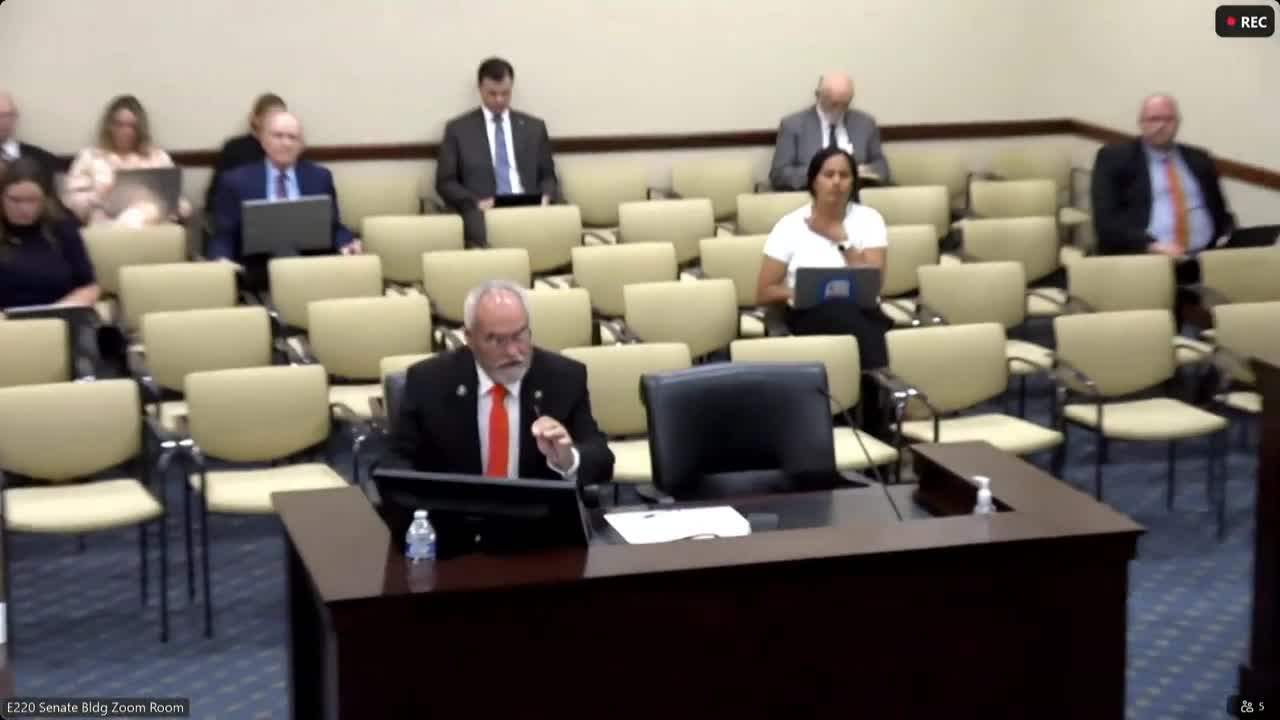
The Political Subdivisions Interim Committee on Aug. 20 recommended favorably draft legislation that would allow counties to choose whether their legislative and executive officers serve on a part-time or full-time basis. Senator Winterton, sponsor of the draft, said the change simply "opens it up so that ... they do have an option to be full time or part time, and with pay." He said the draft removes statutory language that currently prevents some counties from designating officials as full time. Winterton described Salt Lake County as an example: "They're part time, but they have a staff of between 30 and 35 people to do all of the work that we elect officials to do," he said, noting that counties now either hire staff or must meet population thresholds that determine part-time status. The draft would strike specified lines of the existing county code (identified in the draft as lines 46'47 and 64'65) to give counties the option to set employment status and pay through local budget decisions. Committee discussion noted the choice ultimately comes down to county budgets and voter preferences. A motion to approve the draft legislation carried unanimously; the committee recorded no roll-call vote during the meeting. The committee did not enact the language into law at the meeting; the action was a recommendation to open or advance the draft for legislative consideration. Representative Bennion and other members asked for examples and clarification about governance implications; Winterton said questions about forms of county government and council composition would be addressed in separate legislation. No statutory citation was changed at the meeting; the committee's action was to recommend the draft for further consideration.