Get Full Government Meeting Transcripts, Videos, & Alerts Forever!
Get email alerts on the Vaping Tax topic
No spam. Unsubscribe anytime.
Decatur council adopts local vapor-product tax, agrees to set implementation date later
Summary
The Decatur City Council approved an ordinance authorizing licensing and a 10¢-per-milliliter tax on consumable vapor products, and directed staff to return with a resolution specifying when the city will begin collecting the tax.
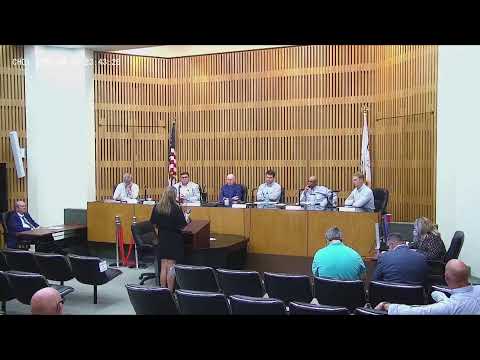
The Decatur City Council voted to adopt Ordinance 25-4-613 authorizing licensing and taxation of consumable vapor products and declaring that the city — not the state — will collect the local portion of the new levy. The ordinance was approved on a council vote after public comment from retailers and distributors who warned of economic harm to local shops if the city begins collecting earlier than the state. The measure obliges the city to decide whether it will collect the tax locally before the state’s October 1 deadline. Council members said the ordinance must be adopted before that date even if the council later delays actual collection. Council staff said they will prepare a follow-up resolution that would spell out the council’s chosen implementation date. Retail worker Margaret Carroll, identified herself as an employee at a local vapor product store, told the council the proposed 10¢-per-milliliter tax could add as much as $12 to some products and “that's an additional cost of up to 70% in the retail price.” Garrett Salser, general counsel and director of governmental affairs for W. L. Petrie, a wholesale distributor, told the council the new state statute (Act 2025-377, subsection 3(b), as cited in public comment) creates a 10¢ per milliliter tax and includes a 25% revenue-sharing provision for local jurisdictions distributed by population. Salser warned that subsection 3(b) also conditions revenue sharing and may prohibit distribution to jurisdictions that levy a local tax on vapor products. Council members asked city staff and the city attorney to confirm whether adopting the local collection option would forfeit any state revenue-sharing that might otherwise be distributed. City staff and council discussion clarified the legal point that adopting the ordinance is required before October 1 if the city wants to opt to collect locally, but the council may set a later implementation date; staff said they will prepare a resolution to set the implementation date for the council’s next meeting. The ordinance was introduced and approved by roll call, with Council Member Pepper moving and Council Member Pike seconding the motion. Council members expressed differing views on timing and administrative burden; one member said he lacked enough information to vote, but the ordinance passed in the recorded vote. Council discussion and public comments focused on timing, administrative burden for small retailers, potential loss of customers to neighboring cities, and the state law’s revenue-sharing structure. The council directed staff to draft a resolution that will specify when the city will begin collecting the local tax and to provide additional legal and fiscal analysis on whether local collection would affect state revenue-sharing to Decatur.