Get Full Government Meeting Transcripts, Videos, & Alerts Forever!
Get email alerts on the Municipal Budget topic
No spam. Unsubscribe anytime.
Delray Beach workshop narrows proposed FY25-26 cuts; staff to present revised budget at regular meeting
Summary
City staff identified $507,000 in possible efficiencies, including cuts to downtown pressure‑washing and training line items. After debate, commissioners asked staff to present a revised package of about $425,000 in efficiencies that would raise the city's fund balance ratio modestly before final adoption at a later public meeting.
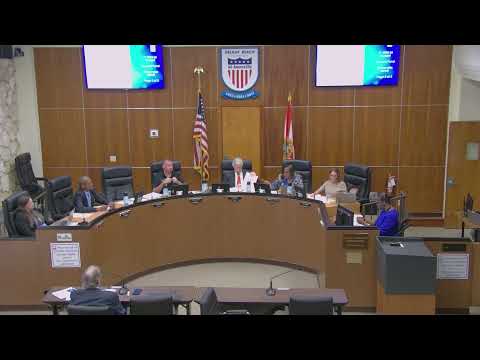
Delray Beach city officials on Monday debated final adjustments to the proposed fiscal year 2025-26 operating budget and asked staff to present a reduced list of efficiencies at the upcoming regular meeting. City staff had identified roughly $507,000 in additional savings but, after commissioner feedback, agreed to carry a $425,000 efficiencies package forward for formal adoption consideration.
The discussion matters because the commission is setting a millage rate and other budget choices that affect residents' tax bills. Resident Mark Ronald told the commission during public comment that "the average tax bill is going up $320," and urged officials to limit increases.
City Manager Moore opened the workshop by saying staff returned with a final attempt to identify efficiencies and operations for the commission to consider before the final adoption vote. "We are pleased to share that we've come up with about $507,000 or a little over half million dollars in additional efficiencies," he said, summarizing work staff completed with department heads.
Chief Financial Officer Henry Dakowitz (presentation slides) told commissioners the gross amount of identified adjustments was roughly $586,000 but that line items such as a $55,000 library request and other adjustments reduced the net to about $507,000. The draft list showed the largest single reductions in the departments with the largest budgets: $100,000 in police, $79,000 in fire, and smaller reductions in public works and parks.
Commissioners and staff spent the bulk of the workshop debating which line items to hold and which to trim. Several commissioners raised concerns about removing funding for training, particularly for code enforcement staff. Jerry Pryor, Director of Neighborhood and Community Services, explained the trade-offs: "Currently... it's about $800 to send a person, a code officer, to class to get certified," and said the department has prioritized who receives training because the available training budget is tight.
Staff and commissioners also discussed a proposed $75,000 reduction for downtown pressure washing. Pryor said the cut would mean a modest reduction in service frequency in the Community Redevelopment Area — for example, moving from two cleanings per month to roughly 1.5 — and noted the Downtown Development Authority had expressed interest in helping offset that work.
Some commissioners pushed back on the scale and character of the cuts. One commissioner summarized the underlying fiscal constraint: "We have commitments that are not flexible in the city. Contractual commitments. 90% of our allocated expenses are locked in by commitment," and cited recent increases in police and fire costs. Commissioners also debated how much of the overall tax increase residents would feel: staff explained that the city-controlled millage rate change would be a smaller share of total tax-bill growth driven by higher property assessments.
After discussion, staff said they would reduce the efficiency package presented to the commission from about $507,000 to approximately $425,000 and carry that adjusted package and related fund-balance calculation forward to the regular meeting for final action. Staff described the mechanical effect of the adjustments as moving the city's fund-balance ratio from roughly 21.1% to about 21.3% (staff will finalize exact decimals in the published budget documents).
No formal vote was taken during the workshop. City staff will advertise and present the revised proposed budget at the scheduled public hearing and regular meeting, where commissioners may adopt the millage rate and make final budget decisions.
Ending: The commission scheduled the item for the regular meeting public hearing later the same evening; staff said the presentation materials will be updated to reflect the smaller efficiencies package and the adjusted fund-balance percentage before that hearing.