Get Full Government Meeting Transcripts, Videos, & Alerts Forever!
Get email alerts on the Transportation Safety topic
No spam. Unsubscribe anytime.
Rangeley board asks DOT for concepts after residents seek Route 4 speed and sight‑line fixes
Summary
Following resident concerns about sight lines and high speeds on Route 4, the board voted to ask the Maine DOT planner for conceptual plans and cost guidance for traffic calming, sidewalk and gateway options; DOT earlier declined to lower posted speeds but offered partnership for localized changes.
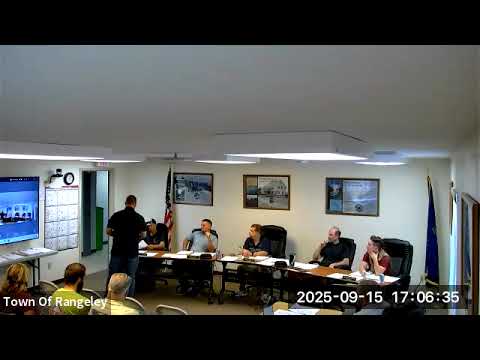
Rangeley Select Board members voted to ask the Maine Department of Transportation (DOT) planner for conceptual drawings and cost guidance after residents and the Highland Overlook Association raised safety concerns about Route 4 approach and passing zones.
Joe, a town staff member, summarized DOT’s written response: DOT “did not make any changes to speed limit” but will work with the town on traffic‑calming measures such as signs, sidewalk extensions and landscape or gateway treatments. Board members discussed whether to request removal of a short passing zone closest to town; DOT’s letter indicated the agency would consider removing a roughly 500‑foot passing zone as a localized change.
Several speakers described the hazard they say drivers face pulling out from private drives or association roads onto Route 4 where a passing zone transitions to a lower posted speed. Mark, a resident and association representative, and other residents urged the board to pursue options that would reduce driver speed or improve sight lines. Board member Keith suggested prioritizing improvements to approaches from those private roads and asked residents or associations to consider cutting back vegetation or improving their road mouths before changing posted speeds.
Jim, a Select Board member, moved and Keith seconded a motion for town staff to contact the DOT planner for conceptual designs; the motion passed. Joe told the board that concept studies can have a significant cost — he recalled a recent study near Rangeley that cost roughly $100,000 for the study portion and noted construction would be additional — but DOT partnership programs can offer cost sharing and technical help. A DOT partnership could include a roughly 50% match depending on program specifics.
The board asked staff to request basic conceptual renderings of entry treatments (lighting, sidewalks, gateway treatments) and ballpark cost estimates before deciding whether to pursue a formal study or construction. No change to posted speeds was ordered at the meeting.
The board approved the outreach motion by voice vote; members did not record roll‑call tallies in the minutes.