Get Full Government Meeting Transcripts, Videos, & Alerts Forever!
Get email alerts on the Long Term Care Reform topic
No spam. Unsubscribe anytime.
Advocates urge Legislature to build on Chapter 197 reforms for long‑term care
Summary
Dignity Alliance and other advocates told the Committee on Aging and Independence the state should move from implementing Chapter 197 to a broader set of reforms to strengthen workforce, resident protections and clinical quality across nursing homes and long‑term care settings.
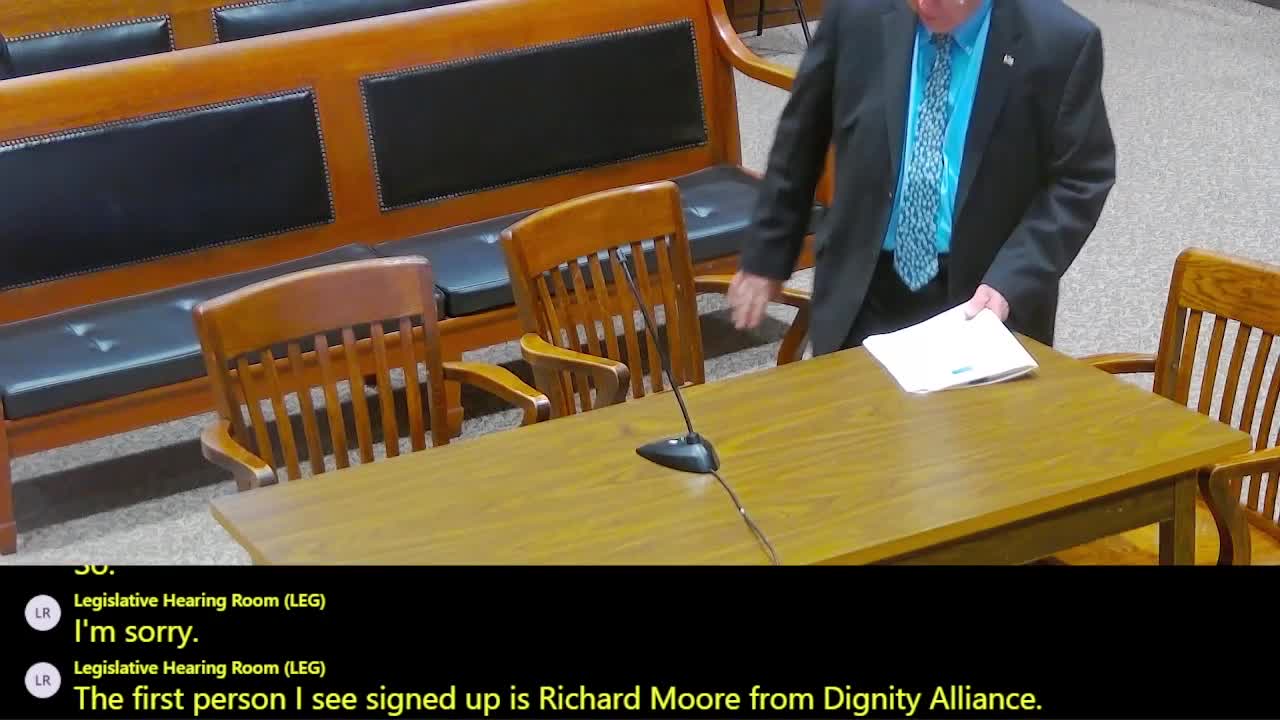
Richard Moore of Dignity Alliance told the Committee on Aging and Independence on Oct. 5 that the group supports a package of bills intended to expand the long‑term care reforms enacted in Chapter 197 (Acts of 2024). “The true measure of our commonwealth is how we care for those who once cared for us,” Moore said, urging the committee to take “favorable action” on the bills Dignity Alliance supports. He said the coalition has six sponsored bills on the list and “at least three others” they favor.
Moore said the bills together would strengthen the workforce, protect residents’ rights and “ensure clinical excellence in our facilities,” and that the state should not “sit back and admire our work” but instead implement and build on Chapter 197. He warned that federal policy shifts could “threaten to erode our progress,” and invoked the COVID‑19 pandemic as a reason to accelerate reforms: “Fueled by the memory of those we failed to protect during COVID, we need to rise to this challenge and forge a system of long term care that serves as a beacon of dignity and as a model for the nation.”
Moore criticized some industry arguments that reforms would be too costly, noting that “the industry is two thirds are for profit” and citing a national study his testimony referenced that suggested an average profit margin near 9 percent. He suggested the committee consider an audit to verify that legislative appropriations intended for staffing actually reach frontline caregivers: the committee should ask “for somebody to do, maybe the auditor…to have her look at whether the money that the legislature appropriates is actually going to the staffing that you intended it to go to.”
Committee members asked questions and expressed appreciation for the coalition’s statewide reach; the committee record shows written testimony was provided for the bills named in Dignity Alliance’s materials. No formal committee vote on any bill occurred during the hearing; witnesses asked for favorable reports on the measures so the committee can continue legislative work on implementation and oversight.
Dignity Alliance representatives and other speakers indicated willingness to work with committee staff to “fine tune, if need be, any of these measures” and to move provisions toward passage.
Less critical details: testifiers noted the coalition’s virtual organization allowed participation from across the Commonwealth, from the Berkshires to Martha’s Vineyard. The Dignity Alliance testimony did not identify precise implementation timelines or cost estimates for the package; written testimony supplied to the committee contains bill‑by‑bill details referenced by Moore.