Get Full Government Meeting Transcripts, Videos, & Alerts Forever!
Get email alerts on the Family Caregivers topic
No spam. Unsubscribe anytime.
Panel hears personal accounts as lawmakers weigh tax credit, paid-spouse caregiving and workplace protections for family caregivers
Summary
Legislation (S.1938 / H.3159) to support unpaid family caregivers through a refundable tax credit, respite vouchers, workplace protections and permitting spouses to be paid caregivers under MassHealth drew emotional testimony from caregivers, providers and legislators about financial strain and caregiver fatigue.
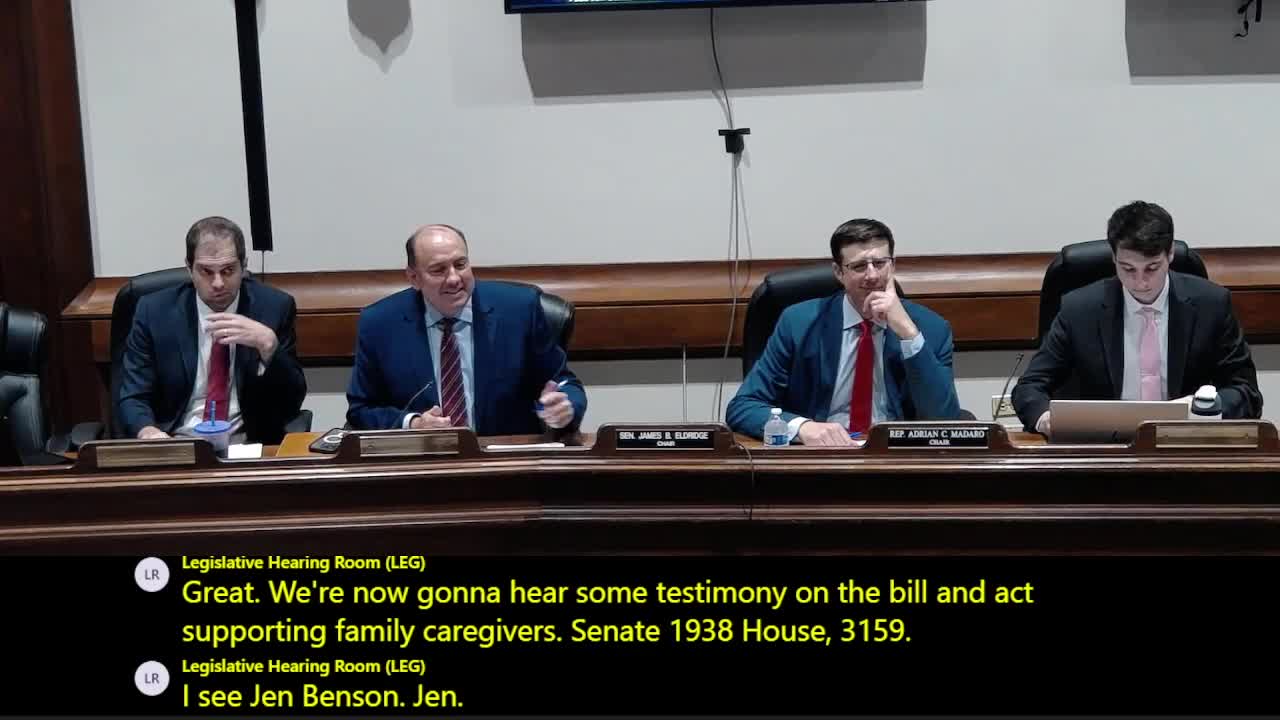
Lawmakers heard detailed personal testimony and organizational support on Tuesday for legislation to provide recognition, financial support and legal protections to family caregivers across Massachusetts.
The bills before the Joint Committee on Revenue — Senate Bill 19-38 and House Bill 31-59, "an act supporting family caregivers" — would establish a refundable caregiver tax credit of up to $1,500 for qualifying caregiving expenses, create a respite voucher program for moderate-income caregivers, codify access to unemployment insurance for eligible caregivers who leave employment, extend paid caregiver eligibility to spouses under MassHealth, and create a permanent caregiving advisory council.
"This is a very large percentage of the Commonwealth," testified Jen Benson (testifying as an advocate), referencing the share of residents who have served or are serving as family caregivers. Benson said unpaid family caregiving is worth roughly $15,000,000,000 in services annually to Massachusetts.
Beth Gutierrez, representing the Massachusetts Council for Adult Foster Care, told the committee her organization advocates for more than 18,000 seniors and adults with disabilities served by adult foster care providers. "These individuals rely on the compassionate care provided by trained caregivers, many of whom are family members," Gutierrez said. She described pressing workforce shortages and framed the bill as a way to sustain community-based care and delay institutionalization.
Multiple legislators shared personal accounts. Representative Kushmarek recounted caregiving responsibilities that began suddenly and persisted for many years; he said the experience informed his decision to file the bill. "I went from being a 22 year old focused on final exams ... to now worrying about MassHealth rep payee forms and medication management for my aging parents," he said. Other lawmakers described caregiver fatigue and the toll caregiving takes on employment and health.
Proponents emphasized the policy rationale and fiscal argument: unpaid family caregivers provide hundreds of millions of hours of labor and save taxpayer dollars by preventing or delaying institutional care. Witnesses and sponsors cited estimates in testimony that family caregivers in Massachusetts provide roughly 730,000,000 hours of unpaid care annually, saving an estimated $15 billion.
Provider organizations and community groups, including AARP and the Massachusetts AFC Council, supported the package. Vitra Health executives urged permitting spouses to be paid caregivers under MassHealth, arguing current policy excludes spouses despite research showing paid-spouse models can reduce preventable hospitalizations and are in use in other states.
No committee votes were taken during the hearing. Witnesses asked for favorable reports and for the legislature to move the bills forward.
Why it matters: Advocates said the proposals would provide financial relief, reduce caregiver burnout, preserve community-based care and help address staffing shortages in the long-term care system.
What's next: The committee will decide whether to report the measures out; sponsors urged a favorable report so the bills can advance for further legislative consideration.