Get Full Government Meeting Transcripts, Videos, & Alerts Forever!
Get email alerts on the Taxes Eitc Cftc topic
No spam. Unsubscribe anytime.
Mass. revenue panel hears push to expand Earned Income and Child-and-Family tax credits
Summary
Advocates, researchers and service providers urged the Joint Committee on Revenue to expand Massachusetts'earned income and child-and-family tax credits, extend eligibility to immigrant and mixed-status families, and increase outreach and advance-payment options to reduce poverty and stabilize low- and moderate-income households.
Lawmakers and advocates on Tuesday heard extensive testimony urging the Joint Committee on Revenue to strengthen the state Earned Income Tax Credit (EITC) and the Child and Family Tax Credit (CFTC), expand eligibility to immigrant and mixed-status households and allow advance periodic payments.
Supporters told the committee the changes would deliver immediate cash to families facing high housing and childcare costs, boost local spending, and decrease child poverty.
The bills under consideration include H.3073 / S.1957 (an act supporting families through enhanced tax credits) and S.1975 (an act to reduce poverty by expanding the EITC and the child and family tax credit). Proponents asked the panel to raise the state EITC match from 40% to 50% of the federal credit, lift the cap on dependents for the EITC, expand eligibility to people who file with an Individual Taxpayer Identification Number (ITIN), extend the CFTC to all children under 18 and increase the per-child CFTC from $440 to $600 with inflation indexing.
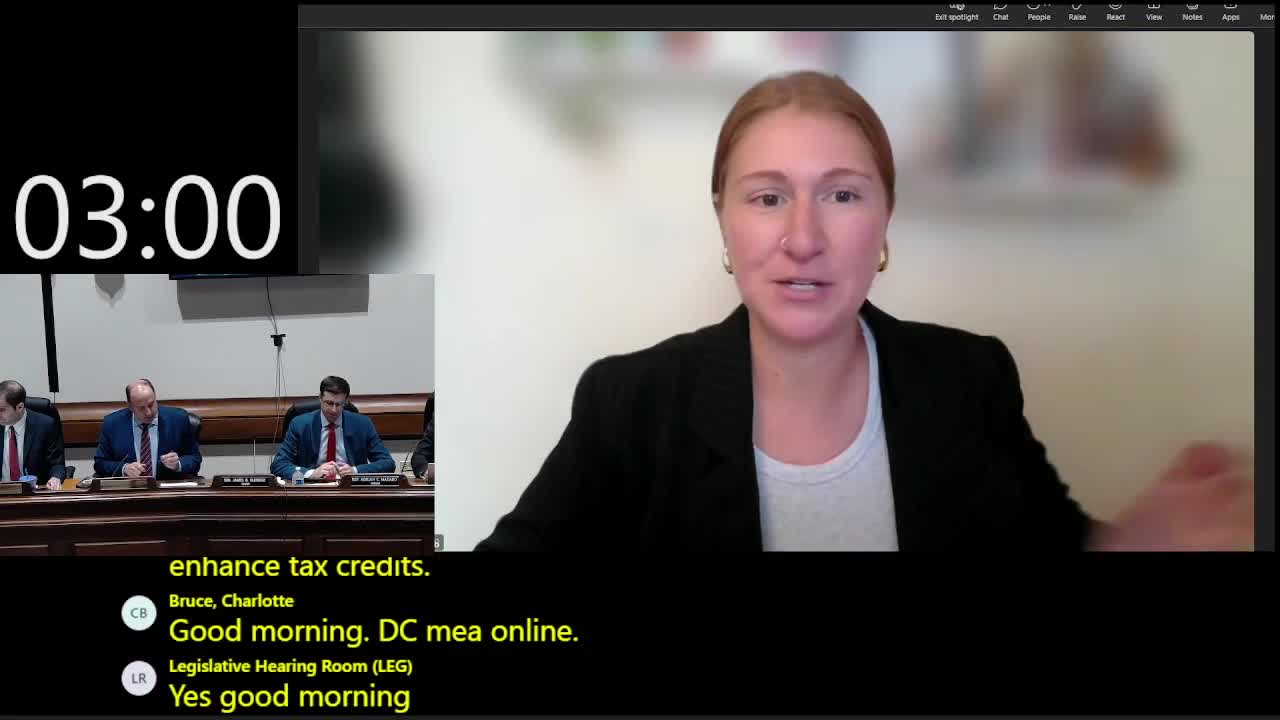
"These bills would direct the Department of Revenue to lead a coordinated, multilingual outreach campaign," Charlotte Bruce, director of policy for Children's HealthWatch, told the committee. "Families who don't file taxes, especially very low income families, miss out on not only the state credits, but also on federal ones, leaving millions of dollars on the table." Bruce testified as part of the Healthy Families Tax Credits Coalition.
Speakers included paid tax-preparation providers, community organizations, medical researchers and immigrant-rights groups. Roni Minter, political director at MIRA, said Massachusetts currently excludes many taxpayers who file with ITINs and urged that mixed-status families be included. "More than 76,000 individuals and 26,000 households, many of them with U.S. citizen children, are denied the EITC simply because one parent does not have a Social Security number," Minter said.
Clinicians and anti-poverty practitioners described evidence that refundable tax credits improve health and economic outcomes. Dr. Lucy Marshall, associate professor of pediatrics at Boston University and executive director of StreetCred at Boston Medical Center, cited research and clinical experience showing the EITC and child tax credit reduce preterm birth, improve maternal mental health and lower food insecurity.
Operational details discussed included allowing the Department of Revenue to implement an outreach campaign partnering with community organizations and providing an option for periodic advance payments of the CFTC rather than a single annual lump sum. Multiple witnesses noted ten states and the District of Columbia have taken steps to include ITIN filers in state-level EITC programs.
No formal committee action or votes were taken during the hearing. Advocates requested a favorable report so the bills can proceed through the legislative process.
Why it matters: Witnesses called the proposals anti-poverty investments that put cash into households that spend it locally, and cited research tying tax credit receipt to better child and family outcomes.
What's next: Committee members did not vote at the hearing. Proponents urged a favorable report to move the bills to subsequent legislative stages.