Get Full Government Meeting Transcripts, Videos, & Alerts Forever!
Get email alerts on the Voter Identification topic
No spam. Unsubscribe anytime.
Committee hears legal review of in-person voter ID options and federal case law
Summary
State legal staff briefed the committee on the constitutionality and practical implications of different in-person voter ID regimes. The presentation summarized binding federal case law, options other states use, and legal risks tied to narrow exceptions or discriminatory effects.
The Government Operations Interim Committee received an informational briefing Aug. 20 on in-person voter-identification policy and the federal case law that governs constitutional challenges.
Why it matters: Any change to in-person ID requirements must balance the state's interest in preventing fraud and preserving public confidence with constitutional limits; courts evaluate burdens on voters and discriminatory intent or effect.
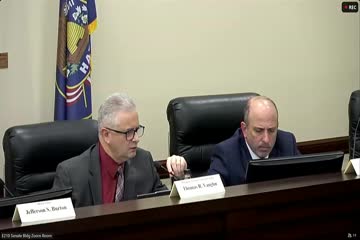
LRGC attorney Thomas Vaughn told the committee the leading U.S. Supreme Court decision, Crawford v. Marion County Election Board, upheld a photo-ID requirement in part because the Indiana law provided exceptions, a free ID and a provisional-ballot cure option. Vaughn said subsequent federal cases (e.g., Fish v. Schwab and ACLU of New Mexico v. Santillanes) demonstrate that courts look at the record and the practical burdens an ID law imposes. The Tenth Circuit requires a case-by-case balancing of burden and state interest.
Senior policy analyst Megan Bowen summarized how states differ: 24 states require photo ID for in-person voting; 12 (including Utah) use non-photo ID lists (Utah accepts driver's license/state ID as primary, then a range of secondary and two-item combinations); and a group of states allows voting without ID but verifies identity by other means. Bowen noted Utah's current code allows provisional ballots when ID is not presented; provisional ballots must be validated (Utah law gives until the Monday following election day to return ID). HB 300 (2025) also changed some ID rules, including a future repeal (01/01/2029) of a utility-bill item as a qualifying secondary ID.
Bowen also explained that Utah driver's licenses and state IDs are Real ID-compliant; applicants must provide proof of citizenship or lawful presence and the DMV uses SAVE checks for certain documents. The driving-privilege card (for persons unable to document lawful presence) is not valid for voting.
No formal action was taken. Committee staff said they will consider statutory clarifications and technical cleanups to align Utah's code with federal case law and recently enacted HB 300 provisions.
Quotable: "Each law must be evaluated on a case-by-case basis with the court balancing interests on both sides," Vaughn said when summarizing federal precedent.