Get Full Government Meeting Transcripts, Videos, & Alerts Forever!
Get email alerts on the School Construction topic
No spam. Unsubscribe anytime.
Legislative audit finds gaps in state oversight of K‑12 school construction
Summary
Legislative auditors told the Education Interim Committee that the Utah State Board of Education has not provided sufficient oversight of K‑12 school construction, citing permit, inspection and code‑compliance gaps across projects totaling about $3.6 billion since 2019.
Legislative auditors told the Education Interim Committee on Sept. 1 that the Utah State Board of Education (USBE) is not sufficiently overseeing K‑12 school construction and recommended steps including standardized cost reporting, better training and consideration of moving oversight responsibilities to an agency with construction expertise. The audit covers more than $3.6 billion in school projects since 2019 and identifies permit, inspection and code compliance problems that auditors say risk school property and occupant safety.
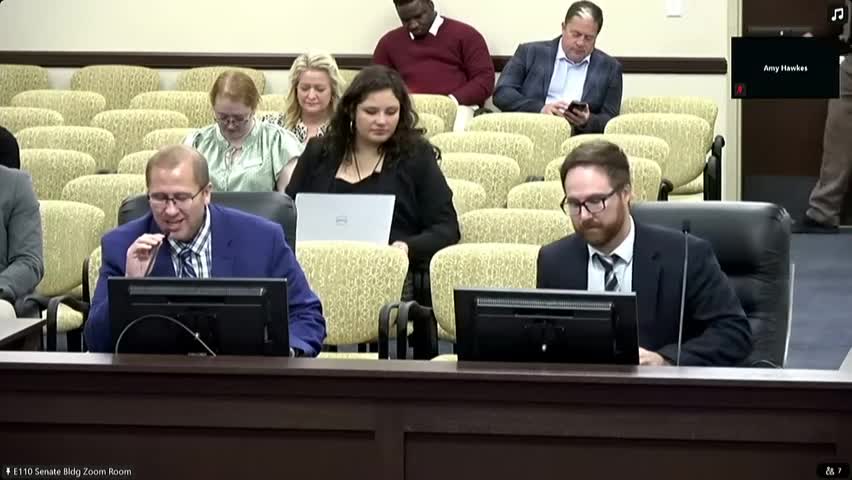
The audit, presented by Jesse Martinson and Jake Davis of the Legislative Auditor General’s Office, said one significant finding was that 87% of sampled preconstruction permits reflected either that construction began before a permit was issued or that a permit was not obtained. “We were asked to look at the oversight provided for public school constructions for K‑12 and the LEAs,” Martinson said, noting the $3.6 billion figure since 2019. Davis said the State Board’s database and internal controls do not generate actionable information for enforcement and that USBE’s process for notifying districts of noncompliance does not reliably produce the data needed to take action.
Why this matters: committee members and auditors tied the findings to safety and taxpayer risk. Auditors’ sample work — including an outside building‑code reviewer of five projects — concluded most buildings met the intent of providing safe, functional schools, but they flagged recurring compliance gaps: missing plan reviews and special inspections; mechanical, plumbing and electrical reviews not fully performed; firewall installations that did not meet code in multiple schools; and weak documentation of inspections.
Key recommendations and options. Auditors recommended that the legislature require standardized cost reporting and data collection so agencies and local education agencies (LEAs) can compare projects and identify outliers. They also recommended strengthening training for LEA building officials; auditors noted the Utah Facilities Operations and Maintenance Association (UFOMA) currently provides a training conference but USBE does not capture attendance, and charters appear under‑represented at those trainings. To address USBE’s limited construction expertise and enforcement capacity, auditors offered three broad legislative options: 1) designate a different state agency with construction oversight responsibility (auditors cited the Division of Facilities Construction and Management, DFCM, as an example); 2) create a spectrum model where a designated agency provides graduated oversight and support to LEAs depending on their capacity; or 3) maintain the current USBE responsibility but require implementation of the audit’s recommendations and fund the board accordingly.
Bidding and conflict concerns. In chapter 3 auditors flagged one district for concerning procurement practices: that district used a single general contractor for many projects since 2014 and, in at least one solicitation, bundled four major projects (about $130 million in combined cost) into a single bid that one contractor won. Auditors said that bundling was uncommon among other districts reviewed and raised questions about competition and transparency.
Committee reaction and next steps. Committee members pressed auditors and USBE officials on remedies and funding. Representative Lisenby and others urged standardized floor‑plan or blueprint options to control costs and avoid architectural features that add price without clear academic benefit. Senator Wilson, who sponsored a bill file tied to these issues, said he plans to pursue legislation that would implement many audit recommendations and explore assigning DFCM a larger role; he invited committee collaboration. USBE Superintendent Molly Hart and State Board Chair Matt Hymas said the board accepts the findings but lacks the staff and resources to absorb the audit’s recommended enforcement work without additional funding or a structural change in oversight.
No formal committee action was taken at this meeting; members discussed potential legislation and follow‑up. The auditors emphasized establishing consistent cost reporting, improving USBE data systems to enable enforcement, tracking attendance at required training, and collecting better certification information for district building officials so the state can target support where needed.
Ending: lawmakers said they will use the audit to inform bill drafting and appropriations next session; Senator Wilson said he already has a bill file and will seek committee input.