Get Full Government Meeting Transcripts, Videos, & Alerts Forever!
Get email alerts on the Professional Licensure Reviews topic
No spam. Unsubscribe anytime.
Committee approves OPLER plan to continue health‑care licensure reviews next year
Summary
The interim committee accepted the Office of Professional Licensure Review’s proposed list for its 2026 periodic review, including a continuation of health‑care occupation reviews and new duties to review administrative rules and accept public input on ineffective or inefficient occupational regulations under HB 474.
The interim Business, Labor and Commerce Committee voted to accept the Office of Professional Licensure Review’s (OPLER) proposed list of regulated occupations for its 2026 periodic review and heard a status report about the office’s expanded duties.
Jeff Shumway, director of OPLER within the Utah Department of Commerce, told the committee the office intends to continue next year’s periodic review of health‑care occupations — a set the office started in 2025 — and plans to include physicians, dentists, pharmacists and other allied health professions.
‘‘Our proposal is to continue that next year ... the major occupations that we'll be looking at are physicians, dentists, pharmacists,’’ Shumway said. He added the office plans to review numerous other health occupations such as radiologic technicians and dieticians.
Shumway also reported on two new duties created by last year’s HB 474. First, the office now conducts systematic administrative rule reviews as part of the periodic review. Second, the office must take public input where members of the public claim an occupational statute or rule is ineffective or inefficient; OPLER has had that public‑input mechanism in operation since late May.
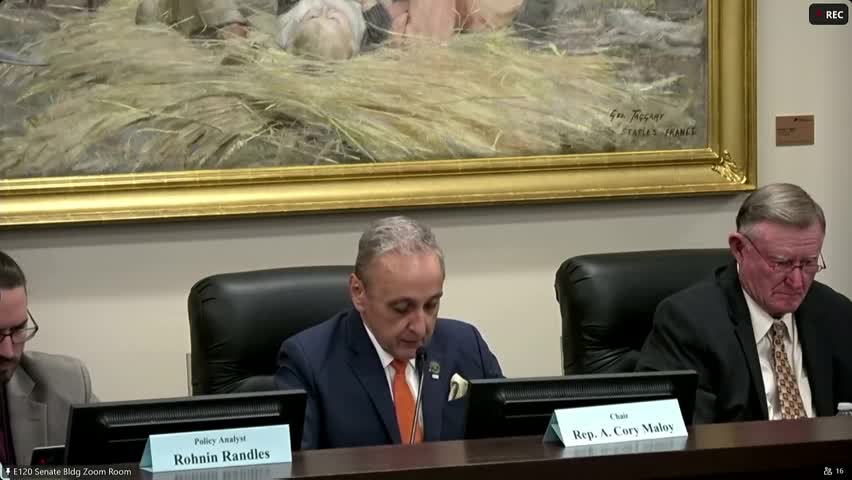
The committee had no clarifying questions beyond staff confirmation that the vote covered the list of occupations only and not additional topics. Ronald Randall, policy analyst with Legislative Research and General Counsel, confirmed the committee was voting only to approve the proposed list of periodic reviews.
A committee member moved to approve the list; the committee voted ‘‘aye’’ and the chair announced the proposal ‘‘passes unanimously.’’ The transcript records the committee’s unanimous approval but does not include a roll call in the hearing record.
Why it matters: OPLER’s periodic review process is the primary mechanism the legislature uses to examine whether occupational regulations remain necessary and whether they impose undue burdens on licensed professionals. The continuation of a health‑care focus signals sustained legislative attention to scope‑of‑practice and regulatory barriers in medical professions.
What’s next: OPLER will include systematic rule‑review sections in its reports this year and continue outreach on public complaints about licensing statutes and rules.
Speakers quoted in this article are identified from the committee meeting transcript and appeared during the OPLER presentation and committee vote.