
Public Works reports chip‑seal billing, ARPA transfers and grant timelines; commissioners ask about project accounting
Get AI-powered insights, summaries, and transcripts
Subscribe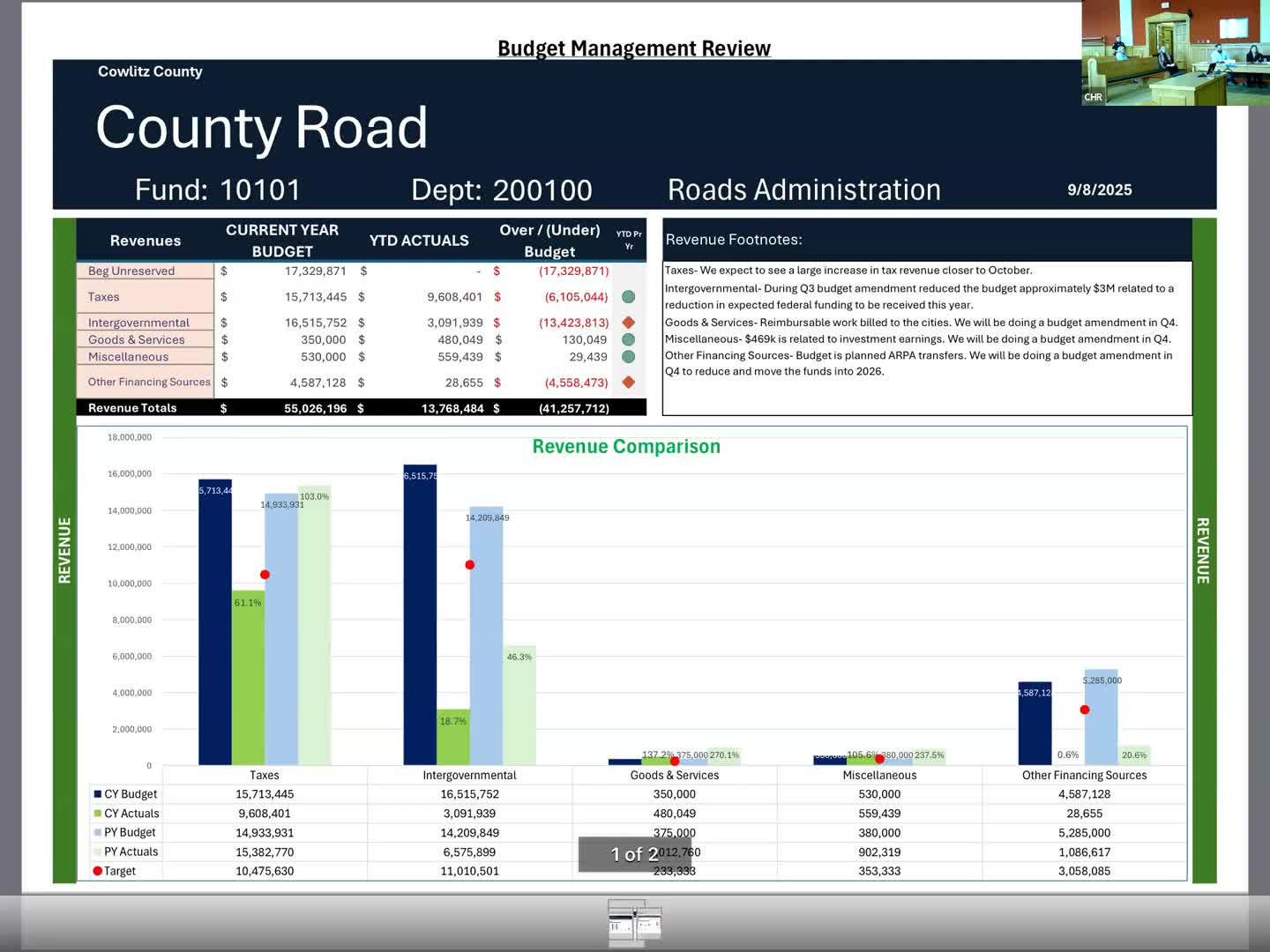
Summary
Public Works staff described revenues and major service invoices (chip seal, overlays), capital spending and the relationship between ARPA/grant transfers and project schedules; commissioners pressed staff on grant deadlines, county award timelines and sandbag distribution authority.
At a Cowlitz County Board of Commissioners meeting (date not specified), Sean Roey, Public Works (commissioner present), and county finance staff outlined Public Works’ budget lines, reimbursements from cities and the timing of major service invoices related to chip seal and overlays.
"Goods and services has a budget of 350,000, and they have exceeded, budget. They brought in 480,000," finance staff reported, noting that some reimbursable work — chip sealing, striping and road overlays performed for cities and utilities — flows into that line. Public Works staff said they were still awaiting invoices from contractors (for example, Lakeside for a roughly $3 million overlay project) and expected service-line increases when those invoices post.
Finance staff tied capital and intergovernmental revenue lines to project timing and grant obligations. They explained that if ARPA transfers or grant-funded projects are pushed into 2026, the county will move the related transfers and grant budget entries accordingly. Staff described grant obligation timelines used by WSDOT and other funders: typically obligation milestones must be met and grant phases (design, construction) can have multi-year windows and may require extension requests rather than immediate recapture of funds if activity is ongoing.
Commissioners asked about grant program cancellations and internal procedures for returning funds not spent by recipients. Cathy Fung Baxter, finance director, said the county’s rural public‑facilities contracts include completion dates and certification forms; some awards are now structured as cost‑reimbursement to improve oversight.
Public Works also presented several project and procurement items: a call for bids for 3,000 tons of 3/8-inch scribe sand to stockpile across shops (750 tons per shop) for winter; a request for qualifications for sewer engineering to replace an expiring contract (typical multi-year contract with optional extension); and an easement-recording action to document an existing turnaround at the end of Hanson Road that was built decades ago but never recorded.
On emergency preparedness, staff described county sandbag procedures: distribution requires a two‑of‑three vote of the commissioners once flooding thresholds are met; sandbag distribution is coordinated from the Kelso shop and staff discussed whether to provide sand or designate pickup sites.
Why it matters: timing of contractor billings, grant obligation deadlines and ARPA transfers can change the county’s reported revenue and capital spending in a given fiscal year, with follow-on effects on budgeting and project delivery.
Next steps: finance and Public Works will continue to reconcile invoices, track grant deadlines, and, where appropriate, request extensions; the call for bids and RFQ items will proceed through the normal procurement process.