
Noah Castillo given five-year deferred-adjudication term with drug-court referral and evaluations
Get AI-powered insights, summaries, and transcripts
Subscribe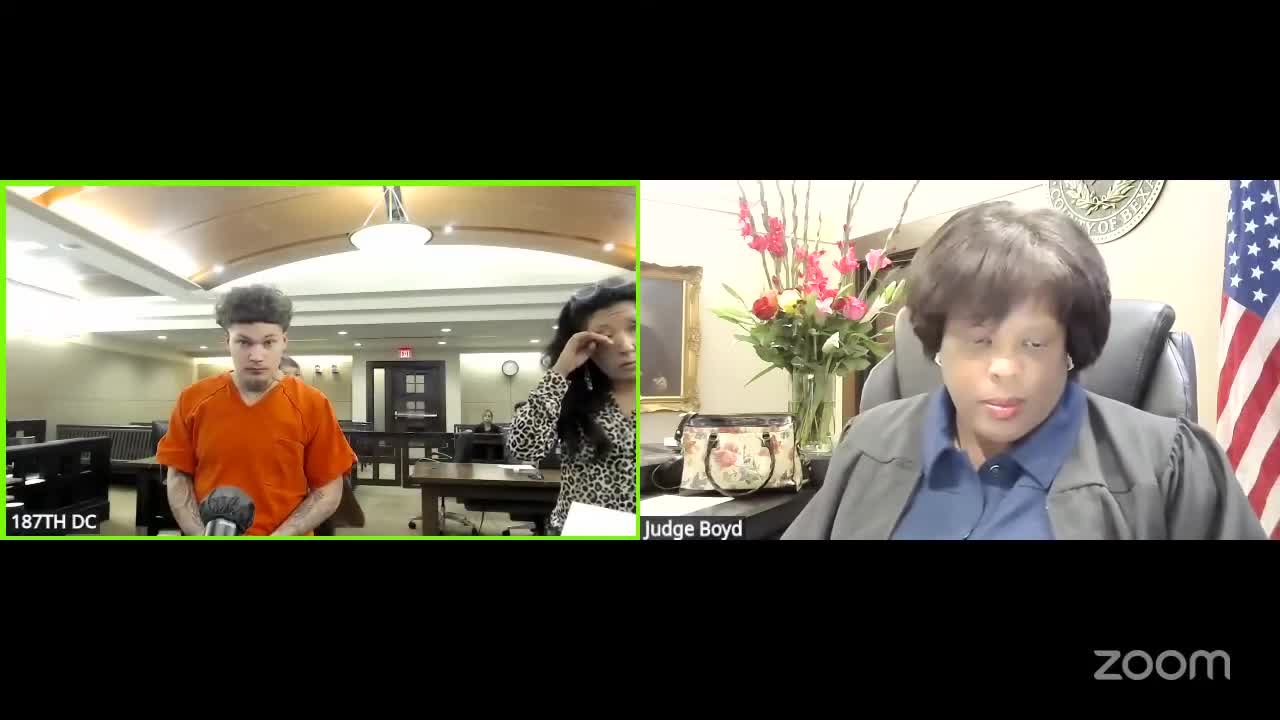
Summary
Noah Castillo’s plea led the court to defer finding of guilt and grant five years of deferred adjudication with random testing, 150 hours of community service, TAP evaluation and a referral to felony drug court; the court warned that noncompliance could lead to revocation and a prison sentence.
Noah Castillo applied for deferred adjudication and the court deferred a finding of guilt, imposing a five-year term of community supervision with multiple conditions and referrals to treatment and evaluation programs.
The judge outlined the terms on the record: “Outside the agreement, the state is requesting that your community supervision be for a term of 5 years. There'll be a TAP evaluation, 150 hours community service restitution.” The judge added reporting requirements, proof of employment within 45 days, regular random urine analyses, field visits and a gang evaluation and ISP evaluation where appropriate.
Why it matters: deferred adjudication preserves an opportunity to avoid a final conviction if Castillo completes the court-ordered programs, but the judge warned that absconding from treatment or failing conditions could expose Castillo to up to 10 years in prison under the statutory range discussed at the plea hearing. The court directed probation to request a felony drug-court referral and ordered in-custody referral and a TAP evaluation.
The judge also imposed a $1,000 probated fine and stated that 150 hours of community service restitution and parenting or other educational steps could reduce the service requirement if Castillo completes higher-level education or trade-school certification.
Ending: The court recorded that Castillo waived appeal rights as part of the plea agreement and emphasized honesty with treatment and drug-court personnel; the judge said that failing to disclose drug problems to treatment programs could result in rejection and adverse consequences in court records.