
Judge accepts multiple plea deals in Freddy Gonzales cases; sentencing reset pending restitution
Get AI-powered insights, summaries, and transcripts
Subscribe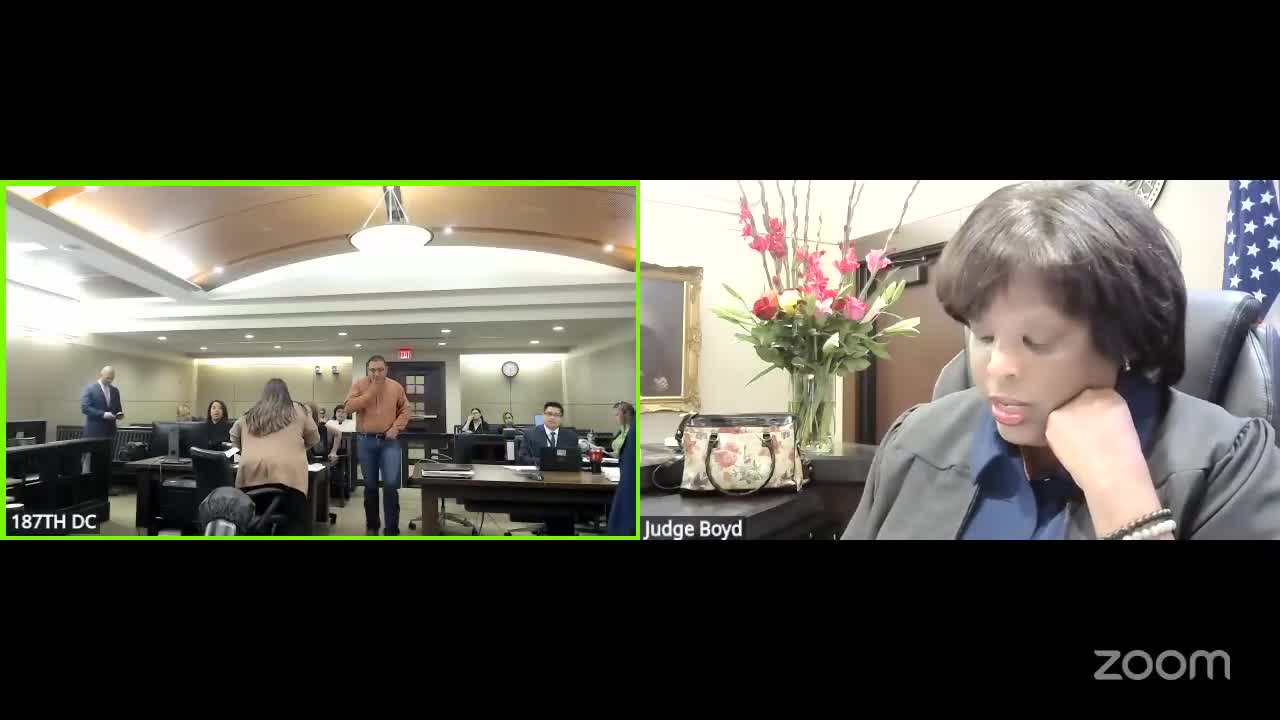
Summary
A Bexar County judge accepted plea agreements in several cases against Freddy Gonzales, found him guilty on those counts and postponed sentencing to allow the state to produce restitution figures; the judge said restitution should be ready at the next hearing and urged payment upfront.
A Bexar County judge on the record accepted plea agreements in several separate cause numbers involving defendant Freddy Gonzales and found him guilty, but postponed sentencing pending final restitution amounts and ordered the parties to confer before the next hearing. The judge set a reset for sentencing and directed the state and defense to prepare restitution figures and reasons the court should follow the plea agreements.
The judge told the court, “So we're gonna figure out what the restitution amount is in each case, and then we're gonna if the court, follows the plea, we will see when that restitution can be paid.” The state told the court it could provide restitution amounts in two weeks; Lauren Espinosa, an attorney for the state, said on the record, “Two weeks will be sufficient.”
Why it matters: the plea packages span multiple indictments and carry varying punishments, including state-jail and prison terms, fines and recommended community supervision. The judge emphasized that restitution often must be paid up front so victims receive compensation and ordered the parties to return on the reset date ready to explain why the court should follow each plea agreement.
The record shows multiple written plea terms. In cause number 2025CR007396 the plea recommends punishment assessed at two years in the state jail facility with a $1,000 fine; the state recommended community supervision concurrent with other cases, a TAP evaluation, and 200 hours of community service restitution. In cause number 2025CR005205 the plea includes restitution of $500 payable to Elizabeth Muscaro and similar recommended conditions. In another cause (2025CR009295) the state indicated it would proceed on count 2 with an agreed punishment assessed at 10 years in prison and a $1,000 fine; the state recommended community supervision to run concurrent with specified related cases and sought a 10-year supervision term outside the plea agreement.
The judge instructed defense and state counsel to confer off the record to determine and document restitution amounts and asked that, if the court follows the plea bargains, defendants be prepared at the sentencing reset to bring the restitution in an acceptable form (the judge suggested a cashier's check as one option). The court set a sentencing reset for September 29 at 9 a.m. and asked the parties to return with reasons the court should follow the plea agreements.
No final sentence was imposed at the hearing; the judge explicitly postponed formal sentencing until restitution amounts were clarified and the parties had an opportunity to address the court’s requirements on the reset date.
Ending: The court’s directions mean Gonzales’s ultimate sentences will depend in part on restitution calculations the state agreed to produce within two weeks and on the parties’ ability to show the court why it should accept the negotiated plea terms on Sept. 29.