
Appeals court hears challenge to negligent-vehicle homicide conviction and consciousness-of-guilt instruction
Get AI-powered insights, summaries, and transcripts
Subscribe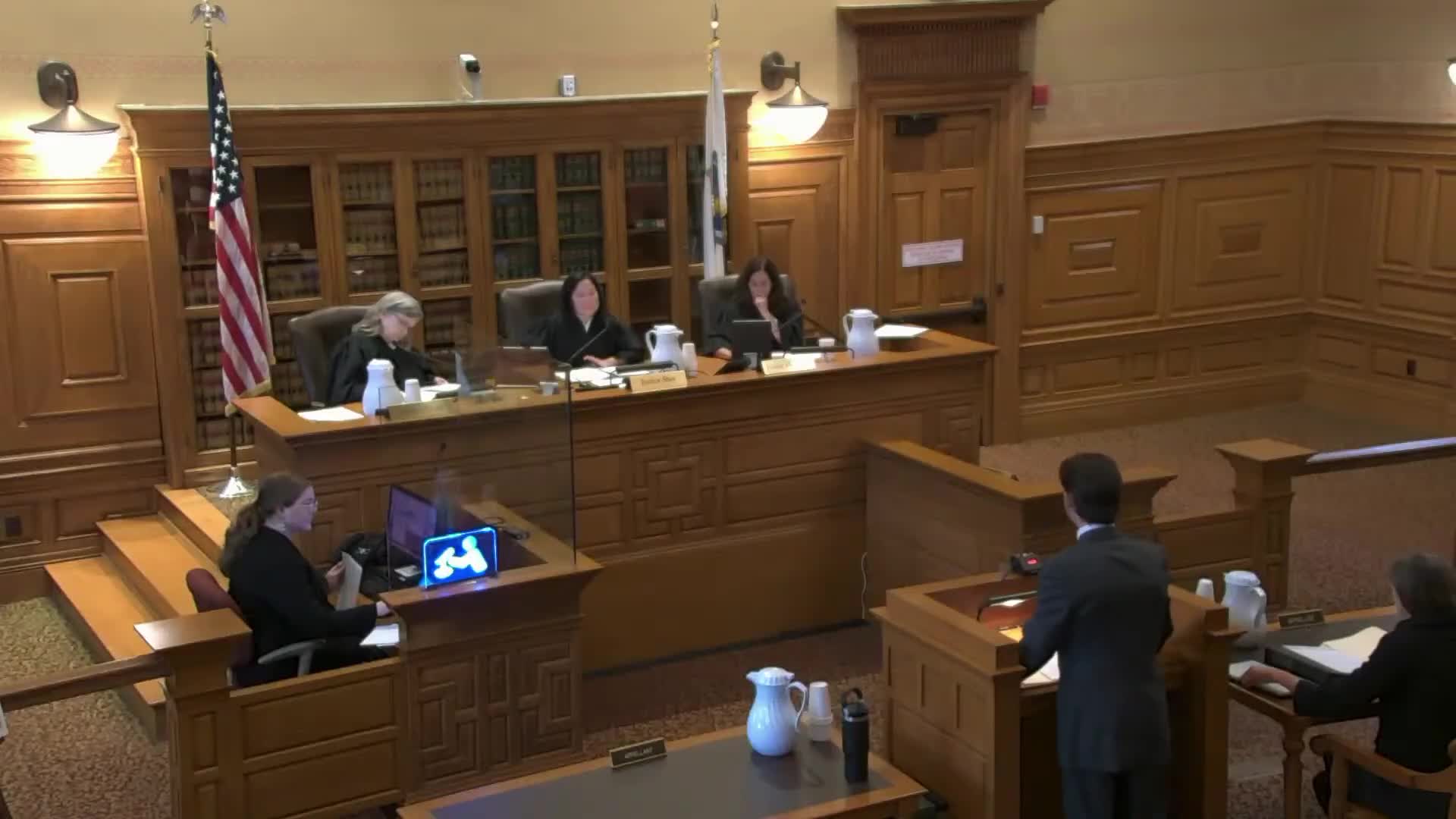
Summary
In Commonwealth v. Alec Butler, defense counsel urged the court to reverse or order a new trial, arguing evidence was insufficient and that a consciousness-of-guilt jury instruction was improperly given; the Commonwealth said the evidence supported convictions.
Luke Roselle, representing Alec Butler, told the panel the record lacks sufficient evidence to support negligent-vehicle homicide and that the judge erred by allowing a consciousness-of-guilt instruction based on flight and other conduct. Roselle emphasized event-data and reconstructions showing the driver depressed the brake at least one second before impact and argued the sequence of events distinguishes this case from precedent the Commonwealth relied upon. Assistant District Attorney Emily Walsh urged the court to view the evidence in the light most favorable to the Commonwealth, saying Butler was “driving more than twice the speed limit” in a 30 mph zone, struck a tree with force that shattered windows and deployed airbags, and had alcohol in the roughly 90 minutes before the crash. Walsh described reconstruction data showing a rapid speed change from 34 to 11 mph in half a second as the vehicle hit boulders beside the roadway and said braking occurred as the car was losing control. Counsel debated how to treat short pre-impact sequences captured by the airbag control module and whether the physical evidence of severe impact and earlier drinking could carry a negligence inference. Roselle argued the case is distinguishable from cases where courts affirmed convictions on stronger evidence, and asked for a new trial if the panel found instructional error. Walsh defended the court’s discretion to give a consciousness-of-guilt instruction for flight and argued the judge found the flight evidence not compelling but nonetheless permissibly presented the instruction to the factfinder. The panel questioned both sides on timing and data from the airbag module and the legal standard for negligence and flight-related inferences. After argument the case was submitted to the court.