
County details court annex remodel to add courtroom, replace building envelope
Get AI-powered insights, summaries, and transcripts
Subscribe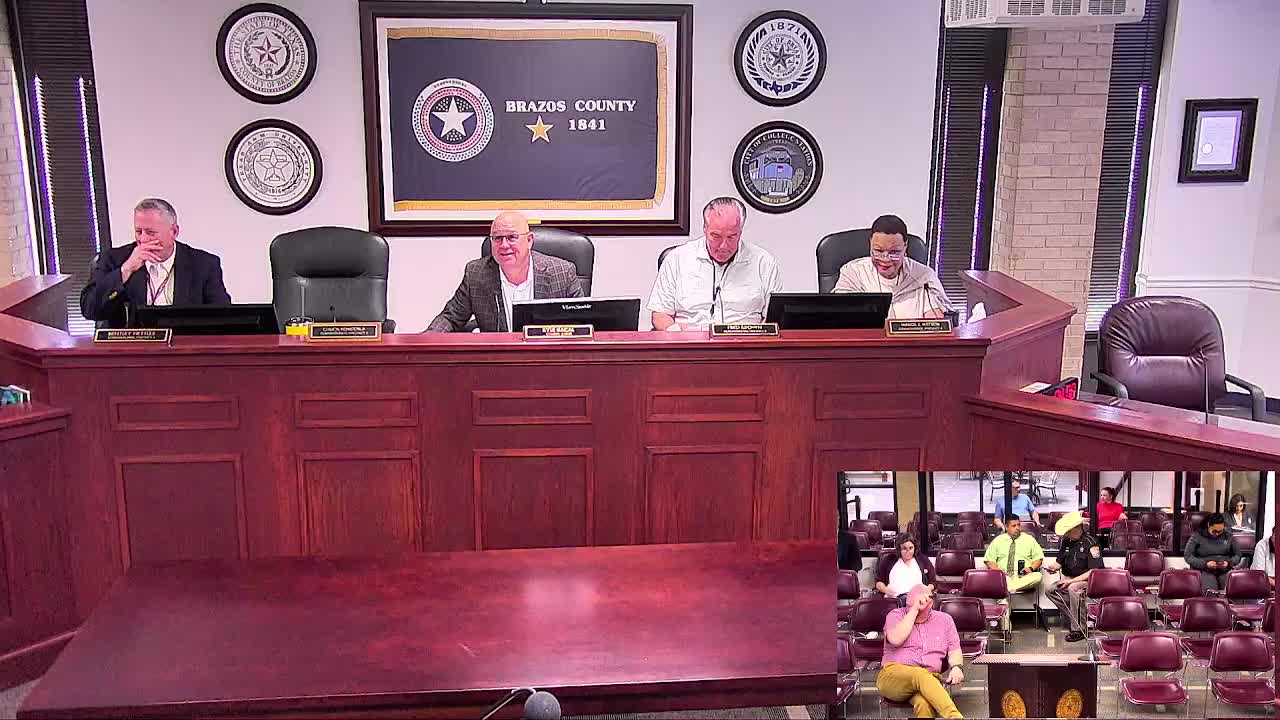
Summary
County staff presented a plan to add a larger Commissioner's courtroom, build a second floor, replace the building envelope and mechanical systems, and manage temporary relocations and parking during construction; design is permitted and general‑contractor negotiations are underway.
County staff presented detailed plans during a Commissioners Court workshop to remodel the County Court Annex, expand public hearing space and renovate the building envelope and mechanical systems.
The presentation said the county acquired and remodeled the building in 2007, completed a feasibility study and design in 2023, and permitted the final design in April; general‑contractor solicitations have closed and negotiations are underway. “This has been a long time coming,” Trevor Lansdowne, staff member, said as he opened the briefing.
The project will replace the building envelope (including brick facade, gutters, downspouts and metal roofing), replace chillers and chiller piping, upgrade HVAC controls so the building functions as a single system, and add interior build‑outs. The Second Floor of the sanctuary will house the budget office, the auditor's office and project management; the Second Floor of the North Wing will become a new human resources suite; and the First Floor will include a larger Commissioner's Courtroom with seating for 101 and an adjacent IT training/overflow space. The design also adds a second elevator serving the atrium and additional windows on all floors.
The county originally considered using ARPA (American Rescue Plan Act) funds, then shifted money for a payroll payback and is proceeding on this project using fund balance, the presentation said. The design team engaged an envelope consultant (06 Consulting) and MEP peer reviewers (Tom Green and Company). The envelope consultant performed destructive testing and recommended fully replacing the envelope if the county intended to retain the building long term; the consultant will remain involved during construction to commission and test windows and sealing work, staff said.
Staff outlined operational impacts: work will be noisy at times, some departments will need temporary relocation, and parking access will change. A construction laydown area is anticipated in the side lot on East 20 Eighth Street, which will reduce staff parking; the county plans to open the secure lot gates, add temporary ADA parking, and rely on the parking garage for overflow. On relocation timing, Lansdowne said, “Could be a couple weeks, could be a couple months, just depending on how big a chunk they're gonna take out of the envelope.”
Safety and security measures were discussed. Staff said they will require PPE and restricted access to work zones, will try to schedule noisy work outside business hours when possible, and will halt work for court events when feasible. The workshop also noted a previous CISA (Cybersecurity and Infrastructure Security Agency, Department of Homeland Security) assessment recommending architectural bollards at vehicle access points; staff said bollards or other protective elements could be added during this project.
Accessibility and public access were part of the brief. The Commissioner's dais will be accessible via a ramp and the new courtroom will include upgraded AV and provisions for remote participation and an overflow room tied into the courtroom sound and video. Staff said new automated sliding exterior doors and a vestibule are planned to reduce water intrusion.
Several commissioners and officials raised operational questions. Topics included whether a license‑plate reader could be integrated with existing gates, the potential to reconfigure curbside parking on Texas Avenue and the gated lot to gain more spaces, the adequacy of evidence and secure storage in justice precinct offices, and whether the planned HR space will meet long‑term growth. Staff said some changes (for example, curb reconfiguration or full civil‑engineering redesign of the parking area) would require additional scope and a civil engineer.
No formal vote or contract award occurred at the workshop. Staff said the court previously approved the decision to replace the envelope during the design process; current next steps are finalizing contractor negotiations, proceeding with early bid packages to provide temporary relocation shell space in the courthouse, and maintaining frequent communication with affected departments throughout phasing.
The presentation included architect renderings and phasing suggestions; staff emphasized the county will try to minimize disruptions during court sessions and that project schedule and relocation durations depend on contractor sequencing and city permitting. A future workshop was proposed to discuss the full set of spaces the county will vacate and long‑term space plans.
Because the project will affect public access and county operations during construction, county staff said they will provide updates as contractor schedules and phasing are finalized.