
Lawmakers, witnesses spar over HR1 provisions as witnesses describe state SNAP controls and fraud tools
Get AI-powered insights, summaries, and transcripts
Subscribe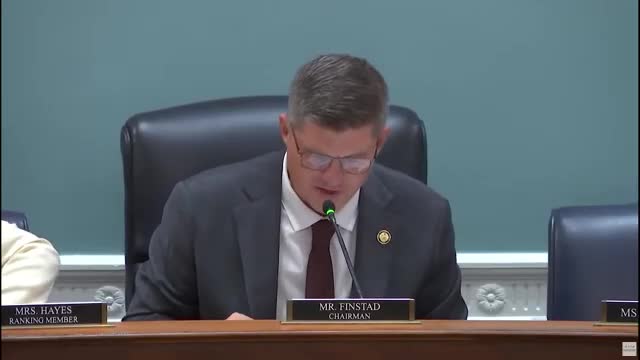
Summary
A House hearing on HR1 and SNAP focused on proposed work requirements, state error rates and fraud-prevention tools, with witnesses describing Wyoming’s quality control practices and debate over whether HR1 would shift costs to counties.
A House committee hearing on HR1 and changes to the Supplemental Nutrition Assistance Program on Oct. 5 examined proposals to tighten work requirements, strengthen state accountability for payment errors and expand front‑end fraud detection, while witnesses and members debated who would bear program costs.
The hearing centered on how HR1 would change SNAP oversight and state responsibilities. Representative (Committee member) said HR1 “protects and strengthens SNAP’s ability to serve our most vulnerable neighbors” while also aiming to reduce what the lawmaker called incorrect benefit issuances. “No 1 in this room should be defending $10,000,000,000 a year in federal SNAP benefits going out the door incorrectly,” the representative said.
Miss Schmidt, a witness from Wyoming who described her state’s SNAP operations, told the committee Wyoming keeps its error rate below 6% and attributed that record to a continuous quality‑improvement process, data collection and targeted use of a 12‑person quality control and fraud‑protection unit. She said Wyoming also adopted a front‑end eligibility tool after learning about it at a welfare‑fraud conference; start‑up costs were about $750,000, funded in part by a grant from the U.S. Department of Agriculture Food and Nutrition Service, and ongoing costs are estimated at about $200,000 per year. Miss Schmidt said the state’s front‑end investigators refer suspicious cases for investigation before benefits issue; she told the panel that approach helped avoid “close to a million dollars in fraudulent SNAP benefit issuances in less than three years.”
Committee members pressed witnesses on Broad‑Based Categorical Eligibility, or BBCE, a policy that can confer SNAP eligibility to households that receive some non‑cash Temporary Assistance for Needy Families benefits. One questioner asked whether a pamphlet, brochure or a 1‑800 number funded with TANF dollars can be used to confer BBCE eligibility; Miss Green said that, in practice, a household may receive a pamphlet or similar material and must show proof of having received it when applying for SNAP to use BBCE‑related eligibility waivers such as higher gross‑income thresholds or waived asset limits.
Members also sought clarity about who would bear administrative costs. A witness (Miss Bivens) answered yes when asked whether HR1 explicitly requires states to pass SNAP costs to counties; other witnesses and members noted longstanding variation in state administration: in six of the 10 county‑administered states the state shares SNAP administrative expenses with counties, and in 41 states counties bear no cost, according to testimony in the hearing.
Representative (Committee member) cited broader spending trends in arguing for the reforms, saying federal SNAP spending has risen roughly 70% since 2019 while food‑insecurity rates “have remained stagnant.” Another member invoked Wisconsin’s budget surplus, saying the state should “prioritize this program” if it chooses to customize SNAP beyond federal law.
Witnesses also described implementation barriers. Miss Schmidt said recruiting experienced investigators was a challenge in her state and noted the need for asset verification tools alongside front‑end investigators. She cautioned that not all referrals turn out to be fraud; some are mistakes in applications.
The hearing record shows substantial discussion and questioning but no committee vote or formal action recorded in the transcript. Members focused on differences in state administration, the mechanics of BBCE, costs of fraud‑prevention technology and how HR1 would change federal‑state accountability for payment errors.
The committee may return to HR1 as it advances through the legislative process; the transcript does not show a formal directive to staff or immediate next steps recorded at the hearing.