Get Full Government Meeting Transcripts, Videos, & Alerts Forever!
Get email alerts on the Education topic
No spam. Unsubscribe anytime.
Mass. education leaders say federal anti‑DEI actions threaten K–12, early‑ed and higher‑ed funding
Summary
State education leaders told a joint legislative hearing federal directives and funding threats tied to anti‑DEI policies are already disrupting programs across early childhood, K–12 and higher education and that Massachusetts will continue legal and legislative pushback.
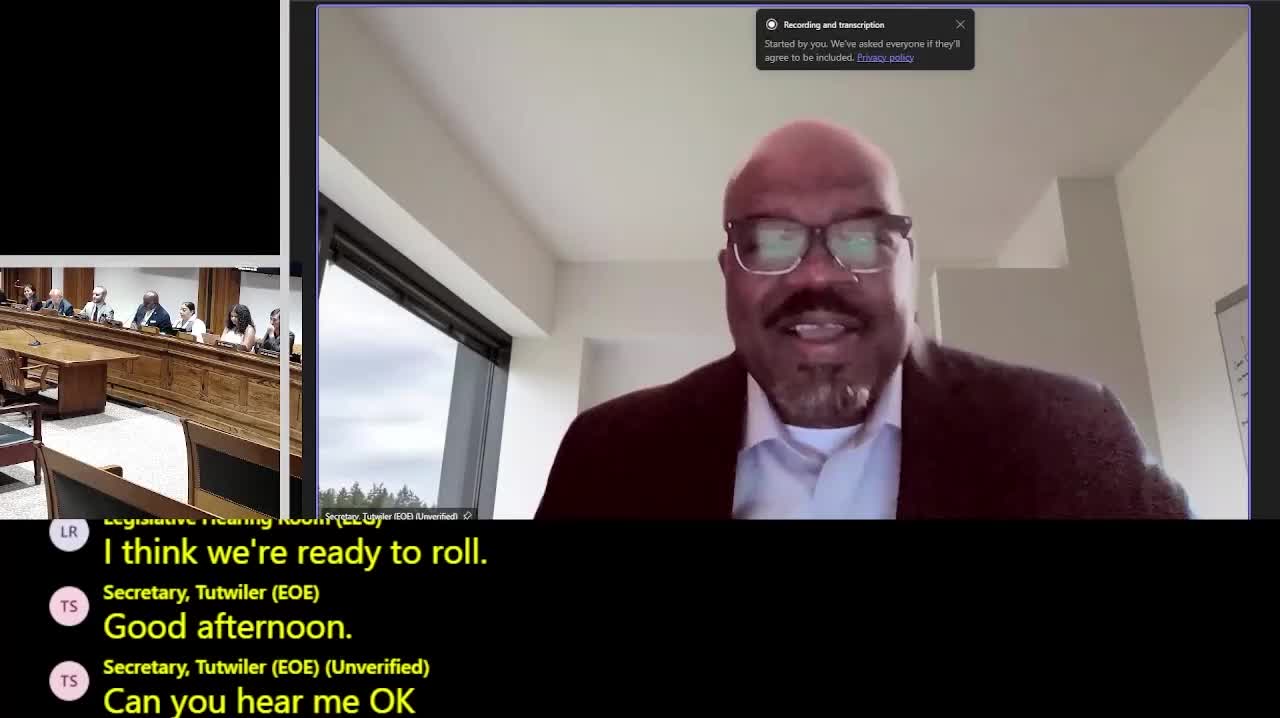
Massachusetts education officials told the Joint Committee on Racial Equity, Civil Rights, and Inclusion on Wednesday that recent federal orders and guidance targeting diversity, equity and inclusion programs have created real risk for schools, colleges and early‑education programs in the Commonwealth. Secretary Tuckwelder, who leads the Executive Office of Education, said federal funds are “core” to services for students and families and cannot be easily replaced.
The committee heard that federal actions starting in January have included an executive order aimed at DEI in federal contracting and a Department of Education “Dear Colleague” letter that the state and its partners challenged in court. Secretary Tuckwelder said Massachusetts receives about $2,000,000,000 annually from the federal government for education and that those dollars “are core to providing the services and supports for students across all education sectors.”
Why it matters: Committee members and agency officials said the funding and regulatory threats put everything from Head Start and special‑education services to after‑school programs and college access pipelines at risk. The state’s early‑education and childcare expansions — including planned FY26 investments and the CommonWealth Cares for Children (C3) initiative — rely on stable federal partnerships, officials said.
At the hearing, Secretary Tuckwelder highlighted state investments and programs the administration says strengthen equity in schools: the FY26 budget’s planned investments in early education (including $475,000,000 for C3 and more than $1,000,000,000 for childcare financial assistance, as described to the committee), recent state laws to protect students with disabilities and immigrant students, and the Mass LEADS provisions intended to diversify the educator workforce and expand alternative licensure pathways. She said the state has expanded early college opportunities (10,000 students may earn college credits this school year) and is investing $100,000,000 in CTE capital to add seats for high‑demand programs.
Legal response and uncertainty: Both the secretary and witnesses from the attorney general’s office described parallel legal work. The attorney general’s office has issued guidance to schools and organizations and joined litigation to halt federal steps to withhold funds. The committee heard that courts vacated the Department of Education Dear Colleague letter and that litigation secured the release of previously withheld K‑12 entitlement grants in one instance. But officials repeatedly warned that uncertainty — including agencies’ requests for certifications from grantees about their DEI activities — has led some institutions to curb programming or seek legal advice.
What’s next: Committee members asked for more state‑level data to track how DEI programs are being implemented across districts and how any federal funding decisions will affect local services. Secretary Tuckwelder told members the administration will keep pressing legal challenges when appropriate and said state agencies will work with the legislature to protect programs and students.
Ending note: Officials urged legislators to prepare targeted responses if federal actions lead to actual grant rescissions — rather than earlier, precautionary program reductions — and to continue coordinating with the attorney general’s office and the governor on litigation and guidance to districts and colleges.