Get Full Government Meeting Transcripts, Videos, & Alerts Forever!
Get email alerts on the Post Disaster Solicitation topic
No spam. Unsubscribe anytime.
Witnesses urge 24-hour moratorium on solicitation at fire and disaster scenes
Summary
Homeowner who lost a family multiunit to fire described intrusive solicitation by restoration companies and public adjusters; legislators and witnesses discussed bills to bar solicitation for a hold period to give owners time to decide.
Deborah Moore, a Holliston homeowner, told the committee her family—s 3-decker was heavily damaged by fire on Aug. 4, 2023, and that restoration-company representatives and public adjusters "were following us around the property trying to speak with us to sign a contract for their services right then and there." She asked lawmakers to consider a law like Rhode Island—s to give property owners time and space to make decisions without in-person solicitation at the scene.
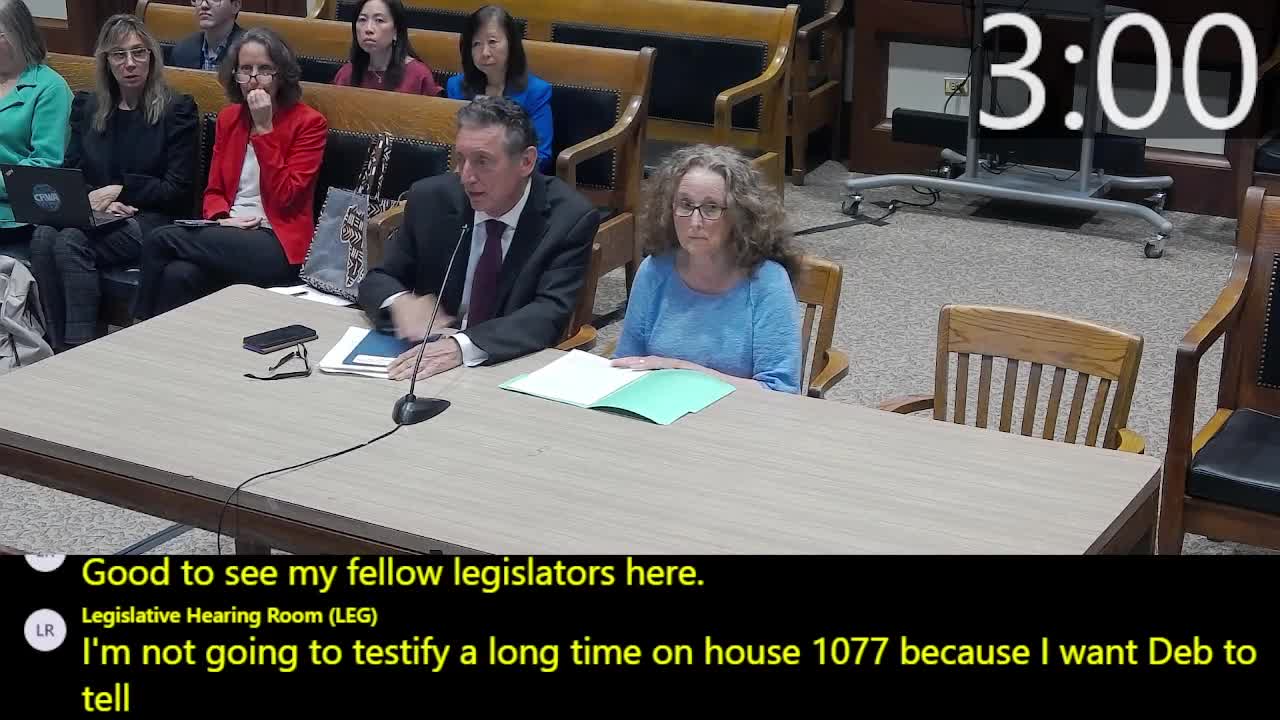
Representative Paul DeRosa introduced H.1077 before the committee and asked members to consider a 24-hour hold on solicitation after the authority having jurisdiction (typically local fire officials) releases a property. "It looks like after the authority having jurisdiction ... there'd be no solicitation for 24 hours until after they release the property back to the homeowner," DeRosa said; he and other committee members framed the proposed pause as compatible with necessary emergency work such as boarding up and fire investigations.
Support and opposition at the hearing: Deborah Moore and several legislators and municipal safety officials supported a limited moratorium. Representatives of the restoration and public-adjuster industries — including Brian Lanane (Massachusetts Association of Public Insurance Adjusters), Joseph Coker, and Lawrence Berman (veteran public adjuster) — opposed an outright ban on solicitation, saying homeowners often need immediate, professional guidance after a loss and that existing consumer protections (a 3-day cancellation period for contracts) and vendor vetting practices in some municipalities are in place.
Legal and practical concerns: Witnesses for the industry cited federal and state constitutional questions and past court findings in other states. Industry witnesses also described the practical role of public adjusters and mitigation contractors in stabilizing properties, documenting losses and preparing inventories: "When that loss happens, it's chaos," Lanane said. Industry representatives argued that a blanket prohibition could hinder necessary mitigation and consumer choice.
Next steps: The committee did not vote on H.1077 at the hearing. Several committee members invited stakeholders to work on narrowly tailored language — for example, specifying the timing of the moratorium tied to the authority having jurisdiction—s release, preserving urgent safety actions, and providing vendor vetting or referral options — rather than enacting an immediate, broad prohibition.