
Mayor and administration outline 2026 budget outlook, warn of steep state revenue declines
Get AI-powered insights, summaries, and transcripts
Subscribe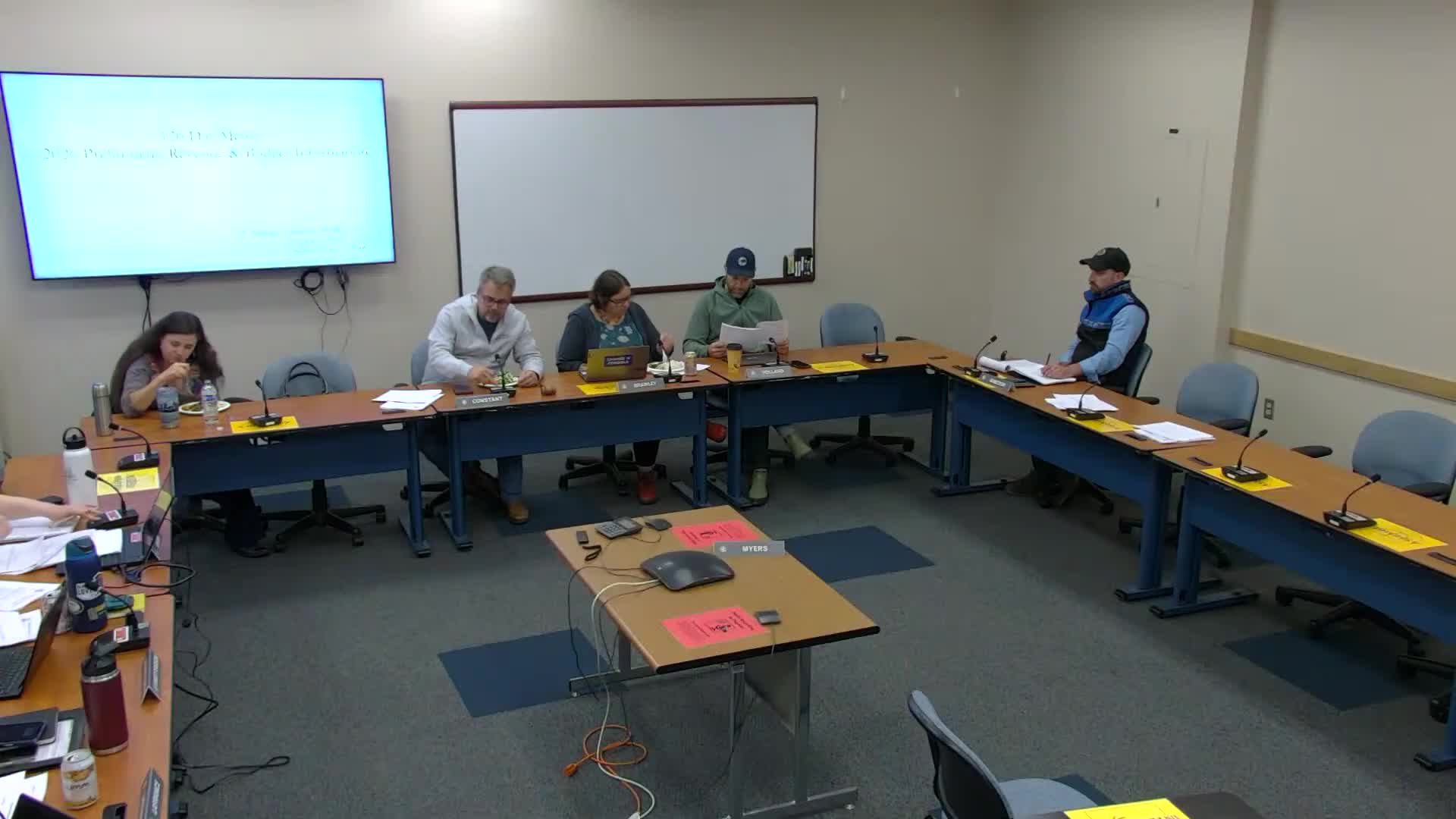
Summary
Mayor LaFrance and Office of Management and Budget staff presented the municipality's 120-day memo on Sept. 12, citing preliminary 2026 revenues, tax-cap calculations and a $700 million decline in state support over the past decade that will pressure the operating and capital budgets.
Mayor Dave LaFrance and administration officials told the Anchorage Assembly on Sept. 12 that preliminary budget figures for 2026 show constrained local resources and a significant long-term drop in state funding that will complicate planning for operations and infrastructure.
The 120-day memo, required by municipal code to be delivered 120 days before year-end, lays out preliminary 2026 revenue estimates, the city's tax-limit calculation, the capital program and utility budgets. "The municipal budget is a plan for turning our values and priorities into action," LaFrance said, adding the administration will prioritize public safety, housing stability, recruitment and community investments.
Why it matters: OMB and finance staff said Anchorage has lost roughly $700 million in state capital support between the 2005'2014 and 2015'2024 decades, a gap they said has left the municipality with fewer dollars to maintain roads, buildings and other assets. "If we have to do this alone, people are gonna continue to hear my tax bill went up because the state is receding," an assembly member summarized during the session.
Key numbers and drivers: The memo lists several preliminary revenue changes. Administration staff said a $3 million reduction in state community assistance is reflected in the draft numbers; new construction assessed valuation produced roughly $4 million in additional property taxes in the last comparable year even though assessed valuation rose by $193 million; the preliminary limit on property taxes under the cap was shown as about $367 million, roughly $12 million more than the 2025 revised number on current estimates; and the six-year capital program totals roughly $1.2 billion in departmental requests. The administration cautioned that transfers between funds are still being trued up and could change the preliminary totals.
Staff explained the largest recurring operating revenue still comes from property tax, and municipal spending remains capped by the local tax-limit formula. Finance staff flagged several revenue lines that can vary year to year, including room and motor-vehicle rental taxes, alcohol and marijuana sales taxes and state and federal reimbursements. "The state and federal revenue decrease is due to community assistance from the state of Alaska being decreased by $3,000,000 as well as a reduction in SEMT revenues," an OMB presenter said.
Context and next steps: OMB staff said the full 120-day memo is about 70 pages and includes attachments and departmental details. The administration and assembly will continue budget work through the fall, and staff agreed to provide follow-up analyses on several topics requested by assembly members, including the underlying assumptions for the projected drop in room tax and motor-vehicle rental tax and the population baseline previously provided by the Anchorage Economic Development Corporation (AEDC), which the administration said is changing. OMB staff said AEDC will no longer produce the same annual population report and the municipality will need a new standardized baseline for tax-cap calculations.
Ending: Administration officials said they will bring more detailed revenue and capital information to upcoming committee and budget work sessions and that the 120-day memo is intended as preliminary guidance for the assembly's budget deliberations.