
Kokomo council advances $10 monthly trash fee in 7–1 first-reading vote after heated public hearing
Get AI-powered insights, summaries, and transcripts
Subscribe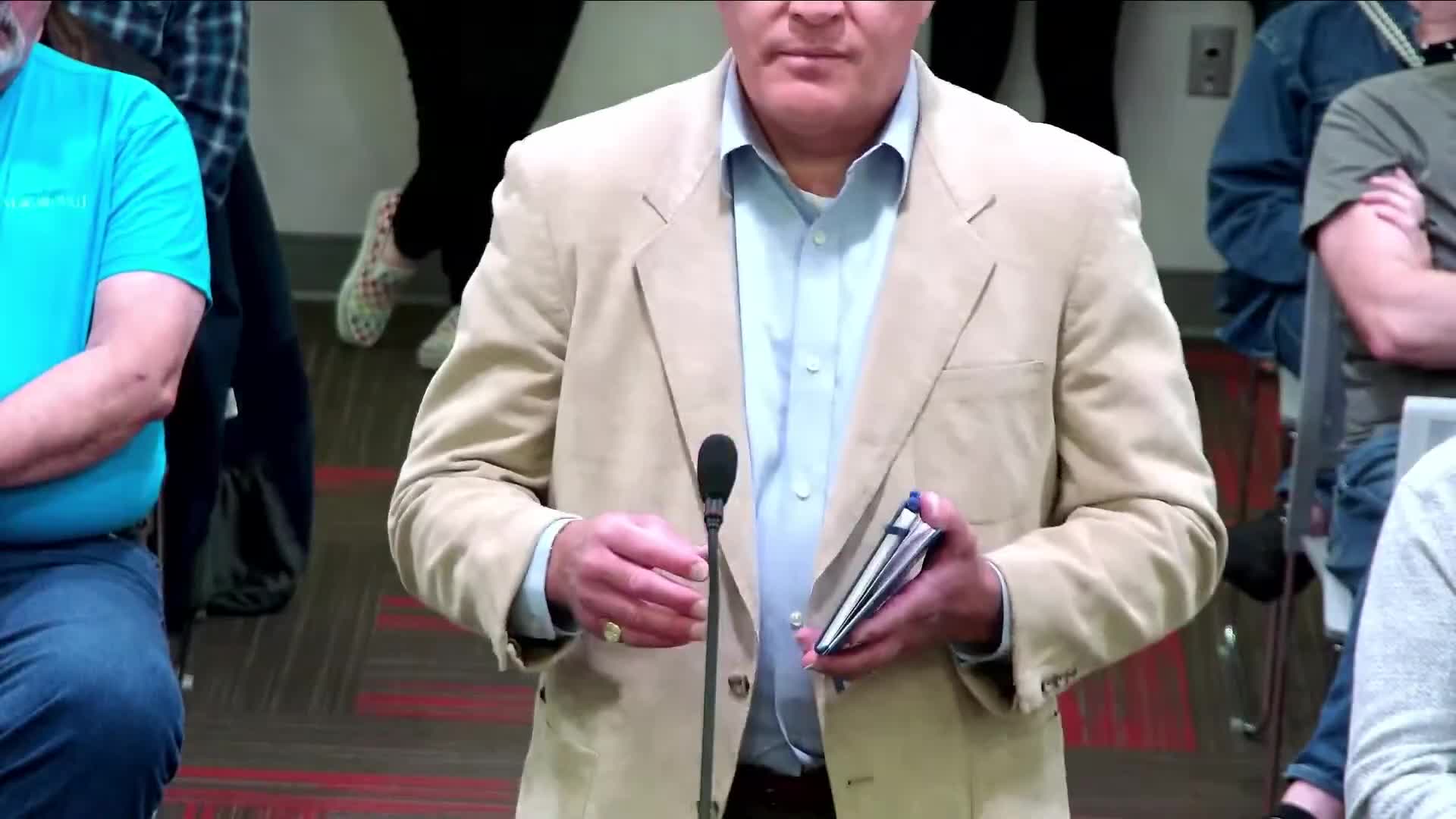
Summary
After a public hearing with dozens of residents objecting, the Kokomo Common Council passed the first reading of Ordinance 72-08 to impose a $10 monthly trash-collection fee, with discounts and implementation tied to wastewater billing beginning Jan. 2026.
KOKOMO, Ind. — The Kokomo Common Council advanced an ordinance to impose a monthly trash-collection fee on residential customers, voting 7–1 to adopt Ordinance 72-08 on first reading after a public hearing in which numerous residents opposed the measure.
The ordinance, as drafted, would add a $10 per month charge per eligible residential dwelling unit to the city wastewater bill beginning with wastewater bills issued on or after Jan. 1, 2026; a cash-collection price of $15 per month is included for other payment methods. The ordinance also creates two $5-per-month discount paths: one for owner-occupants with certain property-tax deductions (blind/disabled, over-65, disabled veteran/surviving spouse) and one for low-income households at or below 150% of federal poverty guidelines, subject to annual application and Board of Public Works and Safety approval.
Why it matters: City officials said the fee is intended to close a growing gap between the cost of providing trash and recycling services and the revenues available to the city, especially after changes enacted by the Indiana General Assembly in Senate Bill 1. Weston Reed, the city’s Director of Development, told the council that single-family properties in the county collectively pay about $7.8 million in property taxes but that only about $327,000 of that currently flows to Kokomo’s refuse budget. Reed said the full annual cost of the city-run trash service is roughly $4.3 million, including about $1.4 million in landfill tipping fees, roughly $1.45 million for equipment (he cited an automated truck cost of about $385,000 and a need to acquire two per year to maintain rotation), and about $1.5 million in labor costs. Reed also estimated Kokomo serves about 21,000 households and warned the city faces about $6.6 million in revenue losses over the next three years tied to SB1 provisions.
Public comment: The council allowed a public hearing before the vote. Dozens of residents spoke; the vast majority opposed the fee. Residents raised multiple concerns: that calling the charge a “fee” masks its tax-like effect; that retirees and low-income households on fixed incomes would be disproportionately affected; that the billing through wastewater statements would publicly display charges; and that the fee is not strictly usage‑based. Representative remarks included: “I oppose Ordinance 72-08,” said Hannah Guillaume Wenger, a Kokomo resident, during the hearing. Jack Chance, another resident, said, “This is just another bill at a time when rent, groceries, and utilities are already breaking us.” Some speakers proposed alternatives, such as charging for large-item pickups, expanding tree-limb pickup fees, or seeking budget adjustments rather than creating a new recurring charge.
Labor and city officials: Patterson Day, staff representative for AFSCME Local 2185, said the union supported the ordinance and that city and union representatives “worked with the city to figure out some creative solutions” to offset revenue losses. Mayor Tyler Moore and staff framed the fee as a means to retain and recruit public works and refuse employees and to fund necessary equipment.
Council action and next steps: Councilmember presention and first-reading procedures concluded with a roll-call vote: the ordinance passed first reading on a 7–1 vote (Councilman Stevenson cast the lone “nay”). The ordinance text sets up collection of the fee through the wastewater billing process, allows the city controller to segregate trash funds from wastewater revenues, and authorizes liening delinquent charges under Indiana Code 36-9-23. The ordinance requires annual reapplication for the low-income discount and provides the Board of Public Works and Safety authority to grant waivers. Final adoption requires subsequent readings; the council indicated there would be no more public comment on this item until later readings.
Budget context: Council members and staff said the fee is one of several measures being considered to address budgetary shortfalls driven by state-level tax changes and rising operating costs. City documents and council remarks referenced a proposed 2026 city budget and the impacts of SB1 as factors in the timing of the trash-fee proposal.
Implementation details from the ordinance: The draft ordinance defines eligible residential dwelling units and provides each eligible dwelling two canisters (either one 95‑gallon trash container and one 95‑gallon recycling container, or two 95‑gallon trash containers); specifies exemptions and discount eligibility; makes the fee subject to the same delinquency, penalty, interest and lien processes as wastewater charges; and requires the city controller to keep a separate trash-collection fund.
What remains open: The ordinance passed first reading; final adoption requires further council action in later readings. The precise administrative rules for applying discounts and processing waivers will be set by the Board of Public Works and Safety as directed in the ordinance.