
Mayor—s summer literacy program reports measurable gains for 80 students, district says
Get AI-powered insights, summaries, and transcripts
Subscribe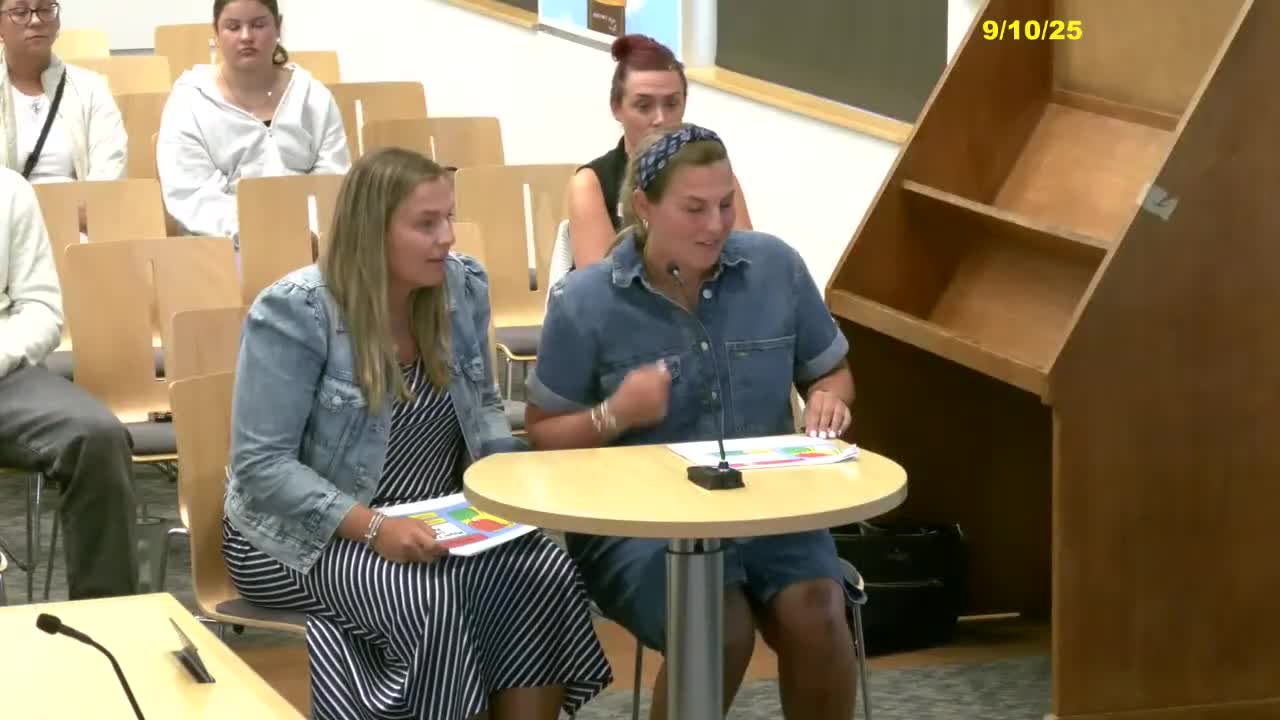
Summary
Beverly—s mayor-sponsored summer literacy program served 80 rising elementary students and reported measurable gains on DIBELS and writing measures after five weeks, program staff told the school committee.
Beverly—s mayoral summer literacy program enrolled 80 rising elementary students this summer and reported consistent gains across early-literacy measures, program staff told the School Committee on Sept. 10.
Program leaders said the five-week summer program combined daily literacy instruction with YMCA recreational activities and provided breakfast, lunch and transportation for participating students. The program received support from the BevEd Foundation and a Cummings Foundation grant, staff said.
"We had 80 students attend the program," a program presenter told the committee, and summarized daily schedules that began with Heggerty phonemic-awareness work and included reading centers, whole-group phonics and interactive read-alouds, followed by YMCA activities in the afternoon.
Teachers used DIBELS progress monitoring in weeks 1, 3 and 5 and grade-level writing rubrics in weeks 1 and 5. Staff reported classroom- and grade-level gains from baseline to week 5: for rising first-graders, correct letter sounds on nonsense-word tasks increased about 26% and words read correctly increased about 23%, with phoneme-segmentation scores up 59% and a 31% rise on word-reading fluency measures. Rising second-graders showed 16% and 20% rises in nonsense-word submeasures, a 55% jump in phoneme segmentation and a 17% gain in word-reading fluency; writing scores for those students rose 87% on the grade-level rubric. The single rising third-grade classroom posted gains including a 42% rise in correct letter sounds and a 48% rise in words read correctly, with a 71% increase in writing scores.
Program staff explained the DIBELS tasks to the committee and described how nonsense-word fluency and phoneme segmentation are used to measure decoding and phonemic awareness. The program also supplied each classroom weekly books from CopperDog Books, and students took those books home.
Superintendent Peter Cushing and committee members praised the gains. Committee members asked about selection and attendance: staff said reading coaches and classroom teachers identified students based on assessment data and teacher recommendation; about 90 students had been referred and 80 actually enrolled. Attendance was variable; families on vacation or scheduling conflicts sometimes reduced participation, staff said.
Program leaders said they will analyze fall outcomes when school-year measures are available and use that analysis to refine curriculum and identification practices.
Ending: Leaders said the program demonstrates targeted summer instruction—coupled with meals, transportation and recreational activities—can reduce summer learning loss and boost early literacy, and they asked the committee to monitor fall follow-up data as the district evaluates effectiveness.