Developer outlines three Jim Wells County solar projects, proposes pilot payments and road-use agreements
Summary
Representatives from Birch Creek Development presented plans for three utility-scale solar projects in Jim Wells County — Rag Horn, Beaverhead and Bandana — describing timelines, estimated investments and proposed pilot/tax-abatement payments and saying they will seek road-use agreements with the county.
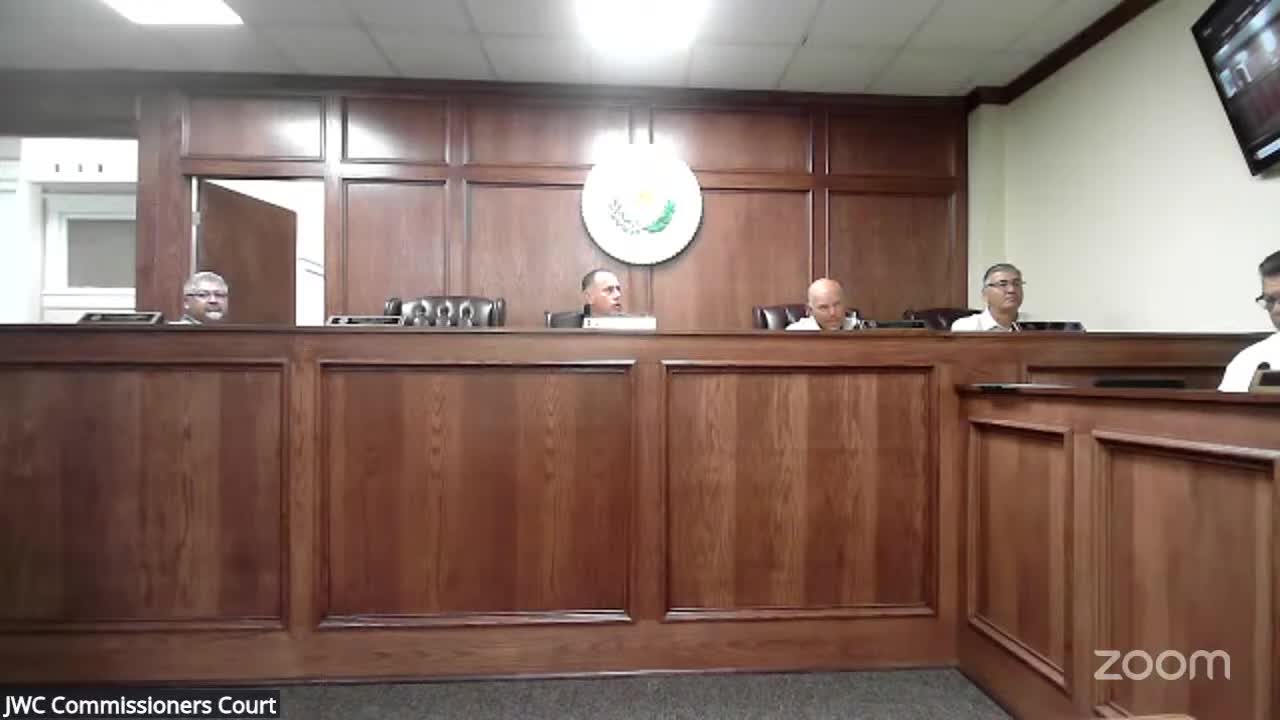
Jim Wells County commissioners on Sept. 12 heard a presentation from Birch Creek Development about three planned utility-scale solar projects — Rag Horn, Beaverhead and Bandana — that the company says would be built in phases beginning in 2027 and would be owned and operated by Birch Creek.
Birch Creek project developer Anna Conley said the Rag Horn and Beaverhead projects are each “an approximately $68,000,000 investment” with construction starting in 2027 and completing in 2028. She said the Bandana project is larger, “about a $90,000,000 investment,” and would follow the first two projects. Conley estimated the three projects together represent about a $226,000,000 total investment in the county.
The company provided long-term tax estimates it said reflect 35-year projections: roughly $10 million to Alice Independent School District and about $4 million to Jim Wells County for the Rag Horn project; similar totals for Beaverhead (noting Beaverhead would split across Alice ISD and Ben Bolt ISD); and a larger school/county tax yield tied to Bandana and Premont ISD. Birch Creek called those figures estimates and did not represent them as final tax receipts.
Garrett Peters of Birch Creek described a pilot/tax-abatement structure the company is proposing. Peters said Birch Creek would offer upfront consideration tied to development milestones — a payment on abatement execution, a construction-start payment, a construction-completion payment and an annual payment in lieu of taxes (pilot). For the three projects combined, Peters presented an example scenario that included an up-front execution payment of about $15,000, construction-start and -completion payments near $150,000 each, and a proposed $300,000 per year in pilot payments. He said those figures were “flexible and negotiable.”
On local impacts, Birch Creek said construction would generate a concentrated period of jobs and sales-tax activity for two years during each project’s build-out, and that long-term operations would require very few permanent employees — Birch Creek estimated one to three positions total and suggested “one job would service all three projects” given the sites’ proximity.
County staff and commissioners asked about local road impacts and repairs. Peters said Birch Creek intends to negotiate road-use agreements with the county to address heavy construction traffic and potential road repairs, and said discussions typically also cover fire and first-responder needs. Anna Conley confirmed the company expects to enter road-use agreements “with the counties.”
The company asked whether the county has an active Chapter 312 tax-abatement policy (often called a pilot or payment-in-lieu-of-taxes process). County officials said the county previously adopted guidelines in 2022 that may need renewal. A county official referenced a prior abatement with Enbridge and outside counsel assistance; Birch Creek said it would send its presentation and begin negotiations once the county’s guidelines are current.
No formal vote or agreement was taken during the presentation. Commissioners directed staff to review and, if needed, renew the county’s Chapter 312 guidelines so Birch Creek may file formal applications and begin negotiations on pilots, road-use agreements and other development terms.
The county judge requested a copy of Birch Creek’s presentation and asked the company to return for an in-person presentation at a future commissioner’s court meeting.
Ending: Birch Creek left the court with an open invitation to negotiate; the county signaled it will consider renewing its tax-abatement policy before accepting formal applications.