
APS candidates urge layered approach to rising on-campus weapons incidents
Get AI-powered insights, summaries, and transcripts
Subscribe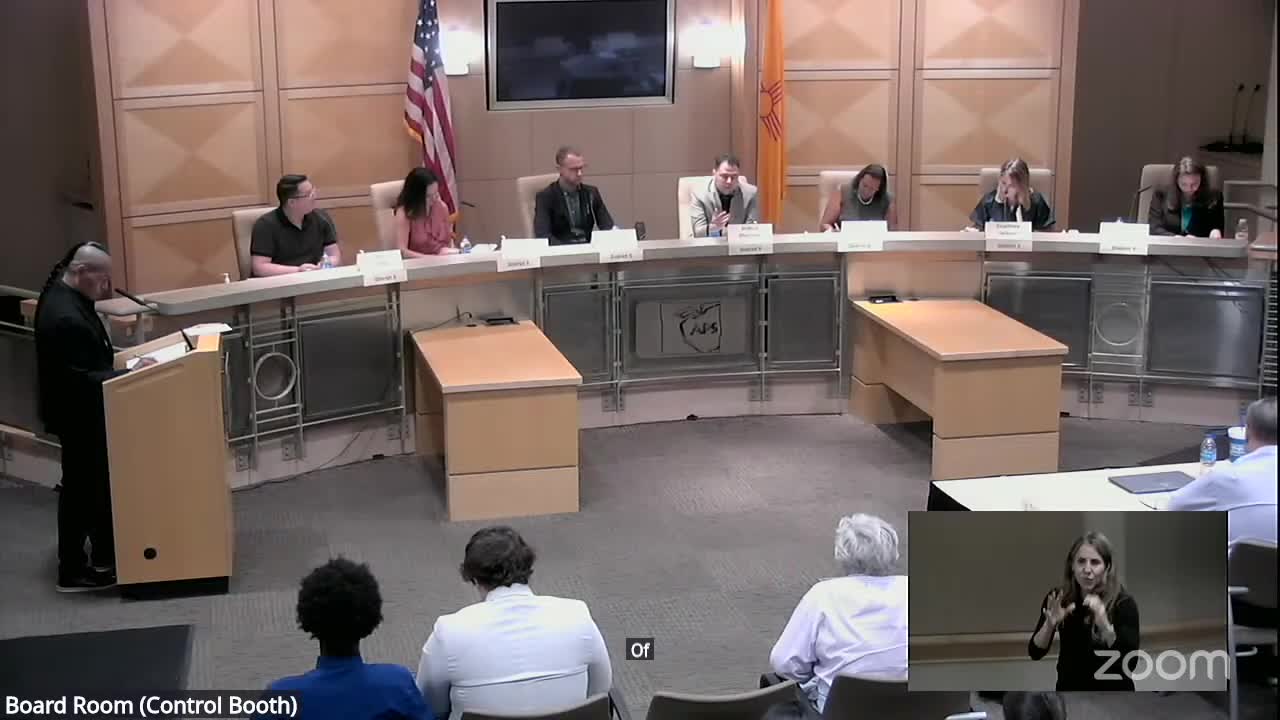
Summary
Candidates at an Albuquerque Public Schools board candidate forum described a rise in weapons incidents on campus and urged a mix of hardware, human supports and community partnerships to improve student safety.
Candidates at an Albuquerque Public Schools (APS) candidate forum on Wednesday called for a multilayered response after multiple speakers described an increase in weapons incidents at district schools. The proposals ranged from stepped-up prevention and mental-health services to low-profile metal detection and clear-backpack policies.
At the forum, Brian Laurent Jr., a special-education teacher and candidate for District 5, said the district's current “if you see something, say something” approach is insufficient because it “allows the weapons into the building.” He urged the district to consider detection technologies and broader conversations about why youth obtain weapons.
Courtney Jackson, vice president of the APS Board of Education and the incumbent candidate for District 7, described an ongoing cross‑agency initiative she has championed: “bringing together the DA, APS, APD, the sheriff, the DOJ, and the FBI to continue discussions with our students, about violence intervention, and they're bringing that directly into the classrooms.” Jackson said the work pairs school-based measures with community collaboration.
Kristen Wood Hegner, a District 7 candidate and child-safety advocate, said early intervention and staff training are essential and provided a figure she said candidates had discussed: “6 guns have been recovered by APS so far in the first 15 days of school,” which she said, if sustained, would put the district on track for more incidents this year. She urged better early identification and consistent disciplinary training for administrators and teachers.
Isaac Flores, a District 3 candidate who works with youth in juvenile detention settings, recommended more mental-health services, “low profile metal detectors, clear backpacks, and … early threat detection systems,” and said the district should coordinate with state lawmakers on longer-term policy changes. Danielle Gonzalez, an incumbent board member, said the district and families are “terrified” when guns are found in schools and described the need for both “hardware” (fencing, cameras, vestibules) and “humanware” (social‑emotional learning, counselors and anti‑bullying work).
Candidates also urged community-wide prevention strategies, including diversion programs and increased behavioral-health staffing. Several speakers emphasized that technical measures should be paired with mental‑health supports and preventive work to address root causes.
The forum produced no formal board actions or votes; candidates described positions they would pursue if elected. The discussion highlighted several currently unresolved choices for the district—ranging from clear backpacks and metal detectors to expanded counseling staff—that would require further policy decisions by the board, budget allocations and likely coordination with law enforcement and the state.
Looking ahead, candidates said APS needs a short-term plan to reduce immediate risks and a longer-term strategy that expands mental‑health services, improves early intervention and engages community partners to reduce youth access to weapons.