
St. Johns River Water Management District: projected demand rise cannot be met from current aquifer without harming springs
Get AI-powered insights, summaries, and transcripts
Subscribe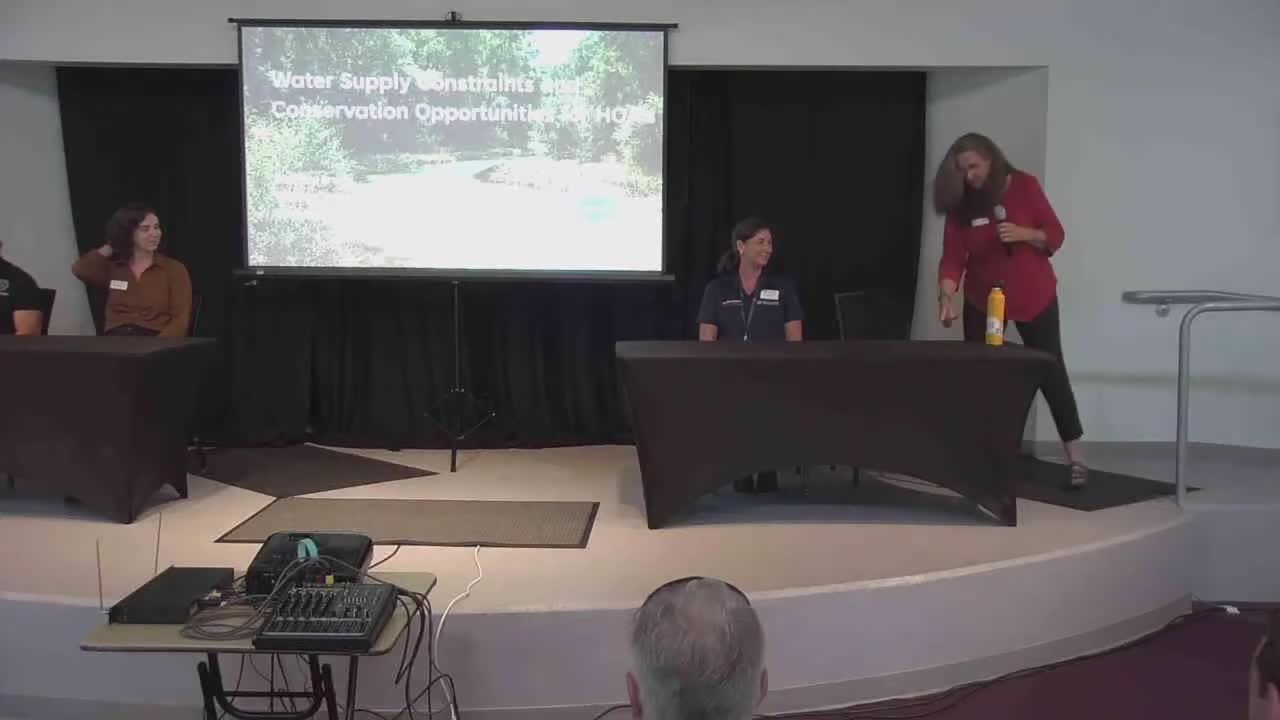
Summary
At Oviedo’s inaugural water expo, St. Johns River Water Management District staff said a projected regional increase in demand — roughly 96 million gallons per day — cannot be met by existing freshwater groundwater sources without significant impacts to springs and surface waters, and urged conservation and alternative supplies.
Deirdre Irwin, Bureau of Water Supply Planning at the St. Johns River Water Management District, told attendees at Oviedo’s inaugural water expo that regional growth will raise demand by about 96,000,000 gallons per day and that relying on fresh groundwater alone would “have significant impacts to minimum flows and [surface] water bodies.”
Irwin said that although Central Florida receives roughly 52 inches of annual rainfall and sits above a productive aquifer, the traditional Floridan aquifer is already constrained in many places because of long-term withdrawals and observed impacts at springs. “Our traditional source of water is becoming constrained,” she said, summarizing why planning is necessary even on a rainy September day.
The district official described the statutory water‑supply planning process used by Florida’s five water management districts: utilities and the districts must evaluate current supplies, project demand 20 years forward, and identify alternative water supplies where surface‑water or spring impacts are observable. Irwin said those regional plans are updated every five years and that the Central Florida Water Initiative (CFWI) region was preparing a second five‑year renewal that district boards are expected to approve in November or December. After adoption, she said, local government comprehensive plans and utility facility work plans must be amended to conform to the report’s findings.
Irwin and other panelists outlined alternatives and tradeoffs: reclaimed water and conservation can delay more costly projects; some utilities are drilling deeper into the Lower Floridan aquifer; brackish groundwater is being tested in limited locations; and seawater desalination is usually a last option because of cost and carbon footprint. “On average, it’s 17 times more expensive than aquifer water,” Irwin said of seawater conversion.
She emphasized that conservation has measurable benefits. District and university analyses cited at the event show that at least half of household water use is outdoors and that irrigation (especially automatic systems) is a primary target for savings. Irwin and others pointed to programs that train irrigation contractors, audit systems, and offer rebates as tools to delay construction of expensive alternative supplies.
The district encouraged residents, HOAs and utilities to review the draft regional report at cfwiwater.org and to participate in local implementation steps once the plan is adopted. Irwin underscored that the planning timeline and technical analyses are intended to protect springs, wetlands and groundwater quality while accommodating growth.