
Butte judicial committee debates enforcement, shelter options after resident complaints about Emma Park
Get AI-powered insights, summaries, and transcripts
Subscribe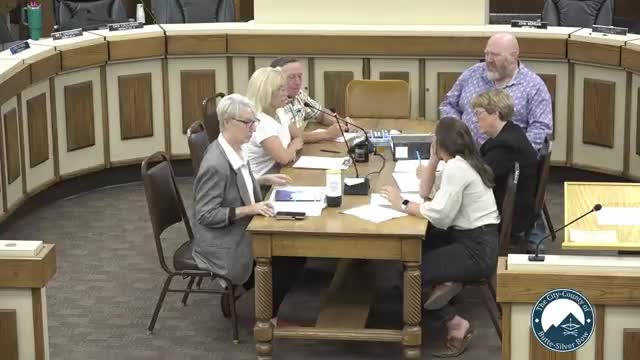
Summary
At a Sept. 10 Judiciary Committee meeting in Butte, commissioners debated enforcement of park camping bans, supportive services and legal limits after residents reported about 85 police calls to Emma Park; the committee voted to hold the matter pending counsel guidance.
The Judiciary Committee reconvened Sept. 10 in Butte to discuss complaints from residents about camping, crime and public-safety concerns around city parks, particularly Emma Park, and to weigh enforcement options against constitutional limits and funding constraints.
The discussion mattered because residents and several commissioners urged more immediate enforcement and cleanup in neighborhoods where people are camping, while civil-rights and legal staff warned that local camping bans may conflict with state constitutional protections and could prompt litigation.
Commissioner Healy said residents are “having to live with crime around their neighborhoods with the homeless,” and listed several potential responses: “Expand shelter access, warming centers, transitional housing, safe camping zones outside of parks, service outreach teams deployed with enforcement,” while noting that “case management … sounds like that's a big money issue.”
Director Frederickson, representing the parks department, said park signs against overnight camping are posted: “I believe there's signs in every park that says no camping.” He described plans to thin dense willows near a creek at Father Sheehan Park to reduce hidden encampments, but said the parks department must “work with the state agencies to make sure that we're following all their proper procedures” before removing vegetation.
Sheriff Lester told the committee the department responds to complaints and that enforcement is generally complaint-driven: “It's complaint based generally,” he said, noting that the 85 responses to Emma Park reflect calls for service but did not imply 85 arrests. “A lot of times we leave and nobody's happy,” he said, adding that constitutional protections limit what officers can do when people decline to leave.
Henry Seton of the American Civil Liberties Union of Montana told the committee that the Montana Constitution provides protections beyond federal law that could make urban camping bans legally risky for Butte, citing the state’s prohibitions on cruel and unusual punishment and the constitutional recognition of the right to pursue basic necessities, “which includes seeking shelter outside.”
Deputy County Attorney Shay agreed the county must act within state constitutional limits and cautioned against measures that could create fines or other penalties that effectively function as a “debtor's prison.” Shay urged the committee to work within those legal parameters.
The meeting included sharp disagreement among commissioners about causes and solutions. Commissioner Callahan said some people who have been offered housing “aren't houseable,” adding that supportive housing placements had been destroyed in some cases. Commissioner Anderson urged stronger action and broader pressure on state and federal lawmakers, saying the county needs to “stop kicking the can down the road” and calling for more shelters and enforcement.
After discussion, Commissioner Healy moved to hold the communication in abeyance pending consultation with the county attorney; the motion was seconded and passed by voice vote. The committee did not adopt new ordinances or funding commitments; members asked Healy to meet with County Attorney Enruth (to be scheduled after Enruth returns from vacation) to clarify what actions are legally permitted and what steps the committee could pursue next.
Next steps recorded at the meeting: Commissioner Healy will confer with the county attorney to determine legally feasible options and return to the committee; no timeline was specified. The committee then moved to adjourn.
Sources: Committee discussion and public comment at the Sept. 10 Judiciary Committee meeting.