
Butte judiciary committee pauses action on park camping after legal and budget concerns
Get AI-powered insights, summaries, and transcripts
Subscribe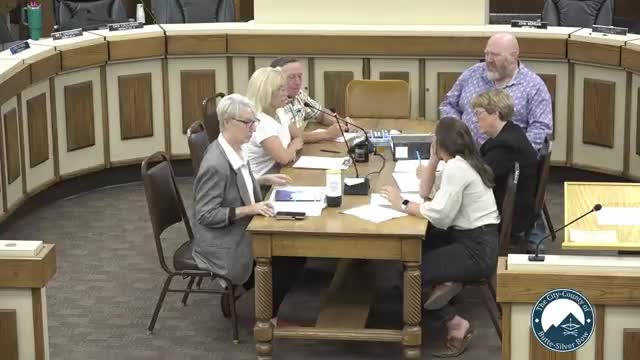
Summary
The Butte County Judiciary Committee voted to hold further action on park camping and related homelessness measures pending a legal review after residents cited repeated calls about camps, the parks director described removal limits, the sheriff warned of constitutional constraints, and the ACLU urged caution under Montana law.
The Butte County Judiciary Committee on Sept. 10 voted to hold further action on enforcement or new ordinances addressing camping in county parks pending a legal review by County Attorney Enruth. Commissioner Healy made the motion to hold the matter in abeyance and the committee approved it by voice vote.
The decision came after residents and commissioners described repeated police calls about encampments and alleged crime around Emma Park and other neighborhoods, while law enforcement and the American Civil Liberties Union of Montana warned that legal limits constrain how the county can respond. "We have to do things that are constitutionally correct so we aren't violating people's rights," Sheriff Lester said.
The issue matters because neighbors said the presence of encampments has created safety and quality-of-life concerns, while local officials said the county lacks funding and legal clarity to adopt or enforce new measures. "Expand shelter access, warming centers, transitional housing, safe camping zones outside of parks, service outreach teams deployed with enforcement," Commissioner Healy said, listing options she wants the committee to explore.
Discussion and evidence Residents and commissioners repeatedly referenced a spreadsheet of police responses showing 85 calls to Emma Park over about a year; Commissioner Healy said residents contend those calls involved people experiencing homelessness. Parks Director Frederickson said signs stating "no camping" are posted in county parks and that, in some park areas such as the willows near Father Sheehan, vegetation has allowed camps to grow. "If you see them in their camp at 10:00, they're breaking the law," Frederickson said, and he added the department plans to thin willows this fall while coordinating with state agencies on watershed protections.
Sheriff Lester described enforcement limits under current law and the department's complaint-driven response model. "Those calls there reflect 85 responses from our department to an issue," he said, noting many calls are welfare checks or reports of suspicious people and that not all calls result in arrests. Lester also warned the county cannot lawfully relocate people without consent and said criminal enforcement alone does not resolve homelessness.
Legal cautions Henry Seton of the ACLU of Montana cautioned the committee that Montana's constitution affords protections that can constrain local bans on camping or displacement of people seeking shelter outdoors. "Our Montana constitution has greater protections than the federal counterpart," Seton said, adding that state protections on dignity and the basic necessities of life could create legal exposure for the county if it adopts sweeping bans.
Deputy County Attorney Shay echoed that the county must act within Montana constitutional parameters and avoid penalties that effectively create a debtor's prison or otherwise exceed legal authority.
Budget and implementation concerns Multiple commissioners said implementation would require funding the kinds of supportive services that many advocates and nonprofit providers say are essential to reducing encampments over the long term. Commissioner Thatcher and others noted that shelters, case management and outreach require new or redirected funding, and that the county's recently passed budget limits what can be added immediately.
Dissent and practical concerns Some commissioners and speakers raised concerns about people they described as "not houseable," saying past housing placements had failed because occupants damaged property or could not live independently. Commissioner Callahan said local housing providers had repeatedly tried to house some individuals without success; other commissioners responded that case-by-case issues do not negate the need for systemic supports.
Committee action and next steps Commissioner Healy moved to hold the matter in abeyance pending consultation with County Attorney Enruth about what legal steps the county can take; the motion was seconded (second not specified on the record) and passed by voice vote. Healy said she will meet with the county attorney after his return from vacation to determine the next steps; no timeline was given. The committee did not adopt any new ordinance or enforcement policy at the Sept. 10 meeting.
The committee discussed several policy options and operational steps for future consideration — expanding shelter access, opening warming centers, establishing transitional housing, creating designated safe camping zones outside parks, deploying outreach teams paired with enforcement, and targeted park vegetation management — but all remain proposals until the county attorney advises on legal and procedural feasibility and until funding is identified.