Get Full Government Meeting Transcripts, Videos, & Alerts Forever!
Get email alerts on the Madison Station Amendment topic
No spam. Unsubscribe anytime.
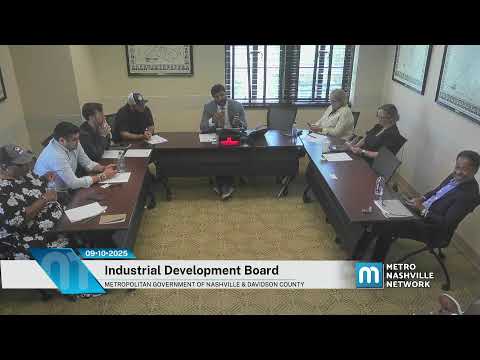
Industrial Development Board approves amendment to Madison Station project to front‑load affordable units, remove parking garage from phase 1
Summary
The Industrial Development Board voted to approve a first amendment to the Madison Station project agreement that reduces density for phase 1, replaces a planned parking garage with surface parking and places all 170 affordable units into the first phase; the chair recorded an abstention.
The Industrial Development Board on Sept. 10 approved a first amendment to the Madison Station project agreement that reduces density in phase 1, replaces a planned parking garage with surface parking and front‑loads affordable housing into the initial phase.
The amendment is intended to make the first phase financially feasible after market changes since the project’s original approval. Jim Murphy, attorney with Bradley Law Firm, introduced the developer team and Daniel Forbes, asset manager for Artesia Real Estate, told the board the original phase 1 design “became economically infeasible” after interest‑rate and cost spikes and that the changes will allow the project to move forward more quickly.
Board members said the amendment matters because it moves affordable housing into construction sooner. The developer agreed to a minimum of 170 units in phase 1 — all affordable at 60–80% of AMI — down from a previously contemplated minimum of about 280 units in phase 1. Board member Laura Yankee asked whether the removal of the garage would affect a planned transit center; Forbes said it would not and that the transit center is more likely to come in a later phase and remains a priority.
Background details provided to the board describe Madison Station as a mixed‑use redevelopment of a 32.4‑acre shopping center about two miles from Brawley Parkway in Madison, with a multi‑phase buildout originally envisioned to include 1,700,000 square feet of residential, retail and office space and up to 1,700 housing units across the full plan. The board packet cited projected economic impacts prepared for the initial agreement, including an anticipated project investment of about $631,400,000 and job and labor‑income estimates tied to construction and long‑term occupancy; those figures were presented by staff and the developer as part of the project overview.
Metro Legal advised the board that the amendment’s language is legally sufficient for the board to consider. The amendment also removes or adjusts language tied to a previous Diversity/DBE requirement that, according to board discussion, has been affected by changes in state law; Metro staff said a local DBE percentage goal that had been included in the original agreement could not be enforced if state law now prohibits the provision and therefore was removed from the amended agreement.
During the meeting Lauren Knotts, president of the Madison Rivergate Chamber of Commerce, spoke during the public‑comment period in favor of the developer’s changes, saying, “They've been a wonderful community partner. We can't wait for them to start phase 1... We love that an even bigger percentage will be more affordable housing, and we are totally fine with not having the parking garage.”
Board member Rodriguez moved approval of the amendment and board member Nancy Van Reese seconded. The motion carried; the chair asked that the record show he abstained from the vote.
The board and developer clarified that this amendment pertains to the project agreement and does not constitute final approval of any bond issuance or the TIF reimbursement structure. The developer will need to return for separate approvals related to any bond issuance or reimbursement when that step is reached. The board also confirmed the overall project’s later phases will return to the board for additional approvals.
The amendment and the board’s vote do not change the economic impact plan previously approved by Metro Council; the project remains subject to the other approvals and processes described in the project materials.