Get Full Government Meeting Transcripts, Videos, & Alerts Forever!
Get email alerts on the Business License topic
No spam. Unsubscribe anytime.
Sierra Vista staff unveils streamlined business-license draft, opens 30-day public comment period
Summary
City staff presented a slimmed-down draft of the city's business-license ordinance that codifies longstanding fee exemptions for nonprofits and religious organizations, removes duplicative provisions, and will be released for a 30-day public comment period before returning as an ordinance.
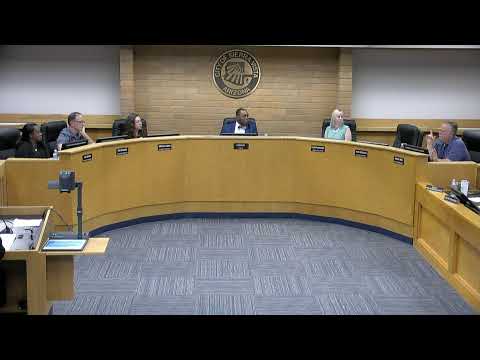
City staff presented a streamlined draft of Sierra Vista’s business-license ordinance Wednesday and told council members the draft will go to a 30-day public comment period before returning as an ordinance for council consideration. The draft consolidates and removes language staff said duplicates community development and code-enforcement rules and codifies long-practiced fee exemptions for certain organizations.
City clerk’s office staff member Ms. Adams, who delivered the staff report, said the ordinance rewrite was intended to ‘‘make it easy on everybody and kind of make things a little cleaner and a little clearer.’’ She told the council the last update tied to a fee change was more than a decade ago and that the rewrite removes provisions staff no longer enforces, such as requiring bonds for peddlers.
The draft explicitly lists exemptions that staff said had been applied in practice for many years. ‘‘We have waived fees for religious organizations and nonprofits forever,’’ Ms. Adams said when asked where the exemption authority came from. She said the exemption was a longstanding practice that staff now proposes to codify so it is clear to applicants.
Councilmembers asked for clarifications during the presentation. One councilmember asked how many other long-standing practices might now be written into the ordinance and whether the changes were strictly administrative. Ms. Adams responded that the rewrite was intended to mirror daily practice and that attorneys had guided interpretations in gray areas historically. Councilmember Rodriguez suggested a plain-language fix to the vendor-permit provision — recommending the draft use wording such as ‘‘more than six’’ rather than ‘‘six or more’’ to avoid confusion about the cutoff for free vendor permits.
Staff described operational details for vendors and small sellers: single-event vendor permits are issued at no charge, turnaround for business-license applications is usually a few days and sometimes same-week unless a zoning inspection is required, and leisure division staff are authorized to issue one-day vendor permits for events such as Art in the Park. Ms. Adams said the intent of the licensing program is primarily to collect information about who is operating in the city and to provide basic guidance to occasional vendors on sales tax and other requirements.
Timeline and next steps were described repeatedly during the discussion: the draft will be published for a 30-day public comment period and then return to council as an ordinance. If the council approves the ordinance at a future meeting and passes it, the ordinance becomes effective 30 days after passage; separate codification and reprinting of the city code are a once‑a‑year administrative step that does not affect when an ordinance takes effect.
No formal vote was recorded on the record during the presentation; staff described the session as the public-comment phase of the ordinance update and invited council and public input during the 30-day period.