Get Full Government Meeting Transcripts, Videos, & Alerts Forever!
Get email alerts on the School Enrollment topic
No spam. Unsubscribe anytime.
Revere will model middle‑school assignment scenarios; equity, capacity and walkability will guide options
Summary
City planner Tom Skorofsky said the city and MAPC will model scenarios to decide whether to shift from a lottery to neighborhood middle‑school assignments, using academic, equity, neighborhood safety and growth criteria; results are expected by December 2025 or January 2026.
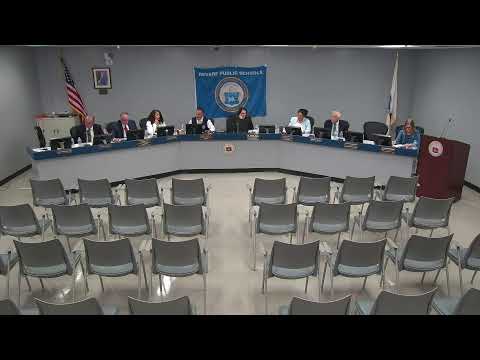
City planner Tom Skorofsky told the Riviera School Committee on Sept. 9 that the city will work with the Metropolitan Area Planning Council (MAPC) to model multiple scenarios for middle‑school assignment, with an eye to shifting from a lottery system to neighborhood‑based assignments.
Skorofsky said the modeling will use criteria that include school capacity and student‑teacher ratios, distribution of English‑language learners and students with special needs, free‑and‑reduced‑price‑lunch shares, race and ethnicity balance, neighborhood proximity and pedestrian‑friendly routes, and projected housing growth. "Our goal here in partnership with MAPC is to basically model out a series of scenarios where we're looking at some criteria and basically using geoprocessing," he said. The city plans to start data analysis in September, complete modeling in December and present three scenarios to the school committee in December or January 2026.
Skorofsky warned about equity risks of poorly planned assignments. He said concentrating students with higher needs or poverty in a single building can create "vulnerabilities on the city side for civil rights litigation" and cited other districts' experience as a caution.
Committee members asked whether existing neighborhood schools would be preserved in the modeling and whether walkability improvements would accompany any assignment changes. Skorofsky said neighborhood schools will be considered and that the modeling will explicitly measure share of students within a mile and percentage with pedestrian‑friendly routes. He also described related city work — a pending pedestrian signal at Harris Street/Bell Circle, a $400,000 federal grant the city retained for additional crossing work, and Mass Gaming Commission funds for a "bike to the sea" connection — as complementary efforts to improve safe access to schools.
No formal assignment changes were decided; Skorofsky said the modeled scenarios will be brought back to the school committee for discussion and decision.