California Transportation Commission adopts 2026 STIP guidelines and fund estimate
August 18, 2025 | Transportation Commission, Agencies under Office of the Governor, Executive, California
This article was created by AI summarizing key points discussed. AI makes mistakes, so for full details and context, please refer to the video of the full meeting. Please report any errors so we can fix them. Report an error »
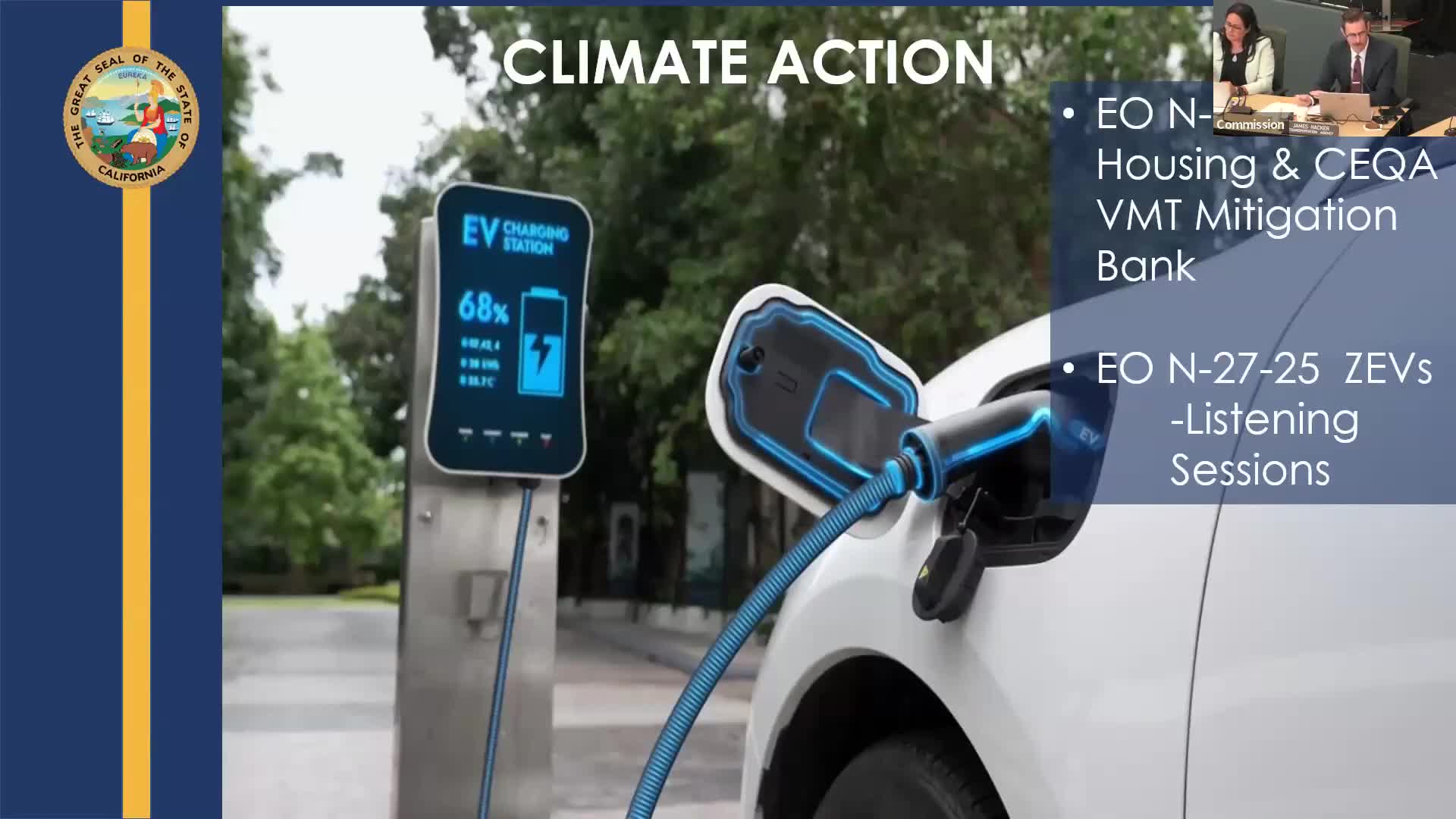
The commission held a required public hearing on the draft STIP guidelines, received brief public testimony and a series of stakeholder endorsements, and then moved to adopt the guidelines and the fund estimate. "The draft 2026 STIP guidelines are divided into two sections," staff said during the hearing, outlining specific guidance tied to the departments fund estimate and a set of permanent policies. The commission voted to authorize staff to make minor technical changes to the guidelines before publication.
Why it matters: The STIP guidelines set policy, schedule and funding parameters for projects that regional agencies will program into the states multi-year capital plan. The fund estimate indicates the amount of funding that will be treated as available for STIP and SHOP programming for the next cycles; adopting it begins the technical work that regional transportation planning agencies need to complete RTIP submissions and feed projects into the 2026 programming cycle.
Commission staff said the 2026 guidelines included two substantive edits this cycle: expanding the uncommitted funding section to allow some project proposals to rely on active transportation and federal discretionary funds in addition to Senate Bill 1 sources, and a change to require regions to provide project page numbers from their adopted Regional Transportation Plans that correlate to each STIP project. Caltrans staff said the fund estimate reflects enacted July 1 beginning balances and updated interest and revenue assumptions.
Garrett Franklin of Caltrans presented the proposed fund estimate. He said Caltrans made no changes to the STIP and SHOP target capacities since the draft; the aeronautics account target was reduced by $1.5 million to reflect updated balances and commitments. The department recommended adoption of the fund estimate and noted that the publication of the final book would follow within 60 days.
Votes and formal actions: The commission took these actions by motion and voice vote. Vice Chair Marissa Falcone moved to adopt the 2026 STIP guidelines; Past Chair Eager seconded and the motion passed. Commissioners subsequently adopted the 2026 STIP and Aeronautics fund estimate on a motion by Commissioner Eager, seconded by Commissioner Tiffany; the motion passed.
Context and next steps: With the STIP guidelines and fund estimate adopted, regional agencies were reminded of the December deadlines for regional STIP programming submissions. Staff also said Caltrans and the commission will continue office hours and outreach to help regions prepare competitive STIP lists under the newly adopted parameters.
Public comment and stakeholders: Representatives of multiple regional agencies, including LA Metro, the Metropolitan Transportation Commission and Nevada County Transportation Commission, offered support during the STIP hearing, thanking staff for outreach and the updated uncommitted funding flexibility.
The commission closed the hearing and directed staff to finalize and publish the guidelines and fund estimate.
Don't Miss a Word: See the Full Meeting!
Go beyond summaries. Unlock every video, transcript, and key insight with a Founder Membership.
30-day money-back guarantee
Sponsors
Proudly supported by sponsors who keep California articles free in 2025

