Get Full Government Meeting Transcripts, Videos, & Alerts Forever!
Get email alerts on the Career And Technical Education topic
No spam. Unsubscribe anytime.
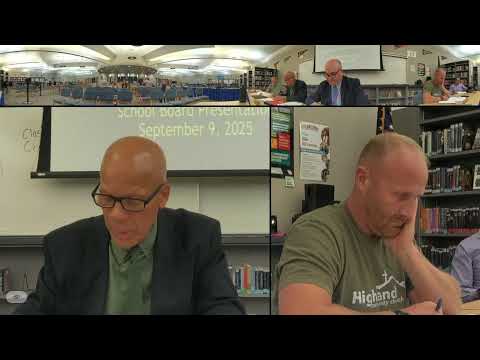
West Valley board hears CTE year‑in‑review, approves district career‑technical program
Summary
The West Valley School District board received a year‑in‑review of career and technical education (CTE) programs, heard details about a new statewide High School & Beyond platform (SchoolLinks), and voted 4‑0 to approve the district's career/technical education program.
The West Valley School District Board of Directors on Sept. 8 heard a year‑in‑review of the district's career and technical education offerings and approved a district career‑technical education program by a 4‑0 vote.
The presentation, led by Jeff Lars, executive director of innovation, outlined upgrades to CTE classrooms across the district, new and split courses at the middle level (including separate Ag Ventures and Food & Nutrition classes), a three‑lane JROTC range, robotics and hydroponics at the Innovation Center, and partnerships that produced apprenticeships with local firms including Pexco and Van Dorn. Lars said the district received a state grant to fund equipment for aerospace and simulator training and that the district acquired five flight simulators and other lab trainers.
Why it matters: district officials said CTE is intended to connect classroom learning to career pathways and local employers, and to satisfy statewide expectations that students complete a "high school and beyond" plan before graduation. Board members and staff described the programs as part of a regional effort with Educational Service District 105 and local workforce partners to expand internships, apprenticeships and employer connections.
Lars told the board the district moved a special‑education pacing lab into the Innovation Center to increase capacity and create a more job‑site like learning environment. "We move that lab to the innovation center and have more room and capacity for that lab," he said. He also described the district's rollout of SchoolLinks, a state‑adopted High School & Beyond platform that will be used for grades 6–12.
SchoolLinks, Lars said, can import statewide and local job listings, connect students to apprenticeship and employer postings, and host virtual campus tours and career inventories. "Right now, the state's providing this free," he said, referring to the state deployment of the program; the district plans trainings for staff and regional coordination through ESD 105. Jesse Elms, the district's newly promoted career and college pathway coordinator, was identified as the staff lead who will work with local employers and regional partners to populate the system with local opportunities.
The board vote approved the agenda item described in the packet as the district's career/technical education program. The motion passed 4‑0. No individual board member votes were recorded by name in the transcript.
Details described in the presentation include: - Classroom and lab upgrades at the middle level campus, including LED lighting, new furniture and renovated science/CTE spaces. - New or revised courses: Ag Ventures and Food & Nutrition at the middle level; Food & Nutrition and Food Nutrition Science at the high school; Construction 101/202 supporting Habitat for Humanity projects; STEM aerospace combining machining and robotics courses at the Innovation Center. - Partnerships: a local credit union (GISA) opened a student branch at the high school to teach account management; industry volunteers regularly working with students (example: welding support from a local employer); apprenticeships and paid student employment with regional businesses. - A two‑year state grant used to purchase simulators and trainers and to support instructor training. - Regional advisory structure for CTE pathways, coordinated with ESD 105 to avoid duplicate outreach to the same employers and to strengthen employer participation across districts.
Discussion on SchoolLinks included how job and employer data are populated. Lars said the platform aggregates job postings from a variety of sources (including national aggregators) and that districts and regional partners can import or add local employer listings. The board discussed using SchoolLinks to specifically surface local Yakima Valley job and apprenticeship options rather than state‑level aggregates.
The presentation emphasized that SchoolLinks will be used beyond an advisory or single‑class exercise: staff described expectations that teachers in math, science or English integrate career connections into coursework so students see the relevance of classroom skills. Lars said the district will train teachers and administrators to use the tool across grades 6–12.
The board also heard that the district has pursued regional coordination so businesses are not asked to attend multiple advisory meetings across nearby districts; ESD 105 has added staff capacity to support that regional effort.
What the board directed next: the district will proceed with the approved CTE program and continue implementation of SchoolLinks, with Jesse Elms serving as a coordinator to reach out to employers and regional partners. Staff described planned training sessions for teachers and a phased implementation this school year for grades 6–12.
The presentation included several implementation items that will require continued staff work and external partnerships: equipment installation and instructor training for the flight simulators and aerospace trainers, employer onboarding to SchoolLinks, and scheduling for new courses. No additional budget actions were recorded in the transcript during the presentation.