Get Full Government Meeting Transcripts, Videos, & Alerts Forever!
Get email alerts on the Public Works topic
No spam. Unsubscribe anytime.
Council confirms three DPW leaders after wide-ranging hearings on safety, staffing and contracting
Summary
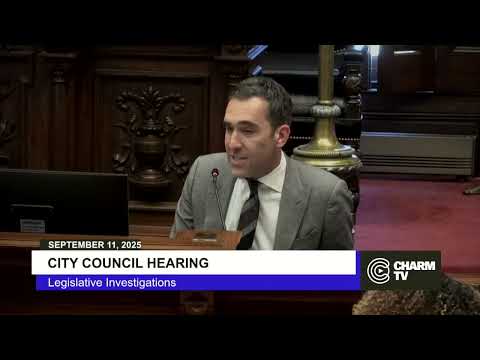
Matthew Garbark, Kendall Abu Hakim and Stephen Sharkey were confirmed Thursday by the City Council committee to lead the Department of Public Works after hearings focused on worker safety, staffing and reducing reliance on contractors.
Matthew Garbark, Kendall Abu Hakim and Stephen Sharkey were confirmed Thursday by the City Council's Legislative Investigations Committee to lead the Department of Public Works after a hearing that centered on worker safety, contracting, recruitment and efforts to modernize operations. Garbar k was approved to serve as director of DPW; Kendall Abu Hakim was approved as bureau head of Solid Waste; and Stephen Sharkey was approved as bureau head of Water and Wastewater. Committee members pressed each nominee on frontline safety, hiring and the department's reliance on contractors. The nominees presented similar top priorities: strengthen a culture of safety, reduce reliance on outside contractors by building in-house capacity, invest in apprenticeships and training pipelines, and use data to guide operations. Garbark, the director nominee, said his top priority is the health and safety of workers and customers. He described work to document procedures, expand anonymous reporting through a "speak up" tip line, and create clearer accountability up and down the chain of command. Garbark told council members he will seek to bring more work back in house where cost-benefit and training permit it and to pursue an enterprise fund or other long-term revenue stream for solid waste only if it can be implemented equitably and with offsetting reductions for residents. Abu Hakim, nominated to lead Solid Waste, emphasized repair of working conditions, fresh facilities and a "career progression trajectory" for frontline employees. He noted several operational improvements already underway, including a new wage package for sanitation workers that the nominee said will yield a 19% increase over three years and delivery of new trucks and equipment. Abu Hakim proposed a return to more systematic supervisor training, including a revival of a prior DHR "boot camp" for new managers, to address what council members repeatedly described as a toxic or "prison" culture in some sanitation yards. Sharkey, nominated for Water and Wastewater, described a plant-focused agenda that included hiring additional safety officers for field oversight, expanding training and certification for plant operators (including expanding the "Be More Wise" wastewater program), and increasing use of leading-indicator data to speed response to water-main breaks and other incidents. He noted climate impacts are already increasing storm intensity and summertime system stress; DPW tracked 160 water-main breaks in July, he said. Council members repeatedly pressed all three nominees on contracting and workforce strategy. Garbark and Sharkey said emergency conditions had required expanded contractor use, but both said it is more expensive to rely on contractors and pledged to analyze cost-benefit cases and to invest in training so more work can be performed by permanent city employees. Abu Hakim and others pushed for project labor agreements on major capital projects and for using apprenticeship pathways to direct more construction and facility work to local labor. Council members also asked operational specifics: Garbark said DPW had ordered 35 street-sweeping vehicles and received all but one; he said the remaining step to restore sweeping was recruiting drivers. Sharkey said DPW reduced the average time to close water-main breaks in a recent cold snap from four days in 2017 to two days by using dashboards and coordinated response. Abu Hakim described prior hands-on leadership roles at DOT and emphasized a data-informed, equity-focused approach to solid waste services. Several council members pressed the nominees on how they would change a culture that had mistreated frontline sanitation workers, including allegations of bullying and unsafe conditions. Each nominee emphasized training, accountability, clearer written procedures and listening to frontline employees. Several members also urged reductions in contractization and reinvestment in city jobs as a long-term strategy. The committee voted to confirm all three nominees. The confirmations followed roll-call votes in committee and were recorded by the chair as approved. What happens next: nominees will take on implementation responsibilities detailed in their hearings: continuing recruitment and certification programs, finalizing pilot yard-waste and compost facility plans, advancing project labor agreement pilots, and continuing conversations with the Board of Estimates about wages and contract reform. Ending: Committee members praised the nominees' accessibility and experience but said they will monitor progress closely. The council repeatedly told the new DPW leadership that improving safety, building a career ladder for frontline workers and reducing contractor reliance must happen quickly and transparently.