Get Full Government Meeting Transcripts, Videos, & Alerts Forever!
Get email alerts on the Public Safety Fire Response topic
No spam. Unsubscribe anytime.
Mount Vernon says fire engines meet NFPA 4‑minute benchmark on roughly half of city roads; city cites need for more firefighters
Summary
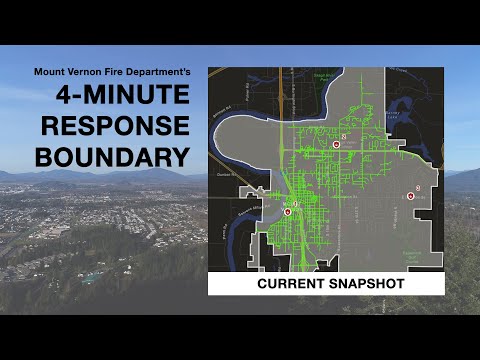
City officials said the Mount Vernon Fire Department meets the National Fire Protection Association benchmark — a fire engine reaching a fire within four minutes 90 percent of the time — on about 50 percent of city roads and that the department needs more firefighters and apparatus to improve coverage for 8,000-plus annual emergency calls.
Mount Vernon city officials said the Mount Vernon Fire Department meets the National Fire Protection Association (NFPA) benchmark — a fire engine arriving within four minutes in 90 percent of calls — on only about half of the city’s roads, and that the department needs more firefighters on shift and additional engine capacity to improve that rate. The city also said MDFD handles more than 8,000 emergency calls each year.
The NFPA benchmark is described as a best practice intended to limit rapid fire spread and increase survival and property preservation. The city’s summary said MDFD can meet that benchmark with a minimum staffing of four firefighters on an engine for roughly 50 percent of Mount Vernon streets, while other streets currently fall short of that response standard.
City officials did not announce a specific hiring plan or budget action in the public update. No formal council vote or ordinance tied to staffing levels was reported in the transcript provided. The statement framed the staffing need as a capability gap: more firefighters on shift and additional engine availability would improve the department’s ability to reach the four‑minute benchmark more consistently.
How this affects residents: faster engine arrival times are linked in the NFPA guidance to higher chances of life‑saving intervention and reduced property loss. The city’s update did not specify which neighborhoods are below the benchmark, any timetable for addressing staffing shortfalls, or the projected cost of hiring more firefighters. Those details were not provided in the transcript.
City officials did report the 8,000‑plus annual call volume to illustrate operational demand; the transcript did not include a breakdown by call type, budget line items, or any formal direction to staff to pursue specific staffing or recruitment actions.