Get Full Government Meeting Transcripts, Videos, & Alerts Forever!
Get email alerts on the Property Tax Millage topic
No spam. Unsubscribe anytime.
Baker council approves slight millage increase after public hearing amid calls to delay
Summary
The City of Baker adopted Ordinance 2025-19 to adjust the city's ad valorem millage upward to the newly authorized level, generating an estimated $44,030 in additional revenue; residents asked the council to table the measure and sought clearer public notice and a work session.
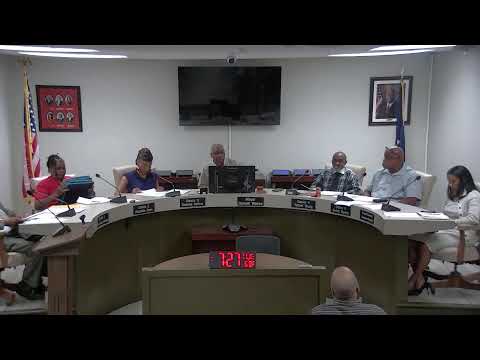
The City of Baker on Tuesday adopted Ordinance 2025-19 following a public hearing that produced questions about where property tax revenue flows and requests from residents to delay the vote. President of the council Pastor Murphy moved to adopt the ordinance; Council Member Robert Young seconded the motion and the measure passed on a unanimous vote of the five districts present. The council and staff said the change is a millage adjustment tied to reassessment and to the city's authorized millage limits.
The ordinance would increase the city's general-ad-valorem millage from the currently levied 5.22 to 5.76 mills, short of the previously authorized maximum of 6.22 mills, and city staff said the adjustment would generate roughly $44,030 in additional annual revenue. City staff also told the public that the city budget already assumes about $545,000 in property-tax revenue for the general fund.
The change drew sustained public comment. A resident who identified herself during the hearing urged the council to "follow the lead" of nearby jurisdictions that had resisted similar adjustments and asked the council to "vote no" or at least table the ordinance for more discussion. That commenter said many residents felt they had not been kept sufficiently informed before the measure appeared on the agenda.
Mayor Stewart answered questions about the mechanics of the measure during the hearing, explaining that the notice published before introduction had followed statutory posting requirements and that the city was not seeking a new voter authorization beyond the 6.22-mill cap previously approved by voters. "Now it is a millage. This is a millage tax," the mayor said when describing the distinction between property-tax millage and other local taxes. Council and staff explained that because a reassessment had changed taxable values the council could either "roll forward" to the authorized millage or accept a lower levy; the motion sought to restore the city's levy closer to the authorized level without exceeding it.
Council members and staff said they received some phone calls from residents seeking clarification during the two-week period after the ordinance was posted. The city clerk and staff described the timeline the council must follow: notice, introduction, public hearing, then submission of adopted millage to the assessor, to the legislative auditor for certification, and ultimately to the sheriff for collection; staff noted the assessor's office and legislative auditor impose administrative deadlines near the end of September.
During the hearing, one caller asked whether property-tax increases "come back" to the city, noting that some taxes on the property bill are levied by separate bodies such as school boards. City staff clarified that the proposed change was for the city's general fund ad valorem millage and that revenue raised under that line item would be used for city operational costs; school-board levies are separate and controlled by the school board.
Although several speakers asked the council to delay the vote and hold a work session to explain technical details in greater depth, the council proceeded to a roll-call vote and approved Ordinance 2025-19. The council recorded a unanimous vote in favor, and the measure will be forwarded to the assessor and the legislative auditor for processing under state deadlines.