Get Full Government Meeting Transcripts, Videos, & Alerts Forever!
Get email alerts on the Evidence Privilege topic
No spam. Unsubscribe anytime.
Court weighs when therapy records may be produced: Rule 17 dispute in Smith appeal
Summary
Commonwealth v. J. Aaron Smith — Appeals argument focused on whether trial counsel established the factual showing required to obtain a sexual‑assault victim’s therapy records under Rule 17 and the Lampron/Dwyer line of cases.
Commonwealth v. J. Aaron Smith — The court argued at length about the narrow circumstances under which a Rule 17 subpoena for a victim’s therapy files may be permitted. Appellate counsel for the defendant asked the panel to find a trial judge abused discretion by imposing an almost-impossible standard to obtain privileged therapy records; the Commonwealth said the record lacked a sufficient factual showing that the therapy files would contain information relevant to the defense.
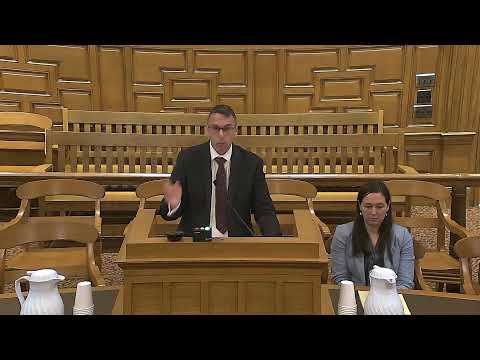
Attorney Anne Mower (argument for defendant) told the court that trial counsel had documented a 51A report and a notation that the victim had been referred to the Family Advocacy Center (FAC) for individual therapy following the alleged assault; Mower argued that was a sufficient factual showing under Lampron and Dwyer to require in-camera review or a limited disclosure protocol. She emphasized that Dwyer and Lampron limit the privilege where records are demonstrably relevant to a defense and where the request is not a fishing expedition.
Assistant District Attorney William Joyce for the Commonwealth responded that mere timing of a therapy referral is not ordinarily enough to pierce the therapist–patient privilege. Joyce cited Seeley, Olivieri, Bourgeois and other precedents that require more than a referral because a patient may choose to discuss unrelated issues in therapy. He urged that Rule 17 is not a discovery tool to hunt for exculpatory material.
The panel asked whether additional documentary evidence outside the sealed record (for example, an affidavit showing the victim actually discussed the incident in therapy) would suffice and explored whether FAC referrals routinely mean the assault was discussed; both sides said the threshold is fact-specific. The court took the appeal under advisement and flagged that if it finds error a remand for in‑camera proceedings would be appropriate.