Get Full Government Meeting Transcripts, Videos, & Alerts Forever!
Get email alerts on the Criminal Procedure Evidence topic
No spam. Unsubscribe anytime.
Appeals court hears argument that officer’s remark and jury instructions tainted Fairburn trial
Summary
Attorneys urged the Massachusetts Appeals Court to order a new trial for Stephen Fairburn, arguing an officer’s testimony and flawed jury instructions prejudiced the jury; the Commonwealth counters jurors can and did follow curative instructions and the record shows no miscarriage of justice.
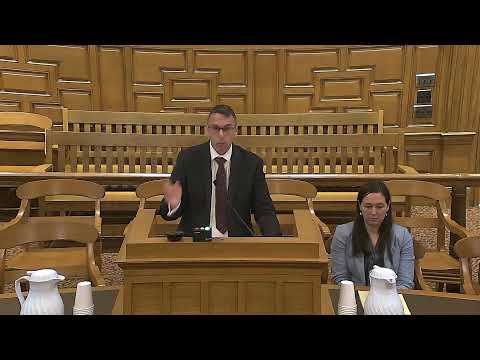
Commonwealth v. Stephen Fairburn — Defense lawyers told the Massachusetts Appeals Court on oral argument that a single remark by an officer and errors in jury instructions together created a substantial risk of a miscarriage of justice and require a new trial. Assistant District Attorney Megan Monahan for the Commonwealth said judges properly cured the one-off remark and that the record does not show prejudice requiring reversal.
The defense, led by attorney Daniel DeMaria, said Officer Pucci’s testimony relaying that the complainant screamed “someone was trying to murder her” went beyond the complainant’s own testimony, was inadmissible and inflamed the jury. DeMaria told the panel — presided over by Justice Arianne Buono and joined by Justices Gregory Massing and Jennifer Allen — that the trial judge erred in denying a mistrial and that the later curative instruction could not erase the remark’s effect. “Asking jurors to disregard ‘someone was trying to murder her’ is tantamount to asking them to ignore an elephant in the jury box,” DeMaria argued.
Monahan replied that the comment was “one-off,” cumulative of other evidence and that jurors are presumed to follow curative instructions. She cited precedent in which a curative instruction was ruled sufficient and told the court the defense has not identified controlling authority that would have mandated a mistrial in these circumstances.
DeMaria also challenged separate parts of the trial court’s instructions, arguing the judge conflated the act of touching with the required specific intent for the charged offense and mischaracterized the self-defense threshold by implying an actual attack was required. The defense urged that those instructions lowered the Commonwealth’s burden on intent and could have led jurors to adopt the wrong, simplified standard.
Monahan countered that the jury instructions, taken as a whole, correctly stated the law and that the record shows the defendant’s testimony and the defense theory at trial were focused on self-defense rather than on an argument of purely accidental or negligent touching. She further noted there was no contemporaneous objection to a brief misstatement, and that such slips are not reversible error when the charge, read as a whole, properly states the elements.
The court questioned both sides closely about whether the evidence and instructions, taken together, could have affected the outcome. After argument the panel took the case under advisement.